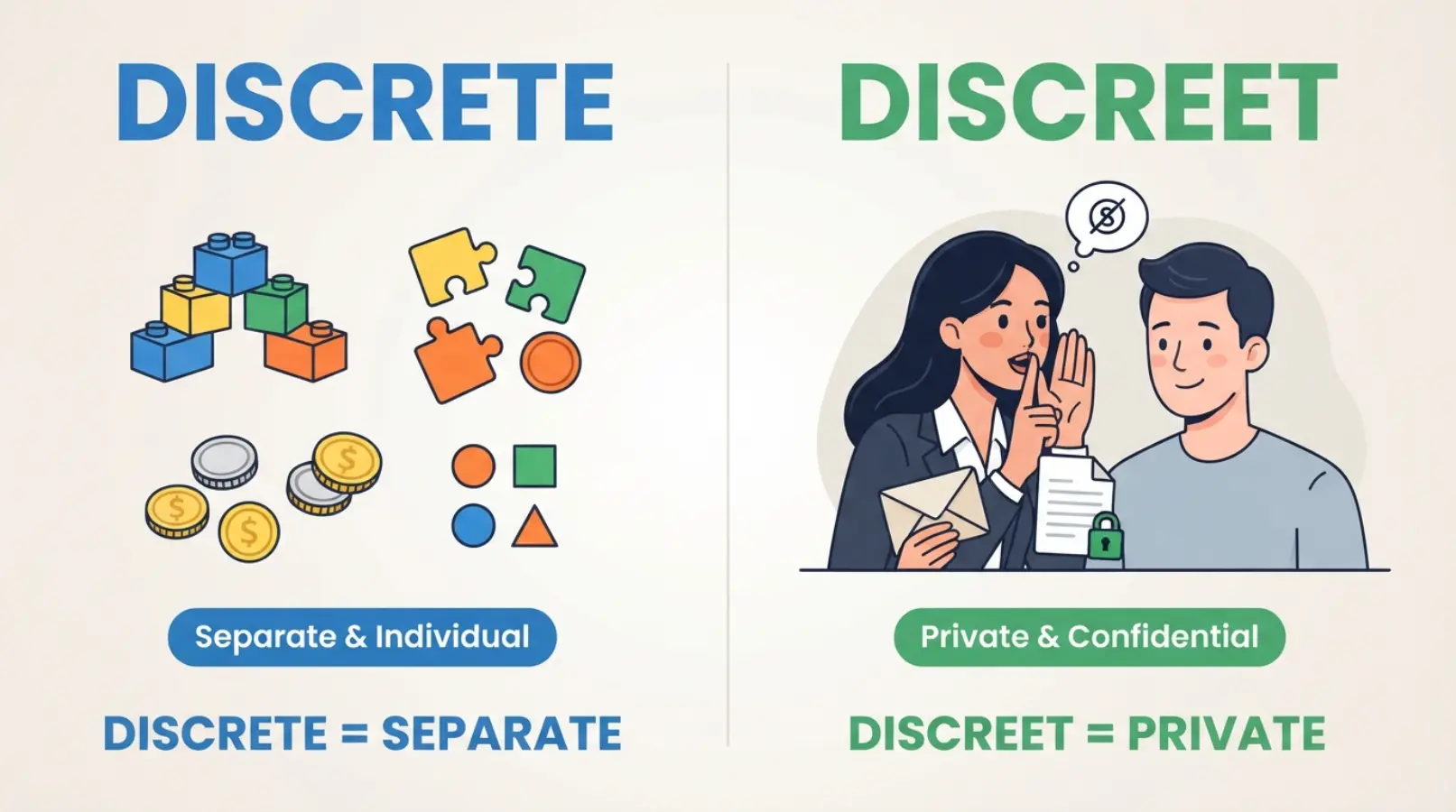
Discrete or discreet is a common English confusion that many writers and learners face. These two words look almost the same, but they have different meanings. One word talks about separate parts or items. The other word describes being careful and private. Understanding this small difference can improve your writing and speaking skills. Many people mix these words because their spelling is similar.
However, their uses are not the same. In this guide, you will learn simple meanings, examples, comparisons, and practical tips. By the end, you will know how to choose the right word with confidence in daily conversations, emails, and professional writing.
Quick Summary Box
- Discrete means separate, distinct, or divided into individual parts.
- Discreet means careful, private, or showing good judgment.
- Discrete often describes numbers, objects, groups, or categories.
- Discreet often describes people, actions, or communication.
- Remember: discrete has “two e’s together” like separate pieces.
- Remember: discreet relates to privacy and careful behavior.
What Does Discrete Mean?
Discrete means something that exists separately from other things. It describes items, ideas, or groups that are clearly different and independent.
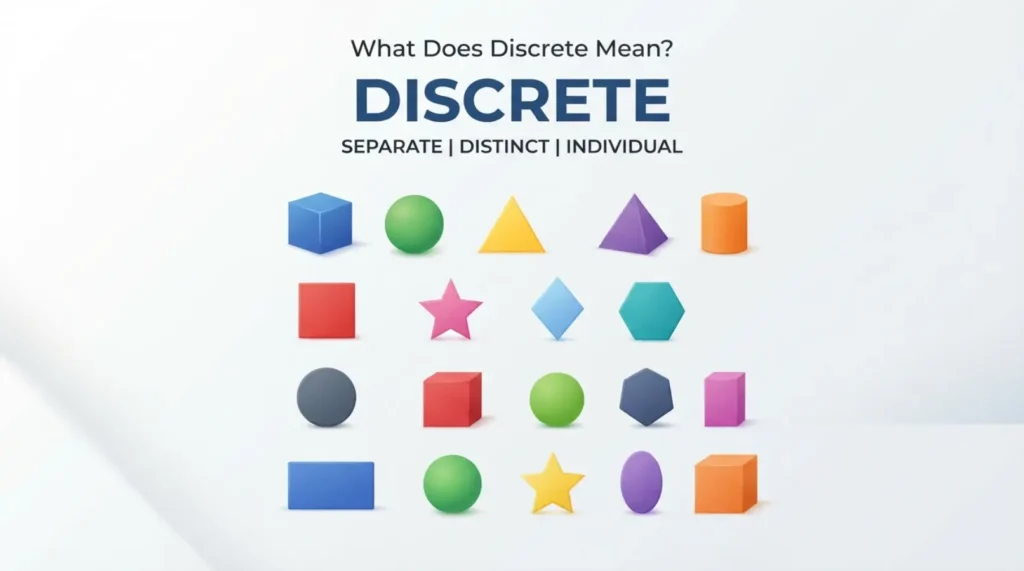
For example, a company may have discrete departments for sales, marketing, and finance. Each department has its own role. They work together, but they remain separate units.
The word often appears in science, technology, and mathematics. Experts use it when they discuss individual parts instead of a continuous whole.
Examples:
- The machine has five discrete components.
- The teacher created discrete lessons for each topic.
- The data contains discrete categories.
In simple words, discrete means “separate pieces.”
What Does Discreet Mean?
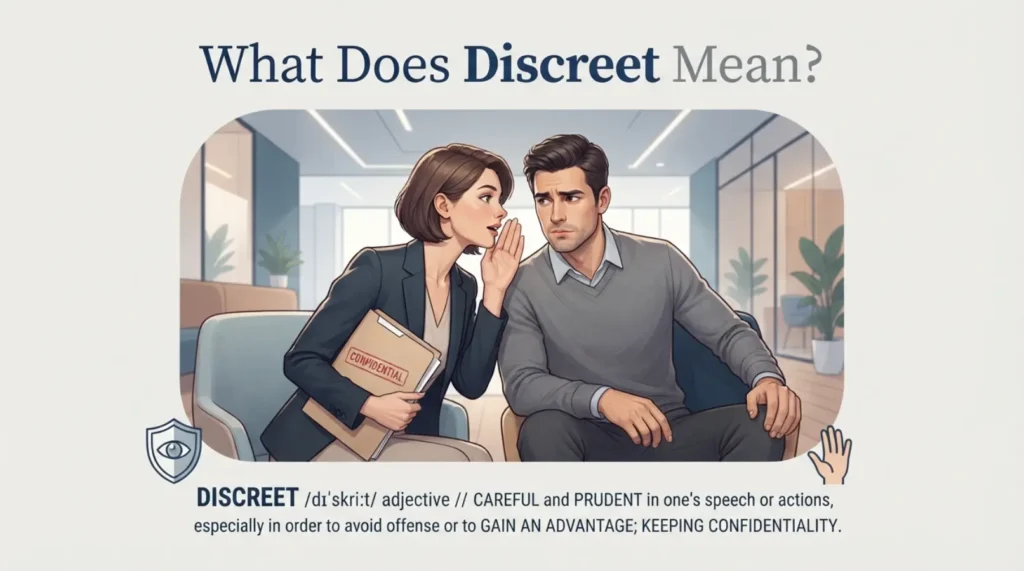
Discreet means careful, private, or respectful about sensitive information. It describes someone who knows how to avoid causing embarrassment or sharing private details.
A discreet person thinks before speaking. They protect secrets and handle delicate situations politely.
Examples:
- She was discreet about her friend’s personal problem.
- The manager gave discreet feedback to the employee.
- He made a discreet exit from the meeting.
In simple words, discreet means “careful and private.”
Discrete or Discreet: What Is the Difference?
The main difference between these words is their meaning.
Discrete focuses on separation. It describes things that are individual or clearly divided.
Discreet focuses on behavior. It describes people or actions that show privacy and good judgment.
Here is an easy comparison:
| Word | Meaning | Common Use | Example |
| Discrete | Separate or distinct | Objects, data, groups, systems | The project has discrete stages. |
| Discreet | Careful and private | People, actions, communication | She was discreet with the information. |
A simple memory trick can help. Discrete has “ete” like separate pieces that stay apart. Discreet has “ee” like someone quietly protecting privacy.
Real-Life Examples of Discrete Usage
You can find discrete examples in many areas of life.
In technology:
- A computer uses discrete parts like memory, storage, and processors.
- A website may organize information into discrete sections.
Education:
- Students learn discrete skills such as reading, writing, and math.
In business:
- A company may track discrete products separately.
In science:
- Scientists study discrete measurements and separate variables.
These examples show that discrete relates to individual units.
Real-Life Examples of Discreet Usage
Discreet appears more often when people discuss manners, privacy, or personal matters.
Examples include:
- A doctor must be discreet with patient information.
- A friend can be discreet when hearing private news.
- A professional worker should make discreet decisions.
For instance, a manager discussing an employee issue should choose a private place. This action shows discreet behavior.
Common Mistakes When Using Discrete and Discreet
Many English learners confuse these words because they sound similar. However, replacing one with the other can change the meaning completely.
Common mistakes include:
Mistake 1: Saying “a discreet number system” when you mean separate numbers.
Correct: “A discrete number system.”
Mistake 2: Saying “She was discrete with the secret.”
Correct: “She was discreet with the secret.”
Another mistake happens because people remember spelling but forget meaning. Always check the context first.
Ask yourself:
- Am I talking about separate things? Use discrete.
- Am I talking about privacy or careful behavior? Use discreet.
How to Remember the Difference Easily
Memory tricks make confusing words easier.
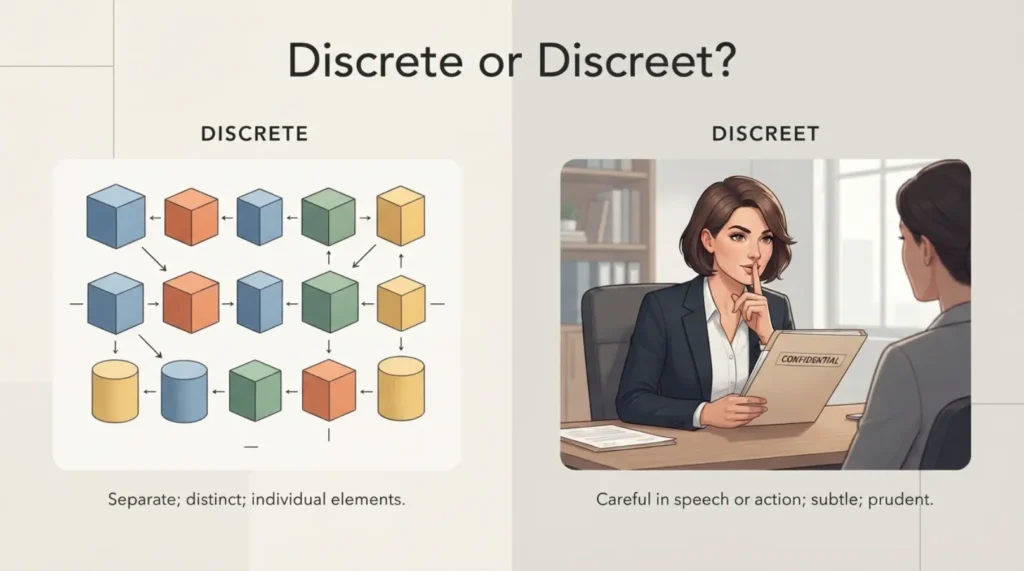
Try these simple methods:
Discrete = Divided
Both words start with “D.” Think of “divided” when you see discrete.
Discreet = Secret
Both words connect with privacy. A discreet person can keep something secret.
Also, practice writing your own sentences. Regular use helps your brain remember the difference naturally.
Usage of Discrete and Discreet in Daily Life
These words appear in many situations.
At work:
- Discrete systems help organize business processes.
- Discreet communication protects private information.
In school:
- Discrete subjects help students learn separate concepts.
- Discreet behavior shows respect toward classmates.
Online:
- Discrete data helps websites organize information.
- Discreet users protect personal details.
Learning these words improves professional communication and everyday English.
Synonyms and Related Words
Synonym for Discrete:
- Separate
- Distinct
- Individual
- Independent
- Different
- Divided
Synonym for Discreet:
- Private
- Careful
- Sensible
- Tactful
- Secretive
- Respectful
These related words can help you understand the context faster.
Expert Insights: Why This Difference Matters
Language experts often highlight small word differences because they affect clarity. A single wrong word can confuse readers or change a message.
Strong writers choose words based on meaning, not just spelling. In professional writing, accurate word choice builds trust. It also improves communication with readers, customers, and teams.
A useful writing habit is to review similar-looking words before publishing content. This small step creates stronger and clearer writing.
Frequently Asked Questions About Discrete or Discreet
What is the simple meaning of discrete?
Discrete means separate, individual, or clearly divided from other things.
What is the simple meaning of discreet?
Discreet means careful, private, and respectful when handling information or situations.
Are discrete and discreet homophones?
No. They look similar and sound similar, but their meanings are different.
How can I remember discrete vs discreet?
Remember discrete means divided. Discreet means secret or private.
Can discrete describe a person?
Usually, no. Discrete normally describes things, groups, data, or systems.
Can discreet describe an action?
Yes. Discreet can describe actions, choices, conversations, or behavior.
Which word relates to privacy?
Discreet relates to privacy and careful handling of information.
Conclusion
Discrete or discreet may look almost identical, but their meanings are very different. Discrete describes separate parts, individual items, or divided categories. Discreet describes privacy, careful behavior, and good judgment. Learning this difference helps you write clearer sentences and avoid common English errors. Use discrete when you talk about separation. Use discreet when you talk about privacy. A simple memory trick can make the difference easy to remember. Strong word choice improves communication in school, work, and daily life. Always focus on meaning first, and your English accuracy will continue to improve.

Sophia Hayes is a language researcher and content writer at WordsCoppe.com, specializing in word comparisons, spelling differences, grammar explanations, and vocabulary insights. She is passionate about making English easier to understand through clear, accurate, and practical content. By breaking down complex language topics into simple explanations, Sophia helps readers improve their writing and communication skills. Her goal is to make learning English more accessible, engaging, and confidence-building for learners worldwide.