Beside or besides is a common grammar question that confuses many English learners and even native speakers. These two words look almost the same, but they have different meanings. Using the wrong one can change the meaning of your sentence. The good news is that the difference is easy to learn. Once you understand how each word works, you will choose the correct one with confidence. In this guide, you will learn the meaning of beside and besides, see simple examples, compare their uses, and discover an easy trick to remember the difference. By the end, you will know exactly when to use each word in everyday speaking and writing.
Quick Summary
- Beside means next to or by the side of.
- Besides means in addition to or also.
- Beside usually shows location.
- Besides usually adds extra information.
- The extra “s” in besides helps you remember it means something more.
- Mixing these words is a common grammar mistake.
- Learning the difference improves your writing and speaking.
Featured Snippet
Beside or Besides: Which One Is Correct?
Both words are correct, but they have different meanings. Beside means next to someone or something. Besides means in addition to or also. Use beside for location and besides when adding information or giving another reason.
What Does “Beside” Mean?
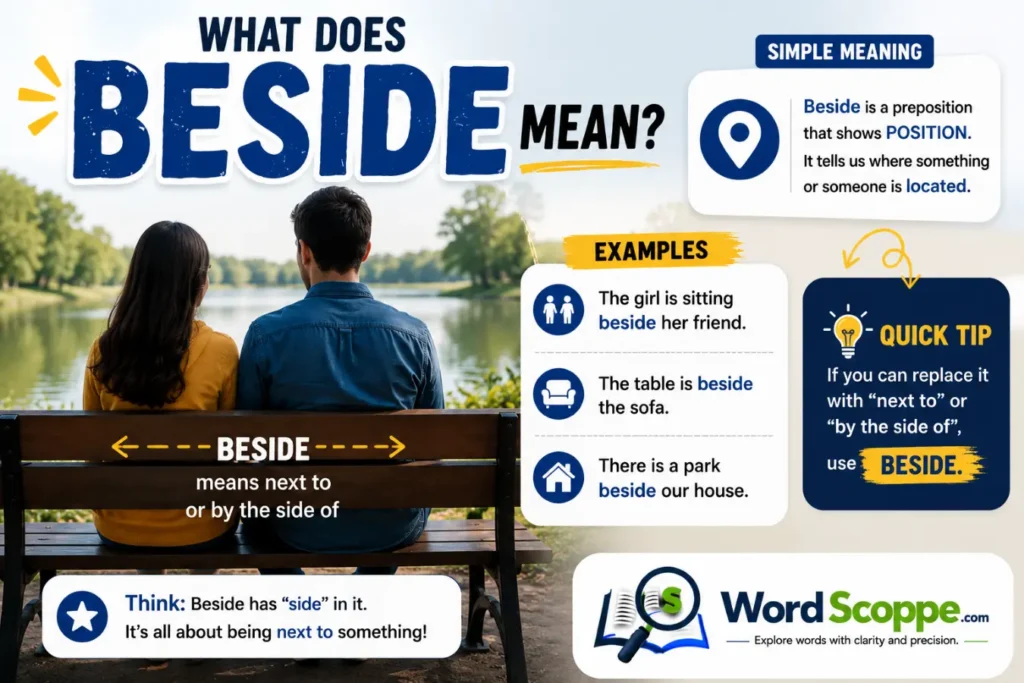
Beside is a preposition.
It means next to, by the side of, or close to someone or something.
You use beside when talking about a physical position.
Examples
- The dog sat beside its owner.
- My phone is beside my laptop.
- She stood beside the window.
- A chair was placed beside the bed.
In every example, beside tells you where something is located.
What Does “Besides” Mean?
Besides is also a preposition. Sometimes, it works as an adverb.
It means:
- In addition to
- Also
- Moreover
- Apart from that
Unlike beside, it does not describe location.
Instead, it adds extra information or another point.

Examples
- Besides English, she speaks French.
- I don’t want pizza. Besides, I already ate lunch.
- Besides my brother, my sister came too.
- We need more time. Besides, the project is not finished.
Here, besides means also or in addition.
Beside vs Besides Comparison Table
| Feature | Beside | Besides |
| Meaning | Next to | In addition to |
| Part of Speech | Preposition | Preposition or Adverb |
| Shows | Location | Extra information |
| Common Meaning | By the side of | Also, moreover |
| Everyday Use | Physical position | Adding another point |
| Example | Sit beside me. | Besides me, everyone agreed. |
Beside or Besides: What’s the Main Difference?
The easiest way to understand the difference is to focus on their purpose.
Use Beside for Position
Think about physical location.
Examples:
- The bicycle is beside the garage.
- Emma sat beside her friend.
- The flowers grew beside the fence.
Each sentence tells you where something is.
Use Besides for Addition
Think about adding another idea.
Examples:
- Besides math, I enjoy science.
- We should leave now. Besides, it’s getting late.
- Besides coffee, they also sell tea.
Each sentence adds extra information.
Why Do People Confuse Beside and Besides?
These words look almost identical.
Only one letter separates them.
However, that small difference changes their meaning completely.
People often confuse them because:
- They have similar spelling.
- They sound almost the same.
- Both appear in everyday English.
- Many learners focus on pronunciation instead of meaning.
Once you remember their main purpose, choosing the correct word becomes much easier.
Easy Trick to Remember the Difference
Here is a simple memory tip.
Beside = Side
Both words contain side.
Think about standing by someone’s side.
Examples:
- Stand beside me.
- Park beside the building.
If you can replace it with next to, beside is correct.
Besides = Plus One More
Notice the extra S.
Think of that extra S as meaning something extra.
Examples:
- Besides English, I know Spanish.
- Besides, we already have enough food.
If you can replace it with also, in addition, or moreover, use besides.
Can “Besides” Mean “Except”?
Sometimes, yes.
The meaning depends on the sentence.
Example:
- Besides John, everyone attended.
This can mean:
- In addition to John, everyone attended.
Or in some contexts:
- Everyone attended except John.
Modern English usually avoids this confusing use.
Instead, writers often choose except when they want to exclude someone.
This keeps the sentence clear for readers.
Which Word Is More Common in Everyday English?
Both words are common, but people use them differently.
You will often hear beside when describing places or positions.
For example:
- Sit beside me.
- The school is beside the park.
On the other hand, besides appears often in conversations and writing when someone adds another idea.
For example:
- Besides, we have plenty of time.
- Besides football, he enjoys tennis.
Learning both words helps you speak and write more naturally.
Real-Life Examples of Using Beside and Besides
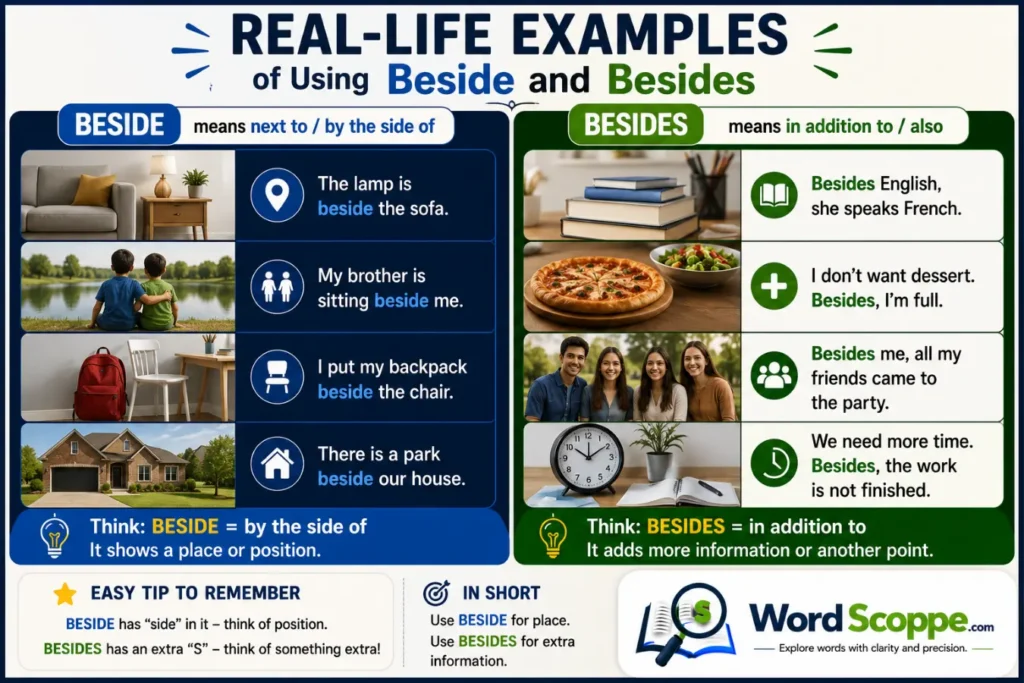
Seeing these words in real sentences makes them easier to remember.
Example 1
✅ The baby slept beside her mother.
Here, beside shows location.
Example 2
✅ We planted flowers beside the fence.
The flowers are next to the fence.
Example 3
✅ Besides English, he speaks German.
Here, besides means in addition to.
Example 4
✅ I don’t want dessert. Besides, I’m already full.
The second sentence adds another reason.
Example 5
✅ Sarah sat beside her best friend during the movie.
This sentence talks about physical position.
Example 6
✅ Besides reading, Emma enjoys painting.
This sentence adds another hobby.
These examples show that beside refers to location, while besides introduces extra information.
Common Mistakes People Make
Many English learners confuse these two words because they look almost identical.
Here are the most common mistakes.
Using “Besides” for Location
❌ My bag is besides the chair.
✅ My bag is beside the chair.
Remember, physical position needs beside.
Using “Beside” to Add Information
❌ Beside English, I study French.
✅ Besides English, I study French.
When adding another idea, use besides.
Forgetting That “Besides” Can Start a Sentence
Many people think besides only comes before a noun.
Actually, it can also introduce another reason.
Example:
✅ Besides, we already have enough food.
Thinking the Words Are Interchangeable
Although they look similar, they cannot replace each other.
Choosing the wrong word changes the meaning of your sentence.
How to Use Beside and Besides in Daily Life
These words appear in everyday conversations and writing.
You may use beside when:
- Giving directions
- Describing where objects are
- Explaining seating arrangements
- Talking about places
Examples:
- Sit beside me.
- The bank is beside the supermarket.
Use besides when:
- Adding another reason
- Listing extra items
- Mentioning additional people
- Expanding an idea
Examples:
- Besides soccer, I enjoy basketball.
- Besides, the weather looks bad.
Synonyms and Similar Words
Understanding similar words can improve your vocabulary.
Synonyms for “Beside”
- Next to
- By
- Alongside
- Near
- At the side of
Example
The bicycle is next to the garage.
Synonyms for “Besides”
- Also
- In addition
- Moreover
- Furthermore
- As well
- Apart from
Example
Moreover, the team finished the project early.
Choose the synonym that best fits your sentence and writing style.
Expert Insights
Grammar experts recommend focusing on meaning instead of spelling. Ask yourself one simple question before choosing a word.
Are you talking about a place?
If yes, use beside.
Are you adding another idea or reason?
If yes, use besides.
This simple habit helps you avoid one of the most common grammar mistakes in English. It also makes your writing clearer and easier to understand.
Frequently Asked Questions
What is the difference between beside and besides?
Beside means next to. Besides means in addition to or also.
Is it beside me or besides me?
If you mean someone is next to you, say beside me.
Can besides mean also?
Yes. Besides often means also, moreover, or in addition.
Can beside mean except?
No. Beside only refers to location. It does not mean except.
Which word is used for location?
Use beside when talking about physical position.
Can besides start a sentence?
Yes. It often introduces another reason.
Example:
Besides, we have already made our decision.
Is “besides” formal or informal?
It works in both formal and informal English, depending on the sentence.
How can I remember the difference?
Think of beside as side for location. Think of the extra S in besides as something extra.
Conclusion
Understanding beside or besides is easier than it first appears. Although the words look similar, they have different jobs in English. Beside tells you where someone or something is. Besides adds another idea, reason, or piece of information. Remember the simple trick: beside = side, and besides = something extra. With a little practice, choosing the correct word becomes natural. Whether you are writing an email, completing schoolwork, or having a conversation, using the right word will make your English clearer and more accurate. The next time you hesitate between beside and besides, think about whether you are talking about a place or adding more information, and you will choose correctly every time.

Sophia Hayes is a language researcher and content writer at WordsCoppe.com, specializing in word comparisons, spelling differences, grammar explanations, and vocabulary insights. She is passionate about making English easier to understand through clear, accurate, and practical content. By breaking down complex language topics into simple explanations, Sophia helps readers improve their writing and communication skills. Her goal is to make learning English more accessible, engaging, and confidence-building for learners worldwide.