
Flip or flop is a common word comparison that often confuses English learners. These two words sound similar, but they have very different meanings. Choosing the correct one makes your writing and speaking much clearer.
This guide explains each word in simple English. You will learn what flip and flop mean, when to use them, and how to avoid common mistakes. You will also find a comparison table, real-life examples, and an easy memory trick. Whether you are talking about sports, business, movies, or everyday situations, this article will help you use the right word every time.
Quick Summary
- Flip means to turn, toss, or change direction.
- Flop means a failure or something that does not succeed.
- Flip often describes movement or quick changes.
- Flop usually describes poor results.
- These words have different meanings and cannot replace each other.
- Learning the difference improves both writing and conversation.
What Does “Flip” Mean?
The word flip has several meanings. Most commonly, it means to turn something over quickly.
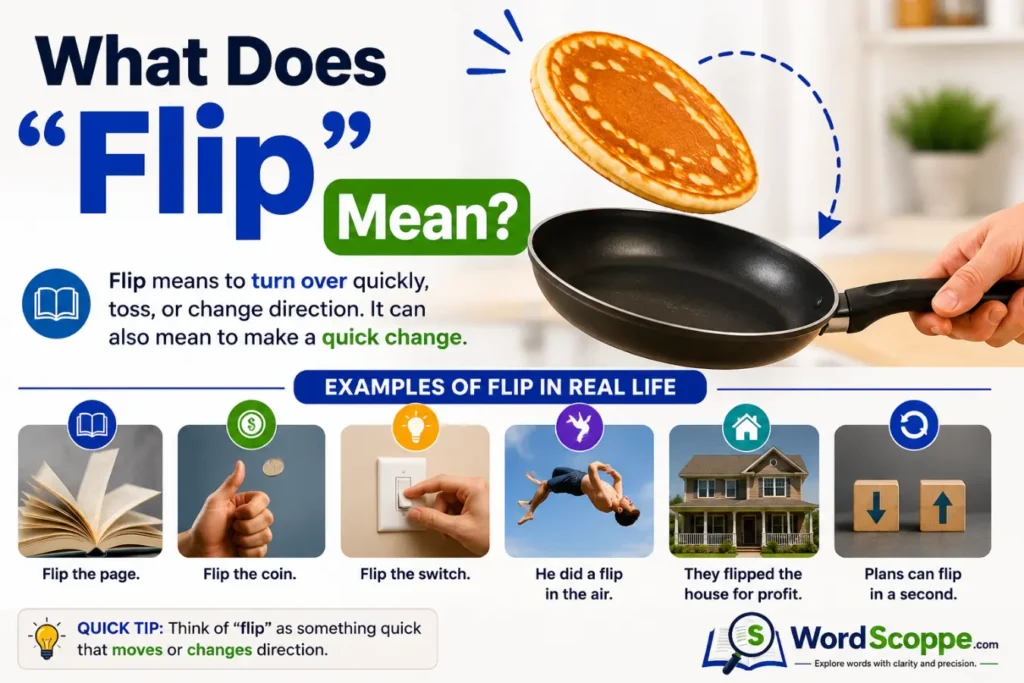
It can also mean making a quick change or moving suddenly.
Simple Examples
- Please flip the pancake.
- She flipped the page.
- He flipped the coin.
- Flip the switch to turn on the light.
- The gymnast flipped in the air.
People also use flip in business and real estate.
For example:
- They flipped the house for a profit.
- Investors sometimes flip properties quickly.
In everyday English, flip usually suggests fast movement or change.
What Does “Flop” Mean?
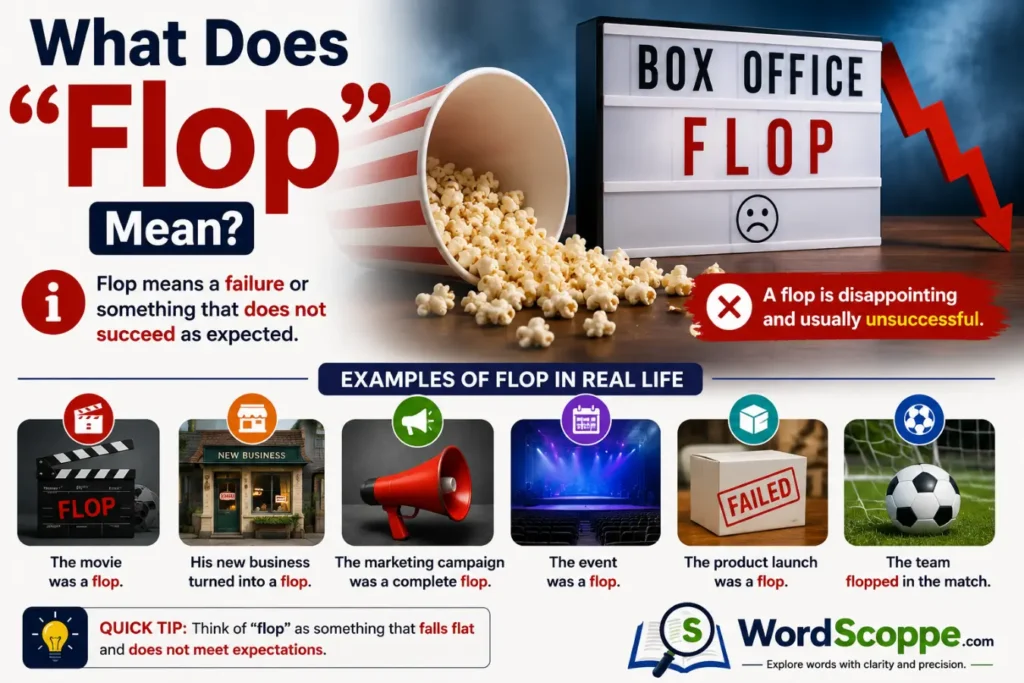
The word flop usually means a failure.
It describes something that does not meet expectations.
People often use flop when talking about:
- Movies
- Products
- Businesses
- Sports teams
- Events
- Marketing campaigns
Simple Examples
- The movie became a flop.
- His new business was a flop.
- The event turned into a flop.
- Their product launch flopped.
- The team flopped in the final match.
As a verb, flop can also describe dropping down heavily.
Example:
- The tired dog flopped onto the floor.
Flip vs Flop: Key Differences
| Feature | Flip | Flop |
| Main Meaning | Turn or change quickly | Fail or perform badly |
| Part of Speech | Verb and noun | Verb and noun |
| Positive or Negative | Usually neutral or positive | Usually negative |
| Common Topics | Coins, pages, houses, switches | Movies, products, businesses, sports |
| Example | Flip the coin. | The movie was a flop. |
Although the words sound alike, they describe completely different actions or outcomes.
Why Do People Confuse Flip and Flop?
These words often appear together in conversations, television, and advertising.
Both begin with the same letters and have similar pronunciation.
However, they describe different ideas.
For example:
- Flip focuses on movement or change.
- Flop focuses on failure or disappointment.
People also know the phrase “Flip or Flop” because of television shows and real estate discussions. That popularity sometimes causes confusion when choosing the correct word in normal writing.
Understanding the meaning behind each word makes the choice much easier.
Real-Life Examples of Flip and Flop
Learning through everyday situations helps you remember each word.
At Home
- Flip the omelet before it burns.
- The pancake flipped perfectly.
At School
- Flip to page twenty.
- The science project did not flop because everyone prepared well.
Sports
- The diver completed a perfect flip.
- The team flopped after making several mistakes.
Business
- Investors flipped the property within six months.
- The company’s latest product became a flop.
In Entertainment
- The audience loved the actor’s performance.
- Critics called the sequel a flop.
These examples show how each word fits naturally into different situations.
Common Mistakes People Make
Many learners confuse these words because they sound similar.
Here are the most common mistakes.
Mistake 1: Using “Flip” Instead of “Flop”
❌ The movie was a flip.
✅ The movie was a flop.
A movie that fails is a flop, not a flip.
Mistake 2: Using “Flop” for Turning Something
❌ Flop the pancake.
✅ Flip the pancake.
When you turn something over, always use flip.
Mistake 3: Thinking Both Words Mean the Same Thing
Some writers believe the words are interchangeable.
They are not.
Remember:
- Flip = Turn, toss, or change direction.
- Flop = Fail or perform poorly.
Mistake 4: Misunderstanding Business Terms
People sometimes hear house flipping and think it means failure.
Actually, house flipping means buying, improving, and selling a property for profit.
The opposite would be a house-flipping flop, where the investment loses money.
Easy Trick to Remember the Difference
You only need one simple memory trick.
Think About the First Letter
Flip = F for Flip Over
Imagine flipping a coin or flipping a page.
The action involves movement.
Flop = F for Failure
Think of a movie that earned very little money.
It became a flop.
Quick Memory Rule
- Flip = Movement
- Flop = Failure
This simple rule helps you choose the correct word every time.
Using “Flip” and “Flop” in Everyday English
You will hear flip and flop in conversations, television shows, news stories, sports, and business discussions. Knowing the difference helps you speak and write more naturally.
Here are some everyday examples.
In the Kitchen
- Flip the burger after three minutes.
- Flip the pancake carefully.
At School
- Flip to the next chapter.
- Our class project did not flop because everyone worked together.
Sports
- The gymnast performed an amazing flip.
- The team flopped in the championship game.
Business
- They flipped an old house for a good profit.
- The company’s new product became a flop.
Entertainment
- The actor’s first movie was a huge hit.
- The second movie turned into a flop.
Using the correct word makes your message clear and easy to understand.
Synonyms and Related Words
Learning similar words can improve your vocabulary and writing skills.
Synonyms for “Flip”
Depending on the context, you can use:
- Turn
- Rotate
- Toss
- Spin
- Reverse
- Switch
- Twist
Synonyms for “Flop”
Words with a similar meaning include:
- Failure
- Disaster
- Bust
- Miss
- Letdown
- Disappointment
- Collapse
Each synonym has a slightly different meaning, but they all relate to the main idea of flip or flop.
Expert Insights
Language experts recommend choosing words based on meaning instead of sound. Although flip and flop rhyme, they describe completely different ideas.
Use flip when talking about turning, switching, or moving something quickly. Use flop when describing failure, poor performance, or disappointing results.
Editors also suggest checking the context before choosing either word. A simple habit like this prevents grammar mistakes and improves writing quality. Clear word choice also builds trust with readers and makes your content easier to understand.
Frequently Asked Questions
Is it “flip” or “flop”?
Both words are correct, but they have different meanings. Flip means to turn or change direction, while flop means a failure or poor result.
What does “flip” mean?
Flip usually means to turn something over quickly or make a fast change.
What does “flop” mean?
Flop describes something that fails or performs badly, such as a movie, business, or product.
Can I use “flip” and “flop” interchangeably?
No. They have different meanings and should not replace each other.
Why do people confuse flip and flop?
The words sound similar and often appear together. However, they describe different actions and outcomes.
What is a house flip?
A house flip means buying a property, improving it, and selling it for a profit.
What does “box office flop” mean?
A box office flop is a movie that performs poorly and earns much less money than expected.
Final Thoughts
Understanding the difference between flip or flop is simple once you know their meanings. Flip describes turning, switching, or changing something quickly, while flop describes failure or disappointing results. Although the words sound alike, they serve different purposes in everyday English. Whether you are talking about cooking, sports, movies, business, or real estate, choosing the correct word makes your writing more accurate and professional. Remember the easy rule: flip relates to movement, and flop relates to failure. With regular practice and the examples in this guide, you can use both words confidently in conversations, emails, schoolwork, and professional writing.

Sophia Hayes is a language researcher and content writer at WordsCoppe.com, specializing in word comparisons, spelling differences, grammar explanations, and vocabulary insights. She is passionate about making English easier to understand through clear, accurate, and practical content. By breaking down complex language topics into simple explanations, Sophia helps readers improve their writing and communication skills. Her goal is to make learning English more accessible, engaging, and confidence-building for learners worldwide.