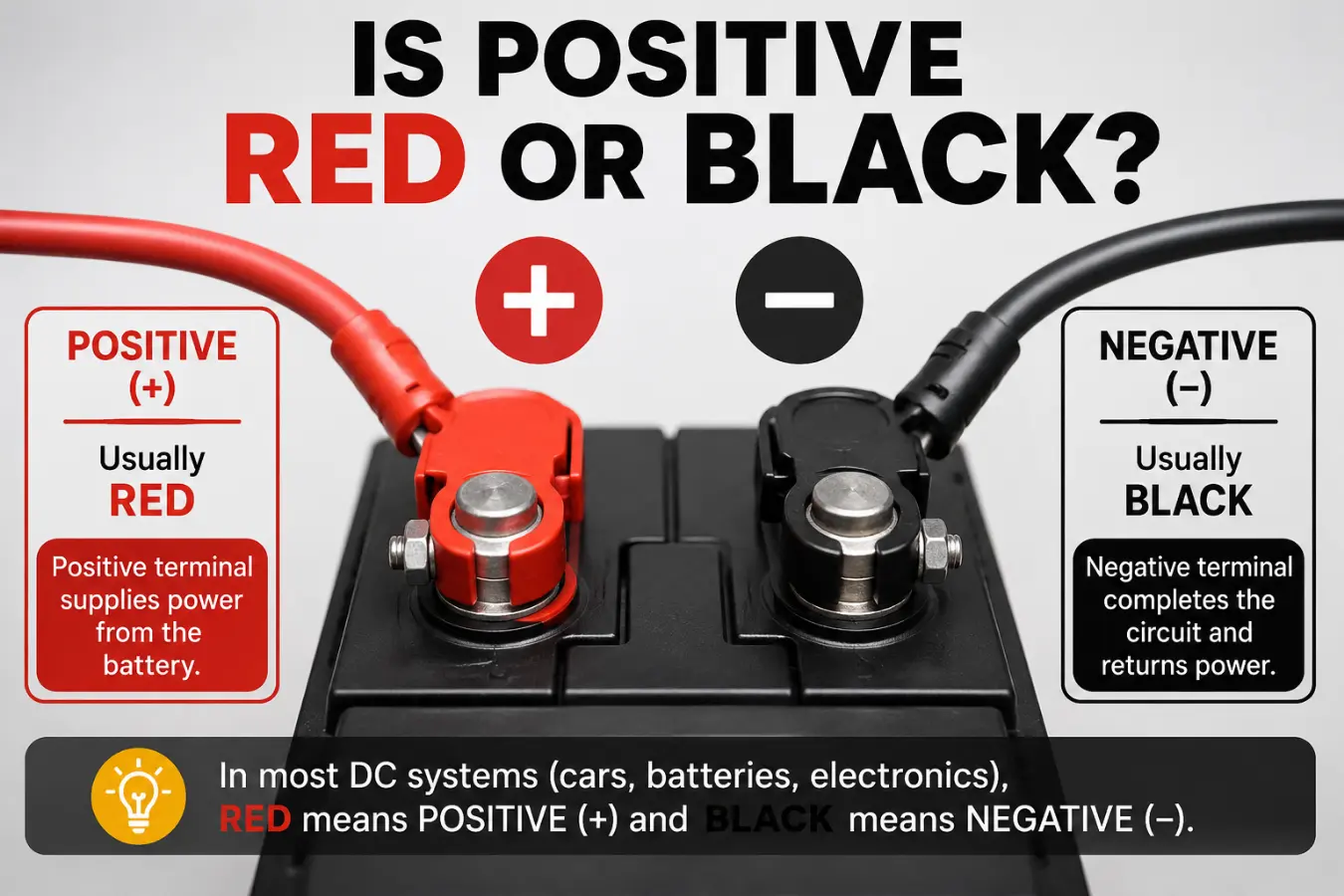
Is positive red or black? This is a common question when working with batteries, electrical wires, or jumper cables. Knowing the correct answer helps you avoid mistakes and stay safe. In most cases, the positive terminal or wire is red, while the negative terminal or wire is black. However, some electrical systems use different colors. That is why you should always check the labels or wiring diagram before making a connection. This guide explains the meaning of positive and negative wires in simple English. You will also learn where these colors are used, common mistakes to avoid, and easy tips to identify the correct terminal.
Quick Summary
- Positive is usually red.
- Negative is usually black.
- Red often connects to the + terminal.
- Black usually connects to the − terminal.
- Some systems use different colors, so always check labels.
- Correct wiring helps prevent damage and improves safety.
Featured Snippet Answer
Is positive red or black?
In most electrical systems, positive is red and negative is black. The red wire or terminal connects to the positive (+) side, while the black wire or terminal connects to the negative (−) side. Always verify the markings because some devices follow different color codes.
What Does Positive Mean in Electricity?
The positive terminal is the point where electrical current starts in many circuits. It carries electrical energy to the connected device.

You can usually identify it by:
- A + symbol
- A red wire or terminal
- A red battery cap or cover
The positive connection is important because it allows electricity to flow correctly.
Why Is the Positive Wire Usually Red?
Manufacturers use red because it is easy to recognize. It stands out and reminds people to pay attention.
Using red for the positive terminal also creates a standard that many electricians, mechanics, and DIY users understand.
However, not every electrical system follows the same color code. Industrial equipment, marine wiring, or imported products may use different colors.
Always read the labels before connecting wires.
Positive vs Negative Wire
| Feature | Positive | Negative |
| Common Color | Red | Black |
| Symbol | + | − |
| Purpose | Supplies power | Completes the circuit |
| Battery Terminal | Positive terminal | Negative terminal |
| Jumper Cable Color | Red clamp | Black clamp |
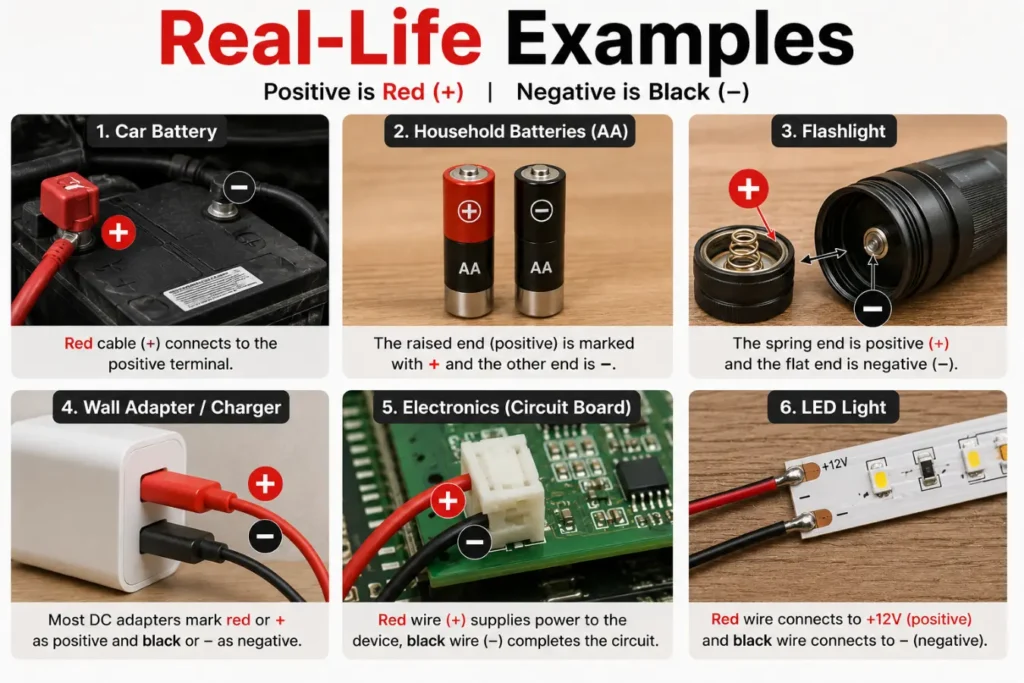
Real-Life Examples
Here are a few everyday situations where color matters.
Car Battery
- Red cable connects to the positive (+) terminal.
- Black cable connects to the negative (−) terminal.
AA Battery Holder
The positive end usually matches the + sign inside the holder.
Home Electronics
Many DC power adapters use a red wire for positive and a black wire for negative.
Common Mistakes People Make
People often make simple wiring mistakes. These errors can damage equipment or create safety risks.
Some common mistakes include:
- Assuming every red wire is positive.
- Ignoring the + and − symbols.
- Connecting jumper cables in the wrong order.
- Mixing up battery terminals.
- Not checking the manufacturer’s instructions.
Taking a few extra seconds can prevent costly problems.
Easy Tips to Identify the Positive Terminal
Use these simple tips before making a connection.
- Look for the + symbol.
- Check if the wire is red.
- Read the device manual.
- Use a multimeter when unsure.
- Follow the wiring diagram provided by the manufacturer.
Never guess when working with electricity.
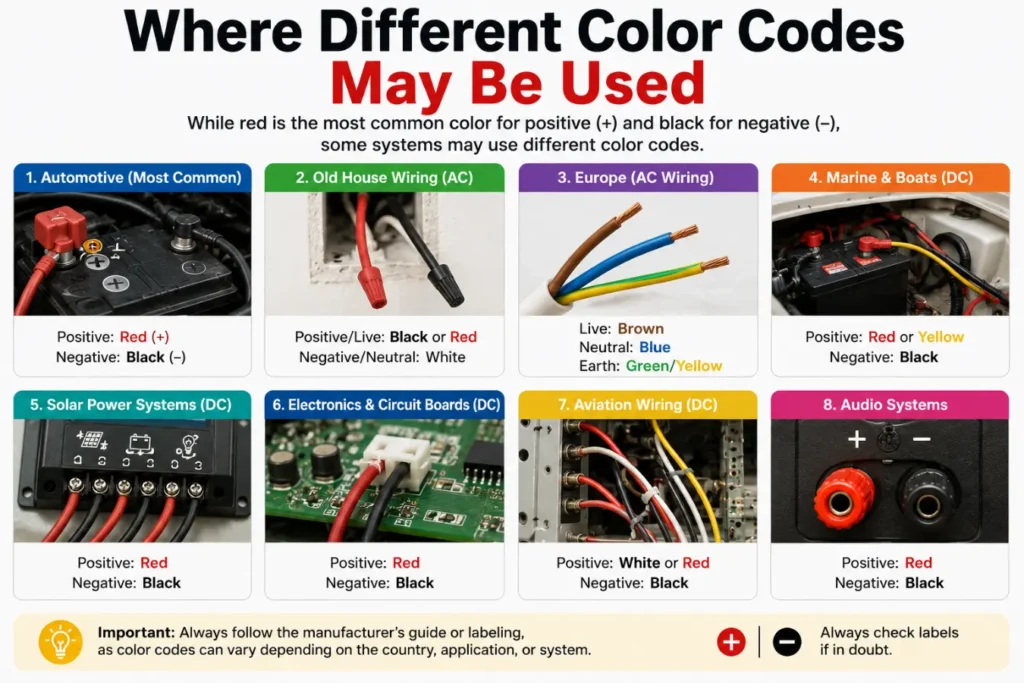
Where Different Color Codes May Be Used
Although red usually means positive, some systems use other colors.
Examples include:
- Marine electrical systems
- Industrial machinery
- Solar power installations
- Imported electronic equipment
These systems may use blue, yellow, brown, or white wires.
That is why labels are always more reliable than color alone.
Synonyms
People often search using similar phrases.
Related search terms include:
- Positive wire color
- Red positive or negative
- Battery positive terminal
- Positive battery cable
- Red wire meaning
- Black wire meaning
- Positive and negative battery terminals
- Electrical wire color codes
These terms all relate to identifying electrical polarity safely.
Expert Insight
Electrical professionals recommend checking both the wire color and the terminal markings before making a connection.
Color codes are helpful, but they are not universal. The safest approach is to verify the wiring using the device manual or a multimeter.
Following this habit reduces the chance of electrical damage and improves safety.
Frequently Asked Questions
Is the positive wire always red?
No. Red is the most common color, but some systems use different color codes.
Is black always negative?
In many DC systems, yes. However, always check the wiring diagram or labels.
Which battery terminal should I connect first?
When connecting a battery, attach the positive terminal first. Follow the manufacturer’s instructions for your specific application.
Can I rely only on wire color?
No. Always confirm the + and − markings or test the wires with a multimeter.
What happens if I connect positive and negative backwards?
Reverse polarity can damage electrical devices, blow fuses, or create sparks.
Why do jumper cables use red and black?
The colors help users identify the correct battery terminals and reduce connection mistakes.
Conclusion
Understanding is positive red or black is simple once you know the standard color code. In most batteries and DC electrical systems, red represents the positive (+) terminal, while black represents the negative (−) terminal. Even so, not every manufacturer uses the same colors. Always check the terminal markings, wiring labels, or the product manual before making a connection. If you are unsure, use a multimeter to confirm the polarity. A few extra moments of checking can prevent damage, improve safety, and ensure your electrical project works correctly.

Sophia Hayes is a language researcher and content writer at WordsCoppe.com, specializing in word comparisons, spelling differences, grammar explanations, and vocabulary insights. She is passionate about making English easier to understand through clear, accurate, and practical content. By breaking down complex language topics into simple explanations, Sophia helps readers improve their writing and communication skills. Her goal is to make learning English more accessible, engaging, and confidence-building for learners worldwide.