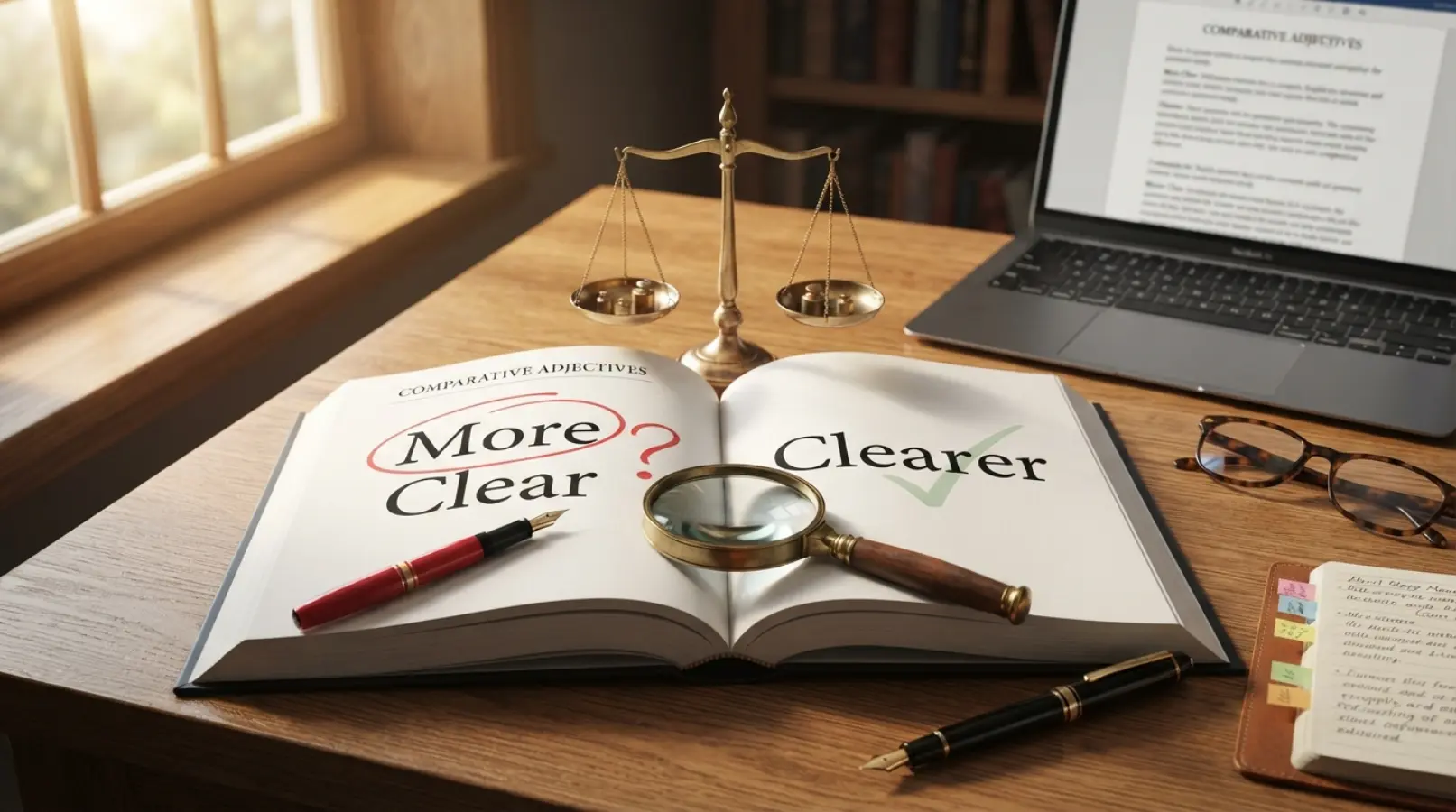
More clear or clearer is a common grammar question for English learners and writers. Many people wonder which phrase sounds more natural and which one is grammatically correct. The simple answer is that clearer is usually the preferred choice because clear is a one-syllable adjective. English grammar normally adds -er to short adjectives when making comparisons. However, more clear is not always wrong. It appears in some writing when speakers want extra emphasis or a particular style. This guide explains the difference in simple English. You will learn grammar rules, compare both forms, see real-life examples, avoid common mistakes, and discover when each expression works best.
Quick Summary
- Clearer is the standard comparative form.
- More clear is also grammatically acceptable in some situations.
- Most grammar experts recommend clearer.
- Both expressions have the same meaning.
- Use one style consistently in your writing.
- Clearer sounds more natural in everyday English.
Featured Snippet
Is it more clear or clearer?
Clearer is the preferred comparative form because clear is a short adjective. While more clear is also grammatically correct, native speakers and style guides usually recommend clearer since it sounds more natural and concise.
What Do “More Clear” and “Clearer” Mean?
Both expressions compare two things.
They mean that something is easier to understand than something else.
For example:
- This explanation is clearer than the first one.
- This explanation is more clear than the first one.
Both sentences express the same idea.
The only difference is the wording.
More Clear vs Clearer: What’s the Difference?
The meaning does not change.
The difference is mainly grammar and style.
| Feature | More Clear | Clearer |
| Meaning | Easier to understand | Easier to understand |
| Grammar | Correct | Correct |
| Preferred by Style Guides | Sometimes | Yes |
| Everyday English | Less common | More common |
| Sounds Natural | Good | Better |
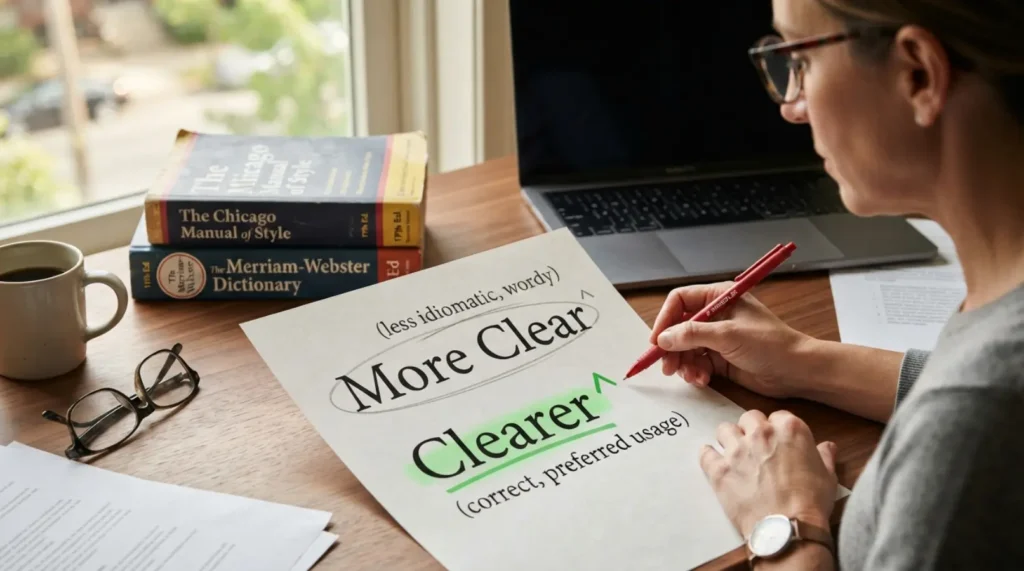
For most situations, clearer is the better choice.
Why Is “Clearer” Usually Preferred?
English follows a simple comparison rule.
Most short adjectives take -er.
Examples include:
| Base Word | Comparative |
| Small | Smaller |
| Tall | Taller |
| Fast | Faster |
| Bright | Brighter |
| Clear | Clearer |
Long adjectives usually use more.
For example:
- More beautiful
- More comfortable
- More interesting
Since clear is short, clearer follows the normal grammar pattern.
Can You Say “More Clear”?
Yes.
More clear is not incorrect.
Some writers choose it for emphasis or personal style.
You may also find it in older books, speeches, legal writing, or formal documents.
However, modern English usually prefers clearer because it is shorter and easier to read.
If you want your writing to sound natural, choose clearer.
Real-Life Examples
Here are some everyday examples.
At School
This lesson is clearer than yesterday’s lesson.
At Work
Your revised report is clearer now.
In a Conversation
Could you speak more clearly?
Notice that this sentence uses more clearly, not more clear, because clearly is an adverb.
While Giving Directions
Your new instructions are much clearer than before.
In Online Writing
A blogger edits an article to make it clearer for readers.
Each example shows why clearer sounds more natural in everyday English.
When Should You Use Each Form?
Use clearer when:
- Writing school assignments.
- Creating blog posts.
- Sending emails.
- Writing business documents.
- Speaking in everyday conversations.
Use more clear only when:
- You prefer a certain writing style.
- A publisher or editor allows it.
- The sentence sounds better with extra emphasis.
For most people, clearer remains the safest and most natural choice.
What Do Grammar Experts Say?
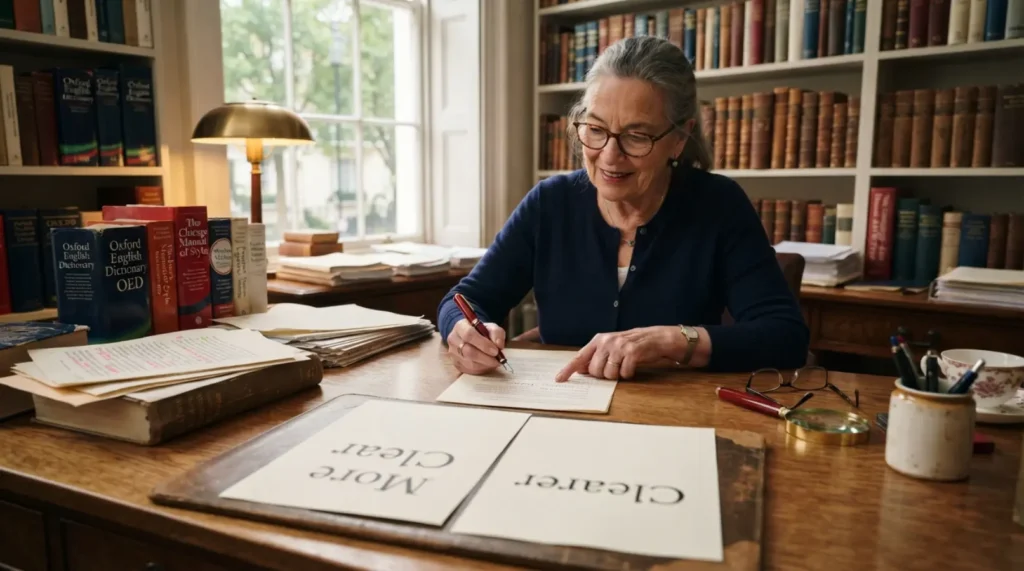
Most modern grammar guides and English style manuals recommend clearer.
They explain that short adjectives usually take -er instead of more.
Many dictionaries also list clearer as the standard comparative form.
Even though more clear is acceptable, it appears less often in modern English.
As a result, using clearer helps your writing sound more fluent and natural.
Common Mistakes When Using More Clear and Clearer
Many English learners understand the meaning but still make grammar mistakes.
Here are the most common ones.
- Using more clear when clearer sounds better.
- Thinking more clear is always wrong.
- Mixing both forms in the same article without a reason.
- Using more clear instead of more clearly when an adverb is needed.
- Ignoring the basic rule for short adjectives.
Avoiding these mistakes will make your writing smoother and easier to read.
Easy Tips to Remember the Difference
You can remember the correct form with a few simple rules.
- Clear is a one-syllable adjective.
- One-syllable adjectives usually take -er.
- Therefore, clearer is the preferred comparative form.
- Use more with longer adjectives like more interesting or more beautiful.
- When in doubt, choose clearer.
This simple rule works in most situations.
How People Use These Words Every Day
Both expressions appear in daily conversations and writing.
At School
The teacher gave a clearer explanation today.
At Work
Your presentation is clearer after adding charts.
In Emails
Could you make your instructions clearer?
In Online Content
Writers often rewrite articles to make them clearer for readers.
In Customer Support
Support agents explain solutions in a clearer way to avoid confusion.
These examples show why clearer is the more natural choice in everyday English.
Synonyms
Sometimes you can replace clearer with another word.
Common synonyms include:
- Easier to understand
- Simpler
- More understandable
- More obvious
- More precise
- Better explained
- More direct
- Less confusing
- More straightforward
Choose the synonym that best matches your sentence.
Expert Insight
English grammar experts agree that clearer is the standard comparative form because clear is a short adjective. Most modern dictionaries and style guides recommend it for everyday writing.
Although more clear is grammatically acceptable, it appears less often in modern English. If you want your writing to sound natural, professional, and fluent, clearer is usually the best choice. Staying consistent with one style also improves readability.
Frequently Asked Questions
Is it more clear or clearer?
Clearer is the preferred form. However, more clear is also grammatically correct in some contexts.
Is more clear grammatically correct?
Yes. It is grammatically correct, but it is less common than clearer.
Why do people say clearer instead of more clear?
English normally adds -er to short adjectives. Since clear is a short adjective, clearer follows the standard grammar rule.
Can I use more clear in formal writing?
Yes. You can, but many editors and style guides still prefer clearer because it is shorter and sounds more natural.
Which form is more common in everyday English?
Clearer is much more common in conversations, books, articles, and business writing.
What is the comparative form of clear?
The standard comparative form is clearer.
Does clearer and more clear have different meanings?
No. Both expressions have the same meaning. The difference is mainly style and usage.
Conclusion
Choosing between more clear or clearer is easier once you know the grammar rule. Both forms are correct, but clearer is the preferred comparative because clear is a one-syllable adjective. It sounds more natural and appears more often in everyday English, academic writing, and professional communication. While more clear is acceptable in certain situations, most grammar experts and style guides recommend clearer for better readability. If you want your writing to sound smooth and confident, use clearer in most cases. Remember this simple rule, and you will make better grammar choices in both speaking and writing.

Sophia Hayes is a language researcher and content writer at WordsCoppe.com, specializing in word comparisons, spelling differences, grammar explanations, and vocabulary insights. She is passionate about making English easier to understand through clear, accurate, and practical content. By breaking down complex language topics into simple explanations, Sophia helps readers improve their writing and communication skills. Her goal is to make learning English more accessible, engaging, and confidence-building for learners worldwide.