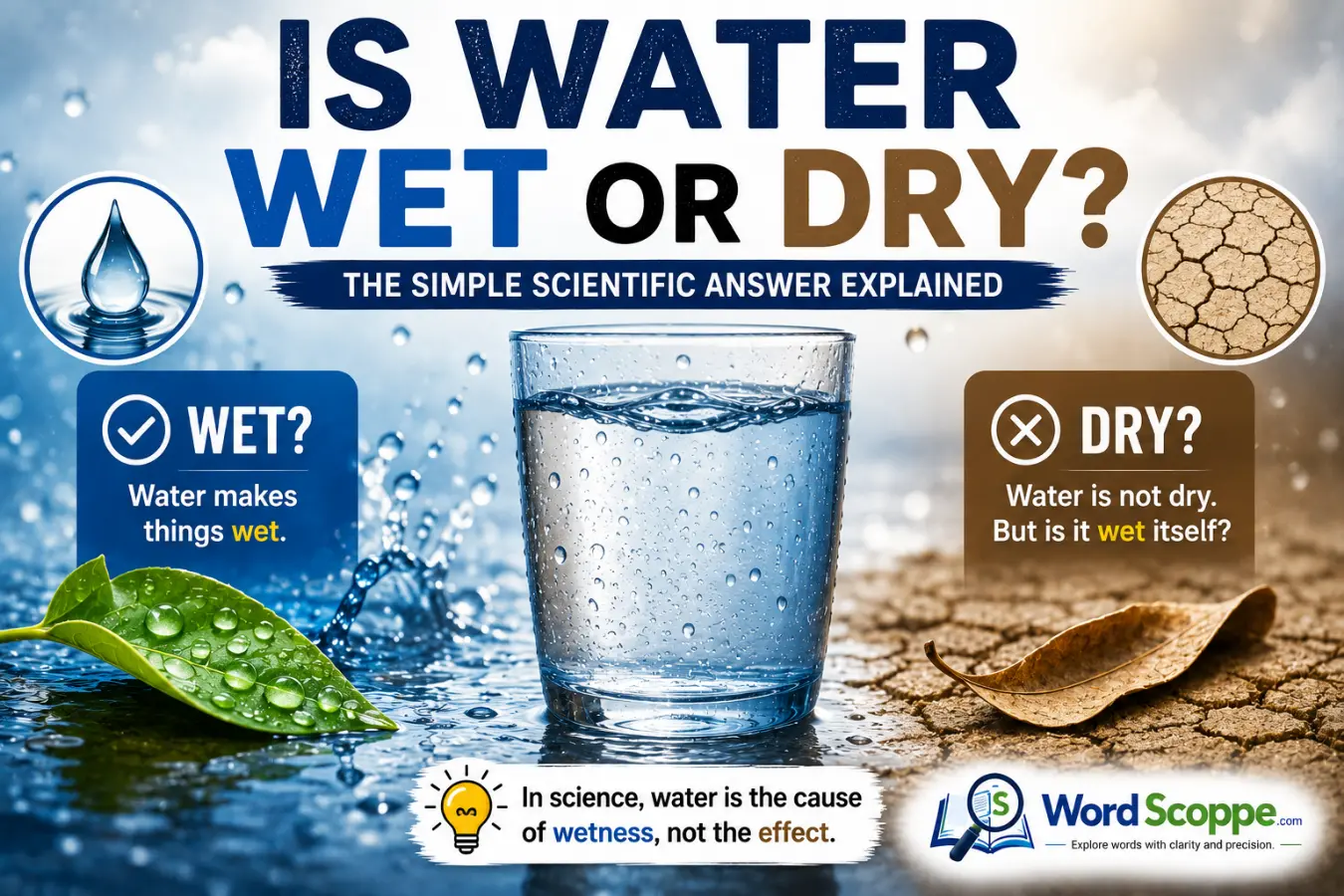
People often debate whether water is wet or dry on the internet. The question seems simple, yet it creates many different opinions. Some people say water is wet because it makes everything around it wet. Others say water cannot be wet because it creates wetness instead of receiving it. Different definitions of the word wet cause this disagreement. Once you understand the definition, you can answer the question more easily. This topic also helps you understand how science and everyday language work together.
The confusion comes from how we define the word wet. Once you understand the scientific meaning, the answer becomes much clearer. This topic is also a great way to learn how everyday words relate to science.
In this guide, you will discover the meaning of wetness, the difference between water and wet objects, real-life examples, common misconceptions, and expert explanations. By the end, you’ll know why this popular question has a surprisingly logical answer.
Quick Summary
- Wetness happens when a liquid covers a solid surface.
- Water makes other objects wet.
- Most scientists define water as the substance that creates wetness.
- Scientists generally describe water as the substance that causes wetness.
- The answer depends on how you define wet.
- In everyday English, people often call water wet.
- Scientists explain that water causes wetness.
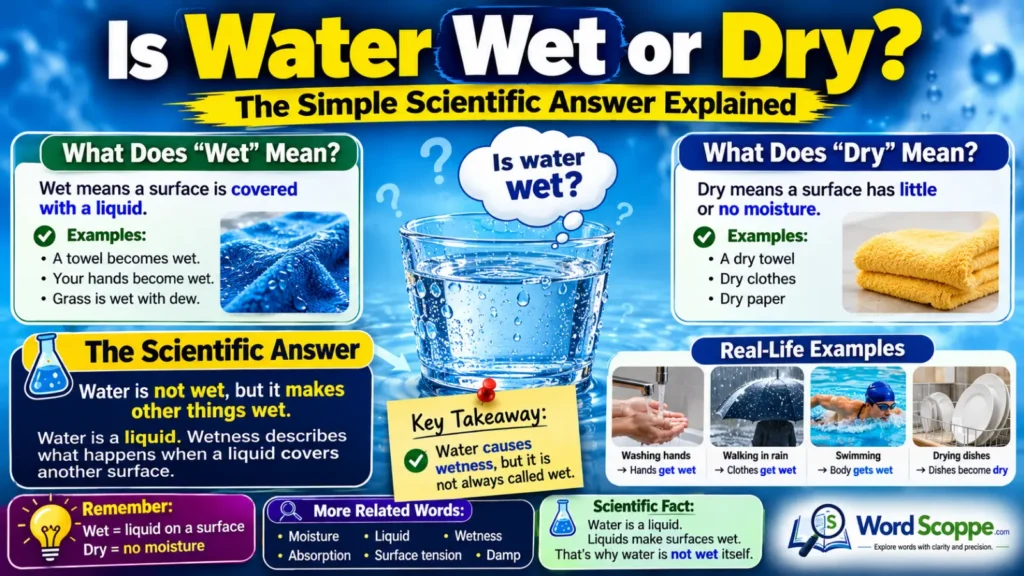
What Does “Wet” Mean?
Start by understanding the meaning of “wet.” Then answer whether water is wet or dry.
A liquid makes a surface wet when it covers or coats the surface.
For example:
- A towel becomes wet after rain.
- Your hands become wet after washing them.
- Morning dew makes the grass wet.
In each example, a liquid covers a solid object.
This definition is important because it explains why the debate exists.
What Does “Dry” Mean?
The opposite of wet is dry.
A dry object has little or no moisture on its surface.
Examples include:
- A dry towel
- Dry clothes
- Dry paper
- Dry wood
Water clearly is not dry because it is a liquid.
Is Water Wet or Dry? The Simple Answer
The scientific answer is:
Water makes other things wet instead of becoming wet itself.
Water is a liquid.
Wetness describes what happens when that liquid sticks to the surface of another object.
For example:
- Water touches your shirt.
- Your shirt becomes wet.
- The water remains a liquid.
However, some scientists point out that water molecules touch one another. Under that definition, they argue that water technically qualifies as wet.
That is why this question often creates debate.
Water Wet vs Dry Comparison
| Feature | Water | Dry Object |
| Contains liquid | ✅ Yes | ❌ No |
| Makes other things wet | ✅ Yes | ❌ No |
| Has moisture | ✅ Yes | ❌ No |
| Is a solid surface | ❌ No | ✅ Usually |
| Scientific description | Liquid | Lacks moisture |
This comparison shows that water and dryness describe completely different states.
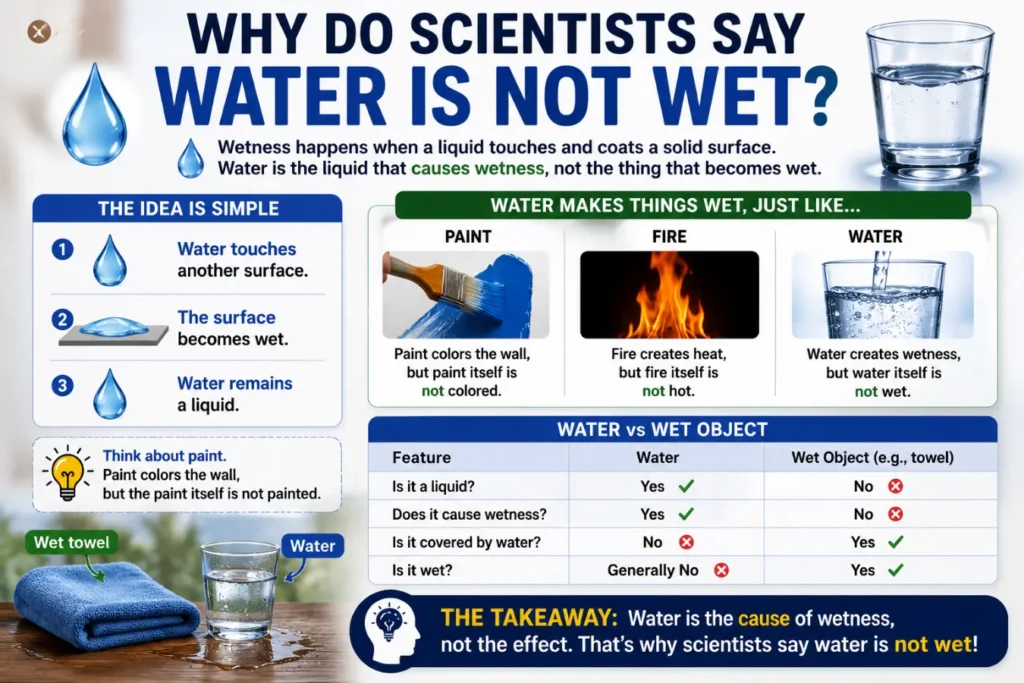
Why Do Scientists Say Water Is Not Wet?
Scientists usually define wetness as a property of a liquid touching another surface.
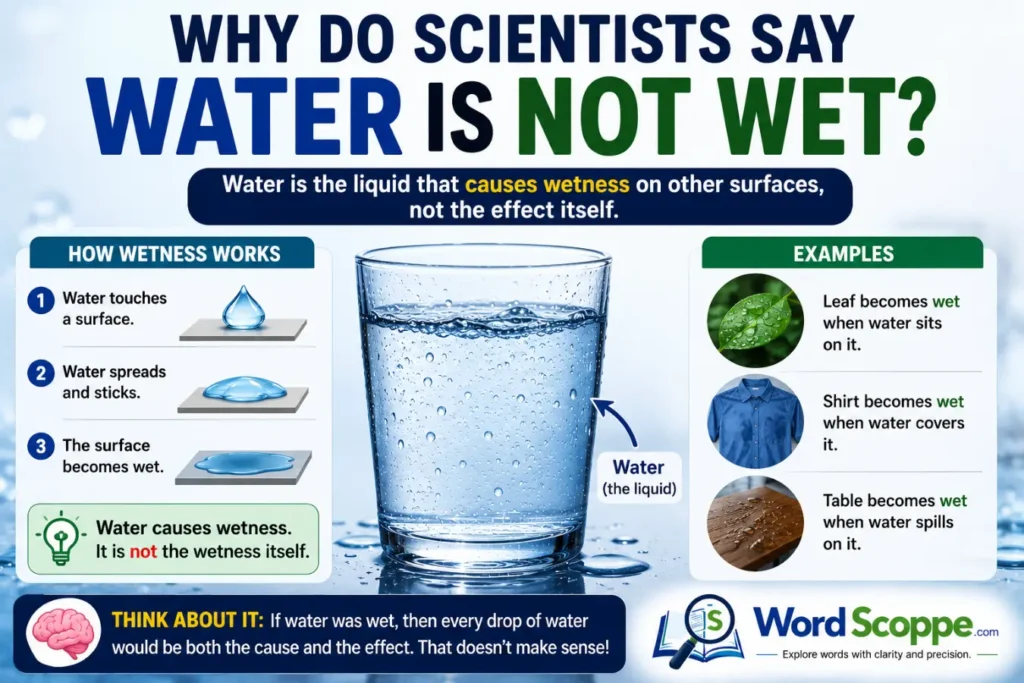
Water itself is the liquid causing the effect.
Think about paint.
Paint colors a wall.
The paint itself is not “painted.”
Similarly:
- Water wets your skin.
- Water wets the floor.
- Water wets a sponge.
The objects become wet because water covers them.
Real-Life Examples
Here are simple situations that explain the idea.
Washing your hands
Water covers your skin.
Your hands become wet.
Walking in the rain
Rainwater lands on your clothes.
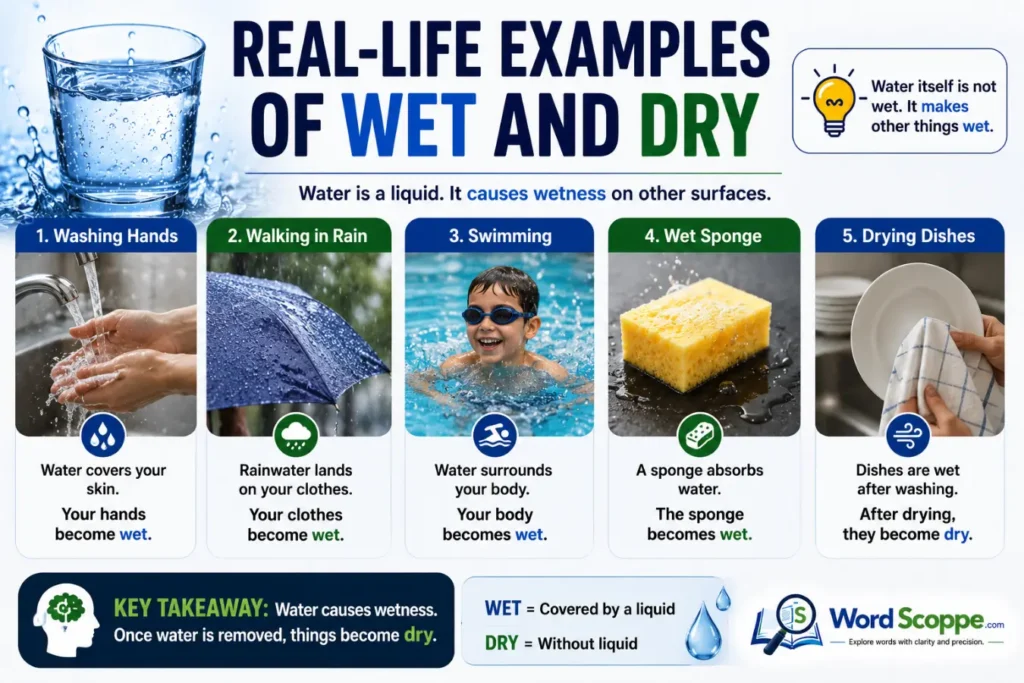
Your clothes become wet.
Swimming
Your body becomes wet while surrounded by water.
Drying dishes
The dishes start wet.
After drying, the water disappears, leaving the dishes dry again.
These examples show that water changes the condition of other objects.
Common Mistakes People Make
Many people misunderstand the meaning of wetness.
Here are common mistakes.
Thinking Wet Means Liquid
Not every liquid is automatically described as wet in scientific terms.
Confusing Everyday Language with Science
People often say “the water is wet” during normal conversations.
That is acceptable in casual speech.
Assuming Dry Is the Opposite of Water
Dryness refers to the absence of moisture, not the opposite of water itself.
Ignoring Definitions
Most debates happen because people use different definitions of the word wet.
Easy Way to Remember the Answer
Use this simple trick.
Think about this sentence:
Water causes wetness.
If something causes an effect, it is not always the effect itself.
For example:
- Fire causes heat.
- Ice causes cold surfaces.
- Water causes wetness.
This memory trick helps you remember the scientific explanation.
How This Question Appears in Everyday Life
The phrase is water wet or dry appears in many places.
People discuss it during:
- School science lessons
- Classroom debates
- Family conversations
- Online quizzes
- Social media posts
- Trivia games
Although it sounds funny, it encourages critical thinking and careful use of language.
Related Words and Similar Terms
When researching this topic, you may also encounter:
- wetness
- moisture
- liquid
- water molecules
- surface tension
- absorption
- hydration
- damp
- soaked
These related terms help explain why objects become wet.
Expert Insights
Science educators often explain that the answer depends on the definition being used. In everyday English, calling water “wet” is common and rarely causes confusion. However, in physics and chemistry, wetness usually describes the interaction between a liquid and another surface. Because of this distinction, many experts conclude that water itself is not wet—it is the substance that makes other materials wet. Understanding the definition is more important than memorizing the answer.
Frequently Asked Questions
Is water wet or dry?
Water is not dry. Most scientists also say water is not wet because it creates wetness on other objects.
Why do people say water is wet?
In everyday conversation, people often use wet to describe anything containing water.
Can water make itself wet?
Some people argue yes because water molecules touch each other. Others disagree based on the scientific definition.
Is ice wet?
Ice feels wet only when its surface melts into liquid water.
Is steam wet?
Steam itself is water vapor. It becomes wet when it condenses into liquid water.
Why is this question so popular?
It combines science, language, and logic, making it a fun debate.
What is the simplest answer?
Water makes things wet, but it is generally not considered wet itself.
Conclusion
The debate over is water wet or dry continues because people use different definitions of the word wet. In everyday speech, many people naturally describe water as wet. However, the scientific explanation is different. Wetness usually refers to a liquid covering the surface of another object. Since water creates that effect, most scientists conclude that water creates wetness instead of becoming wet. Understanding this simple distinction helps explain one of the internet’s most famous questions and shows how precise definitions can change the way we think about ordinary words.

Sophia Hayes is a language researcher and content writer at WordsCoppe.com, specializing in word comparisons, spelling differences, grammar explanations, and vocabulary insights. She is passionate about making English easier to understand through clear, accurate, and practical content. By breaking down complex language topics into simple explanations, Sophia helps readers improve their writing and communication skills. Her goal is to make learning English more accessible, engaging, and confidence-building for learners worldwide.