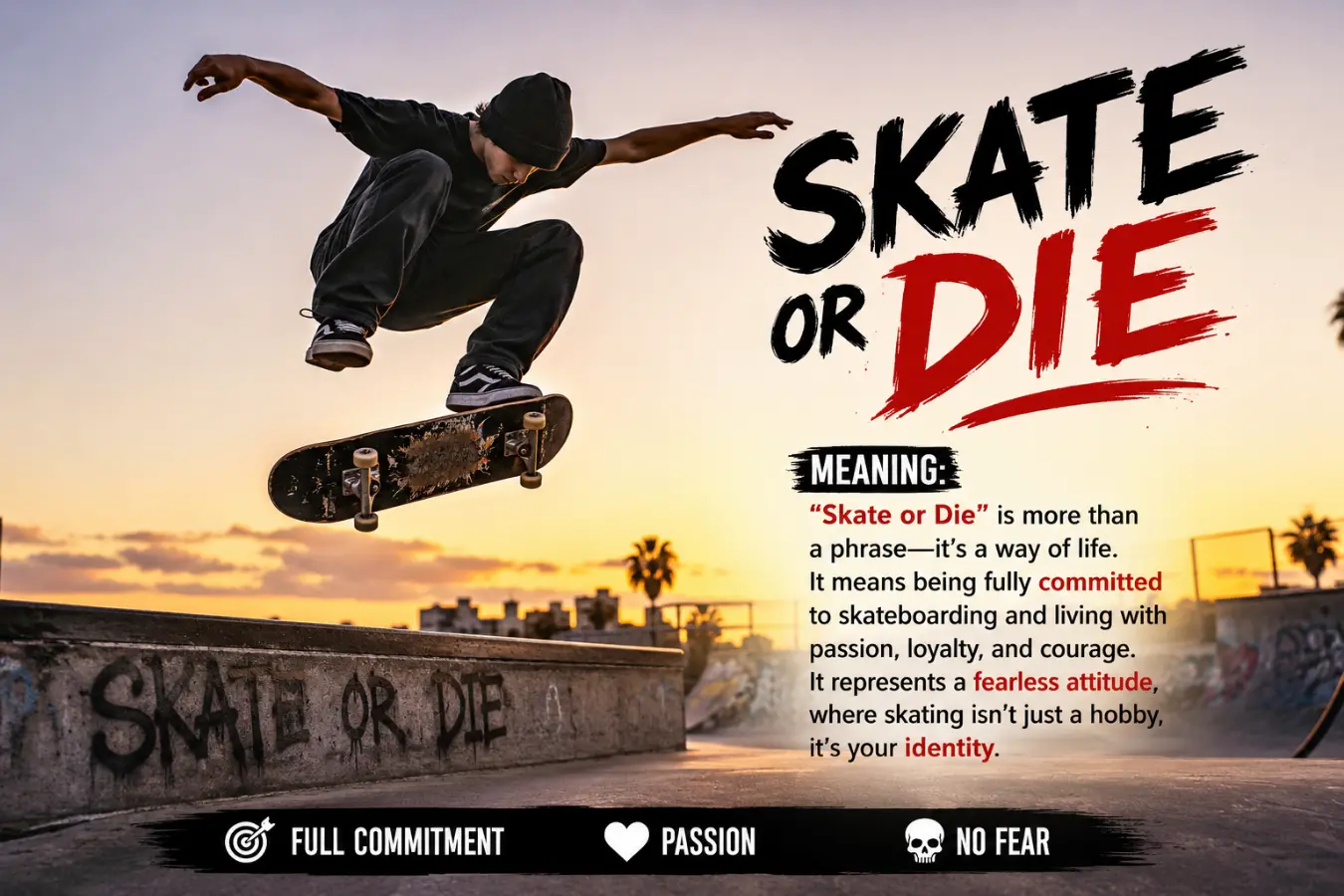
Skate or Die is a popular phrase that represents passion, courage, and complete dedication to skateboarding. Many people see it on T-shirts, skateboards, video games, and social media. However, some wonder if the phrase has a literal meaning or if it is only a slogan. Understanding its true meaning helps you use it correctly and avoid confusion.
The phrase became famous through skateboarding culture and later appeared in entertainment and fashion. Today, it still inspires skaters around the world. In this guide, you will learn what Skate or Die means, where it came from, how people use it, and why it remains an important part of skateboarding culture.
Quick Summary
- Skate or Die is a famous skateboarding slogan.
- It does not mean someone will literally die.
- The phrase shows complete passion and commitment to skateboarding.
- It became popular during the 1980s skateboarding boom.
- Today, it appears in games, clothing, music, and skate culture.
- Most people use it as a motivational expression.
What Does “Skate or Die” Mean?
This is an expression that encourages complete dedication to skateboarding. It suggests that skating is more than a hobby. Instead, it is a way of life.
The phrase is figurative rather than literal. It tells people to follow their passion without giving up.
Simply put, it means:
Be fully committed to skateboarding because it is part of who you are.
Skate or Die: Literal vs Figurative Meaning
Many people misunderstand the phrase because of the word die. In reality, the slogan uses figurative language.
| Meaning | Explanation | Example |
| Literal | Skate or physically die. | This is not the intended meaning. |
| Figurative | Be completely devoted to skateboarding. | This is the correct meaning. |
| Cultural | Live the skateboarding lifestyle with passion. | Common among skaters worldwide. |
| Motivational | Never stop pursuing what you love. | Frequently used in skate communities. |
Where Did “Skate or Die” Come From?
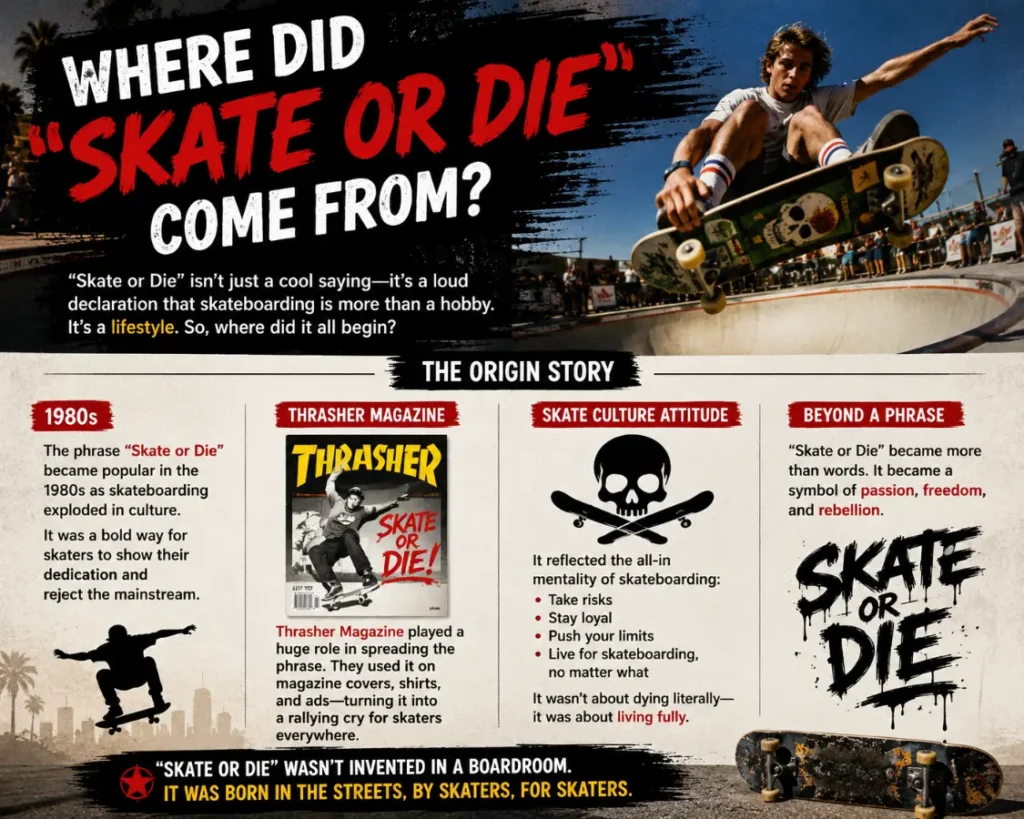
The phrase became well known during the 1980s, when skateboarding rapidly grew in popularity.
It gained even more attention after the release of the classic Skate or Die video game by Electronic Arts in 1987. The game’s title introduced the slogan to many people outside the skateboarding community.
Since then, the phrase has appeared on:
- Skateboard decks
- Clothing brands
- Stickers
- Posters
- Music
- Skate videos
- Social media posts
Over time, Skate or Die became a symbol of fearless skating and dedication.
Why Do Skaters Say “Skate or Die”?
Skaters often use the phrase to express their love for the sport.
It reflects values such as:
- Passion
- Determination
- Freedom
- Creativity
- Courage
- Community
Rather than encouraging dangerous behavior, the slogan celebrates commitment and identity.
For many skateboarders, skating becomes part of everyday life instead of just a weekend activity.
Real-Life Examples of “Skate or Die”
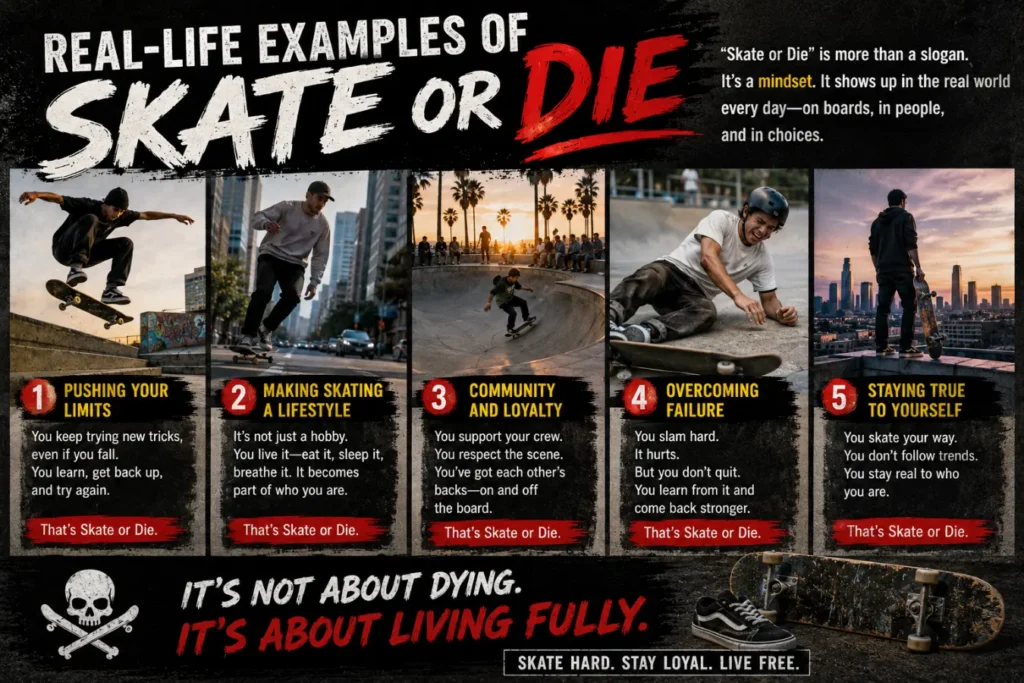
Here are a few examples of how people use the phrase naturally.
Example 1
“I’ve been skating every day this summer. It’s skate or die for me.”
Example 2
“His new skateboard deck has a huge Skate or Die design.”
Example 3
“The skate shop released a Skate or Die clothing collection.”
Example 4
“They ended the competition with everyone shouting, ‘Skate or Die!'”
Common Mistakes When Understanding “Skate or Die”
Many people misunderstand Skate or Die because they focus only on the words. Here are the most common mistakes.
1. Taking the Phrase Literally
This is the biggest mistake. The phrase does not mean someone should risk their life for skateboarding.
2. Using It Outside the Right Context
The slogan belongs mainly to skateboarding culture. Using it in serious or formal situations may confuse readers.
3. Assuming It Encourages Dangerous Behavior
Although the wording sounds intense, the phrase usually celebrates dedication and passion. It does not promote unsafe actions.
4. Confusing It with a Brand or Video Game Only
Some people think Skate or Die refers only to the classic video game. In reality, it is also a well-known slogan in skateboarding culture.
When Should You Use “Skate or Die”?
The phrase works best in casual and skateboarding-related situations.
You can use it when:
- Talking about skateboarding culture.
- Describing a dedicated skateboarder.
- Creating skate-themed content.
- Discussing skate history.
- Writing about skate fashion or events.
- Referring to the famous video game or the slogan itself.
Example
“For many riders, it’s more than a hobby—it’s skate or die.”
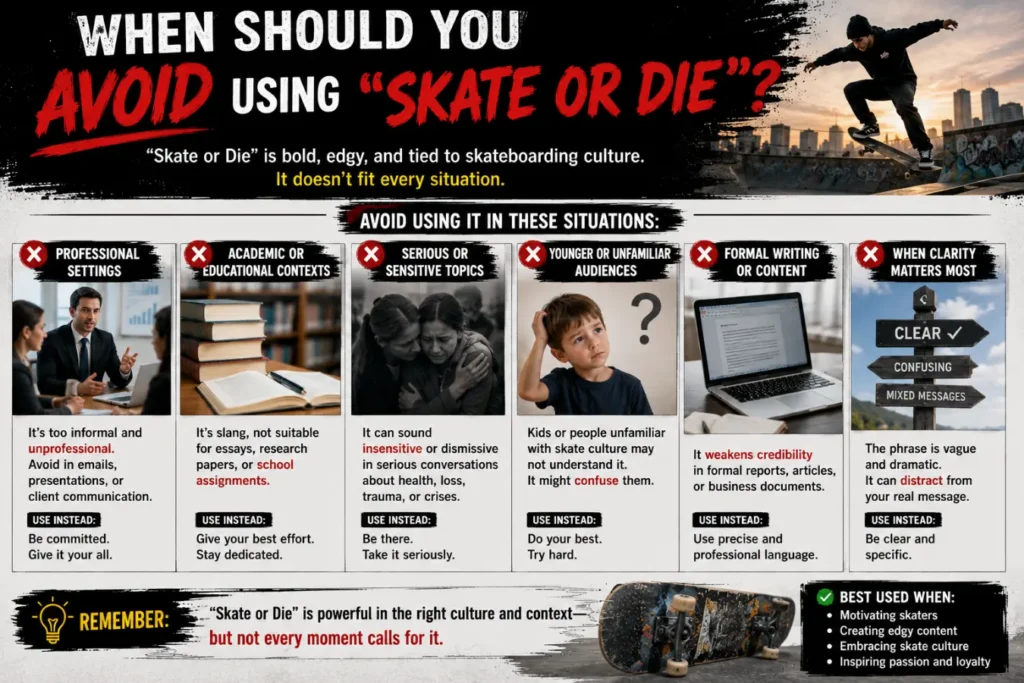
When Should You Avoid Using “Skate or Die”?
Although the phrase is popular, it is not suitable everywhere.
Avoid using it:
- In professional business writing.
- In school assignments unless discussing skateboarding.
- In formal speeches.
- When speaking to people unfamiliar with skate culture.
- In situations where the phrase could be misunderstood as promoting risky behavior.
Choosing the right context helps your message stay clear.
Similar Expressions and Synonyms
While no phrase has exactly the same meaning, these expressions share a similar idea of passion and commitment.
| Expression | Meaning |
| Live to Skate | Skateboarding is your passion. |
| Skate Life | A lifestyle built around skateboarding. |
| Ride or Die | Stay loyal no matter what. |
| All In | Give complete commitment. |
| Go All Out | Put in maximum effort. |
| Dedicated Skater | Someone fully committed to skating. |
Expert Insight
Language often uses strong expressions to create emotion. Skate or Die is a perfect example.
The phrase is memorable because it shows complete dedication instead of giving a literal instruction. That is why it has remained popular for decades. Today, it represents identity, community, and passion more than danger.
When writing or speaking, always consider the audience. In skateboarding communities, the phrase feels natural. Outside those communities, adding a little context can prevent misunderstanding.
Frequently Asked Questions
Is “Skate or Die” meant literally?
No. It is a figurative expression that shows complete dedication to skateboarding.
Where did the phrase “Skate or Die” come from?
It became popular in the 1980s through skateboarding culture and later gained worldwide recognition from the classic video game with the same name.
Is “Skate or Die” still popular today?
Yes. Many skateboarders, clothing brands, artists, and fans still use the phrase.
Is “Skate or Die” offensive?
No. Most people understand it as a motivational slogan within skateboarding culture. However, some readers may misunderstand it without context.
Can I use “Skate or Die” in everyday conversation?
Yes, but it works best when talking about skateboarding or expressing strong passion for the sport.
Why do skateboarders say “Skate or Die”?
They use it to express dedication, freedom, and love for skateboarding.
Is “Skate or Die” only the name of a video game?
No. It is both a famous skateboarding slogan and the title of a classic skateboarding video game.
Conclusion
Skate or Die is much more than a catchy slogan. It represents commitment, freedom, and a deep connection to skateboarding culture. Although the words sound dramatic, the phrase carries a figurative meaning rather than a literal one. For decades, skateboarders have used it to express passion, perseverance, and pride in their lifestyle.
Whether you see Skate or Die on a skateboard, a T-shirt, or in a conversation, understanding its true meaning helps you use it correctly. Remember that the phrase celebrates dedication, not danger. When used in the right context, it remains one of the most recognizable expressions in skateboarding history.

Sophia Hayes is a language researcher and content writer at WordsCoppe.com, specializing in word comparisons, spelling differences, grammar explanations, and vocabulary insights. She is passionate about making English easier to understand through clear, accurate, and practical content. By breaking down complex language topics into simple explanations, Sophia helps readers improve their writing and communication skills. Her goal is to make learning English more accessible, engaging, and confidence-building for learners worldwide.