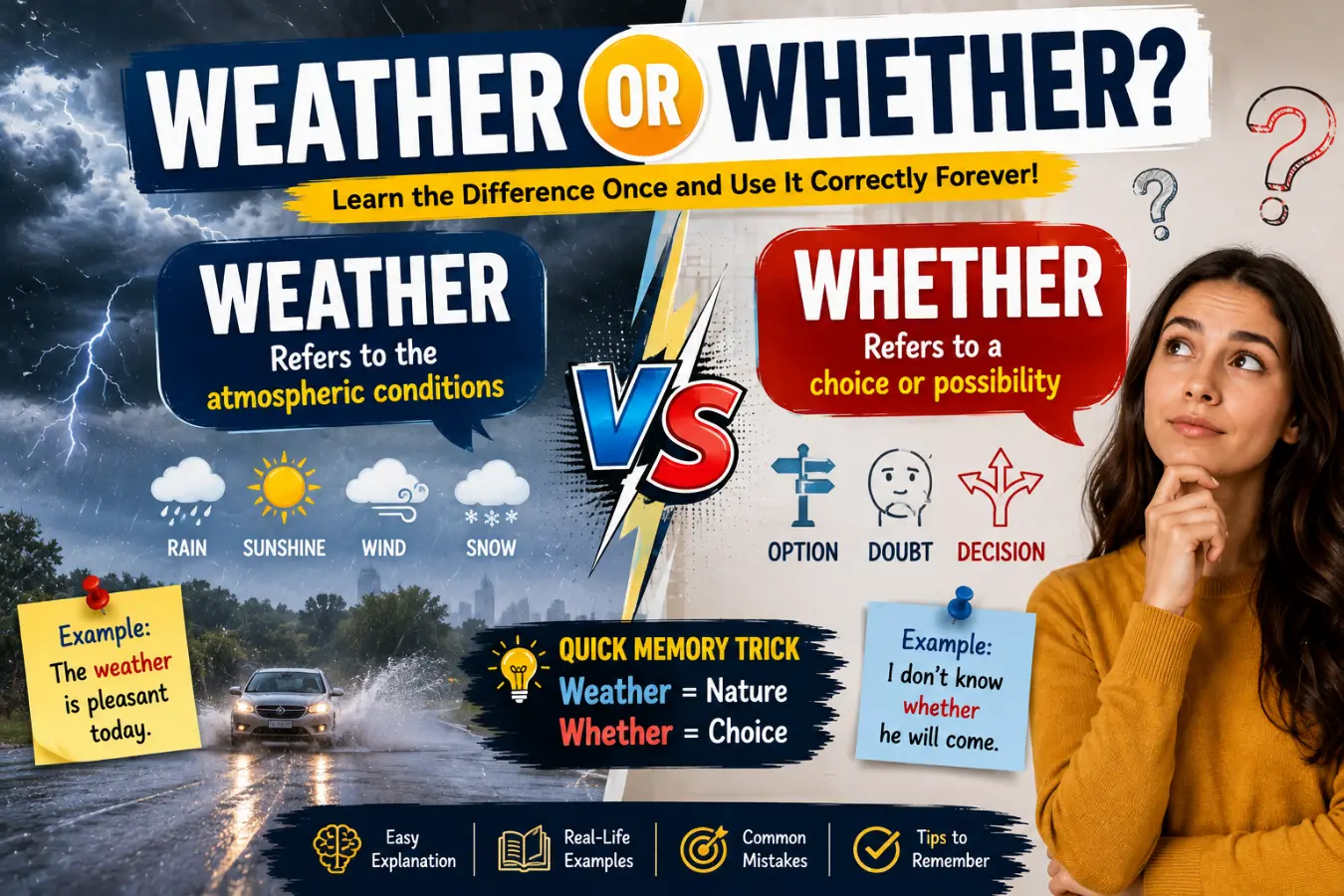
Weather or whether is one of the most common word pairs that confuse English learners. Although these words sound the same, they have completely different meanings. Therefore, using the wrong one can change the meaning of your sentence. The good news is that the difference is easy to learn. Once you understand what each word means, you can use both correctly in speaking and writing. In addition, these words appear in school assignments, emails, conversations, and everyday English. That is why learning them is important.
This guide explains everything in simple language. You will also find examples, grammar tips, comparison tables, common mistakes, and memory tricks. By the end, you will know exactly when to use weather and whether with confidence.
Quick Summary
Featured Snippet Box
- Weather refers to atmospheric conditions like rain, sunshine, wind, or snow.
- Whether introduces a choice, possibility, or condition.
- The words sound the same but have different meanings and spellings.
- Weather is a noun.
- Whether is a conjunction.
- Learning the difference helps you avoid common grammar mistakes.
What Do “Weather” and “Whether” Mean?
Although this sound alike, they serve different purposes.
Weather
It means the condition of the atmosphere.
It includes:
- Rain
- Sunshine
- Wind
- Clouds
- Snow
- Temperature
- Storms
Examples
- The weather is sunny today.
- We checked the weather before leaving.
- Cold weather can affect travel.
Whether
Whether introduces a choice, doubt, or possibility.
It often means if or which option.
Examples
- I don’t know whether she will come.
- Tell me whether you agree.
- We must decide whether to stay or leave.
Remember:
- Weather = climate or atmosphere.
- Whether = choice or uncertainty.
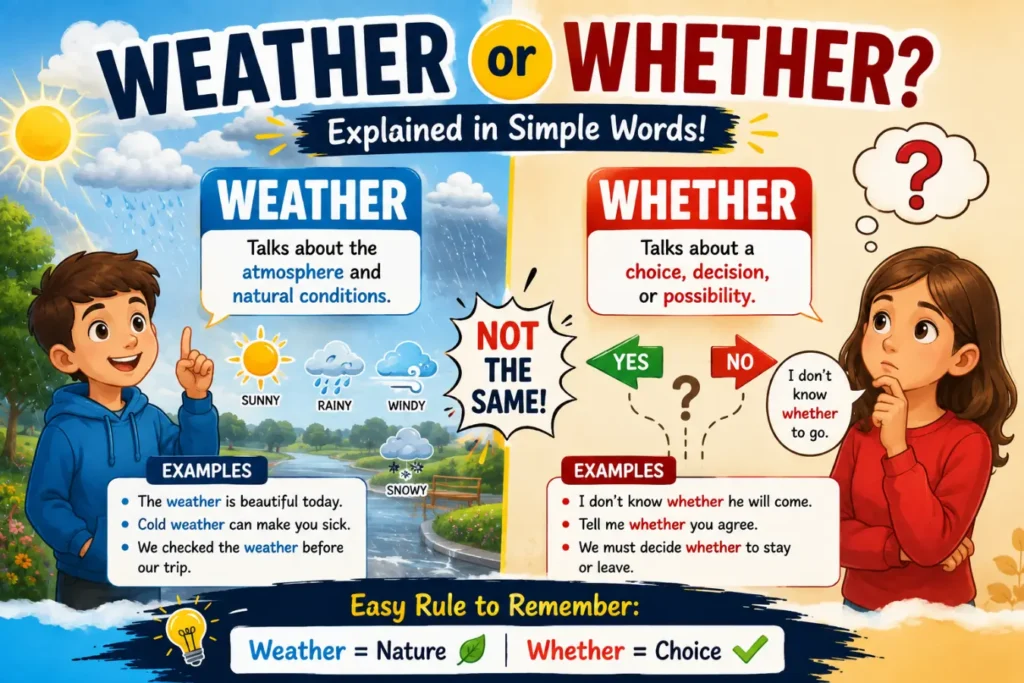
Weather or Whether Explained in Simple Words
A simple way to remember the difference is to think about what you are talking about.
If your sentence talks about rain, sunshine, wind, or temperature, use weather.
If your sentence asks about a choice, decision, or possibility, use whether.
Easy examples
Weather
- The weather looks beautiful today.
- Bad weather delayed our flight.
- Warm weather makes people happy.
Whether
- I don’t know whether he is busy.
- She asked whether I liked coffee.
- We cannot decide whether to travel tomorrow.
The meaning changes completely even though the pronunciation stays the same.
Weather vs. Whether: Comparison Table
| Feature | Weather | Whether |
| Meaning | Atmospheric conditions | Choice or possibility |
| Part of Speech | Noun | Conjunction |
| Talks About | Rain, snow, wind, sunshine | Decisions, uncertainty, alternatives |
| Common Question | How is the weather? | Whether should we go? |
| Example | The weather is cold. | I wonder whether it will rain. |
The Grammar Rule Behind Weather and Whether
Understanding the grammar makes these words much easier to remember.
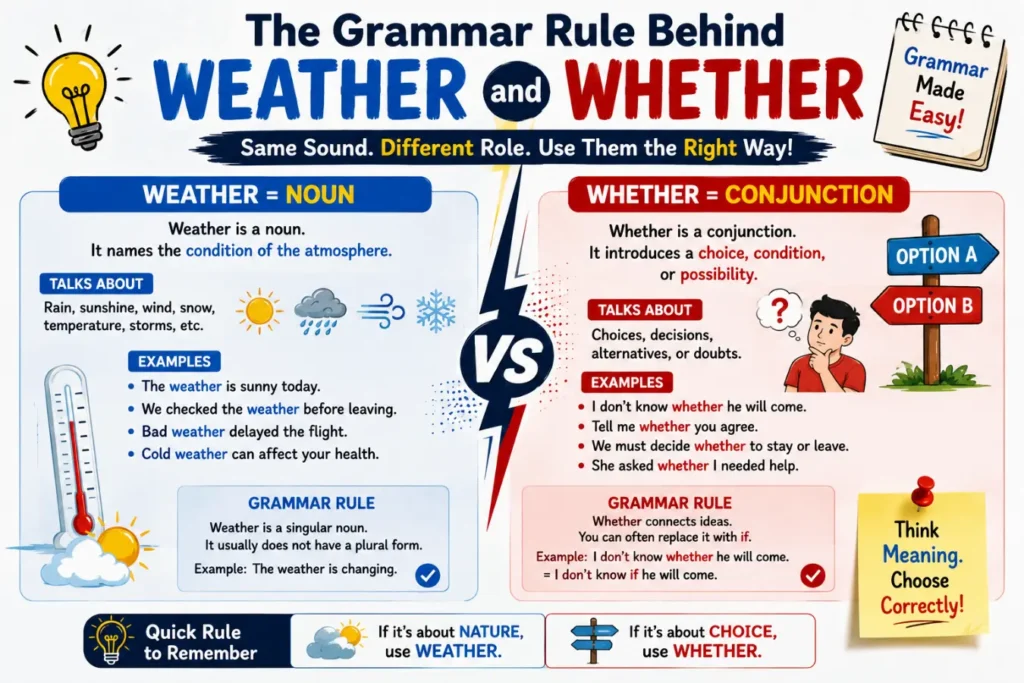
Weather is a noun
A noun names a person, place, thing, or idea.
Weather names atmospheric conditions.
Examples:
- The weather changed quickly.
- Stormy weather caused delays.
- Beautiful weather attracts tourists.
Whether is a conjunction
A conjunction connects ideas or introduces alternatives.
Examples:
- I wonder whether he is ready.
- We discussed whether to buy the house.
- She asked whether I needed help.
Unlike weather, whether never describes sunshine, rain, or temperature.
Real-Life Examples of Weather and Whether
Real situations help you remember the correct word.
Before a trip
You check the forecast.
Correct:
The weather looks perfect for hiking.
Making plans
Your friend asks if you are coming.
Correct:
Please tell me whether you can join us.
At school
The teacher talks about climate.
Correct:
Today’s lesson is about weather patterns.
At work
Your manager needs a decision.
Correct:
Let me know whether you accept the offer.
Watching the news
The reporter discusses storms.
Correct:
The weather will become colder tonight.
Booking tickets
You have not decided yet.
Correct:
We haven’t decided whether to fly or drive.
Common Mistakes People Make
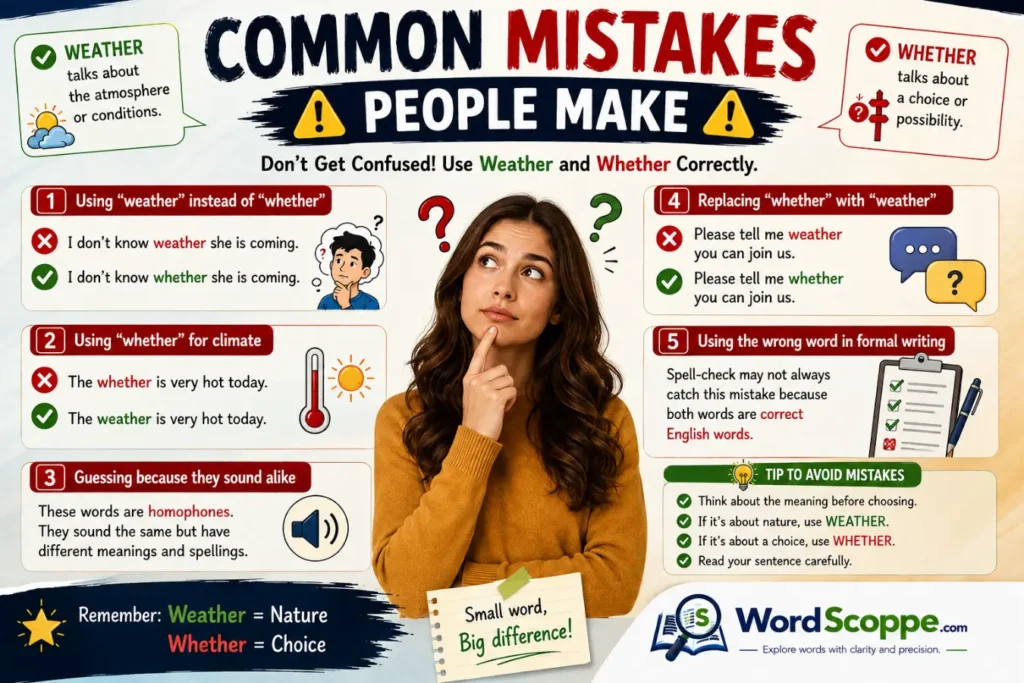
Many learners confuse these words because they sound identical.
Avoid these common errors.
Mistake 1: Using “weather” instead of “whether”
❌ I don’t know weather she is coming.
✅ I don’t know whether she is coming.
Mistake 2: Using “whether” for climate
❌ The whether is very hot today.
✅ The weather is very hot today.
Mistake 3: Guessing because they sound alike
These words are homophones.
They sound the same but have different spellings and meanings.
Always think about the meaning before choosing the word.
Mistake 4: Replacing “whether” with “weather” in formal writing
Spell-check may not always catch this mistake because both words are correct English words.
Therefore, always read your sentence carefully before publishing or sending it.
Tips to Remember the Difference
These memory tricks make the correct choice much easier.
- Weather contains the word weather forecast.
- Think of WEA in weather as wind, earth, and atmosphere.
- Whether usually introduces two possibilities.
- If you can replace the word with if, whether is often correct.
- If the sentence talks about rain or sunshine, choose weather.
- Read example sentences every day.
- Practice using both words in your own writing.
- Check the meaning before checking the spelling.
These simple habits help you use both words correctly and confidently every time.
Using Weather and Whether in Daily Life
You will see weather and whether in many everyday situations. Knowing the difference helps you speak and write more accurately.
Talking about the forecast
Use weather when discussing climate or outdoor conditions.
Example
The weather looks sunny this afternoon.
Making travel plans
Use whether when talking about a decision.
Example
We are deciding whether to travel by train or car.
At school
Teachers use both words in different contexts.
Example
The weather affects farming.
The teacher asked whether everyone understood the lesson.
At work
Both words often appear in emails and meetings.
Example
Please confirm whether you can attend tomorrow.
The bad weather delayed the delivery.
In everyday conversations
People naturally use these words every day.
Example
I wonder whether it will rain because the weather looks cloudy.
Synonyms and Similar Words
These words have related meanings. However, they are not always perfect replacements.
Synonyms for weather
- Climate
- Atmospheric conditions
- Forecast
- Temperature
- Conditions
- Elements
- Environment (in some contexts)
Similar words for whether
- If
- Regardless of whether
- Either…or
- In case (in limited contexts)
- No matter if (informal)
Tip: Replace whether with if only when the sentence still sounds natural and the meaning remains the same.
Weather vs. Whether: Easy Memory Trick
Many learners remember these words with one simple trick.
Remember Weather
Think about the letters WEA.
They remind you of:
- Wind
- Earth
- Atmosphere
If the sentence talks about nature or climate, choose weather.
Remember Whether
Think about choices.
If your sentence asks if, which option, or yes or no, use whether.
Easy rule
- Weather = Nature
- Whether = Choice
This simple trick helps you avoid mistakes in almost every situation.
Expert Insights
Confusing weather and whether is common because they are homophones. They sound the same but have different meanings and spellings.
Language experts recommend learning words by their meaning instead of their pronunciation. This method improves grammar, writing, and reading comprehension.
Reading books, news articles, and English conversations also helps you recognize the correct word naturally.
One simple habit makes a big difference:
Always ask yourself,
“Am I talking about climate or a choice?”
The answer immediately tells you which word to use.
Frequently Asked Questions
What is the difference between weather and whether?
Weather refers to atmospheric conditions. Whether introduces a choice, condition, or possibility.
Is weather a noun?
Yes. Weather is a noun because it names atmospheric conditions.
Is whether a conjunction?
Yes. Whether is a conjunction that connects ideas or introduces alternatives.
Can I replace whether with if?
Sometimes. In many sentences, if works well. However, whether is more accurate when discussing alternatives or choices.
Why do people confuse weather and whether?
They are homophones, so they sound the same even though they have different meanings and spellings.
Which word relates to rain and sunshine?
Always use weather when talking about rain, snow, sunshine, wind, or temperature.
How can I remember the correct spelling?
Remember this simple rule:
- Weather = Climate
- Whether = Choice
Conclusion
The difference between weather or whether becomes easy once you understand what each word does. Weather always refers to the atmosphere, including rain, sunshine, wind, and temperature. Whether, on the other hand, introduces a choice, possibility, or condition. Although these words sound exactly alike, they are never interchangeable because they have different meanings and grammar roles. By practicing real-life examples and using the simple memory tricks in this guide, you can avoid one of the most common English spelling mistakes. The next time you write or speak, pause for a moment and think about the meaning. That small habit will help you choose the correct word with confidence every time.

Sophia Hayes is a language researcher and content writer at WordsCoppe.com, specializing in word comparisons, spelling differences, grammar explanations, and vocabulary insights. She is passionate about making English easier to understand through clear, accurate, and practical content. By breaking down complex language topics into simple explanations, Sophia helps readers improve their writing and communication skills. Her goal is to make learning English more accessible, engaging, and confidence-building for learners worldwide.