Choose or chose is a common grammar question. Many people mix these words because they look almost the same. One is for the present. The other is for the past. Knowing the difference helps you write and speak with confidence.
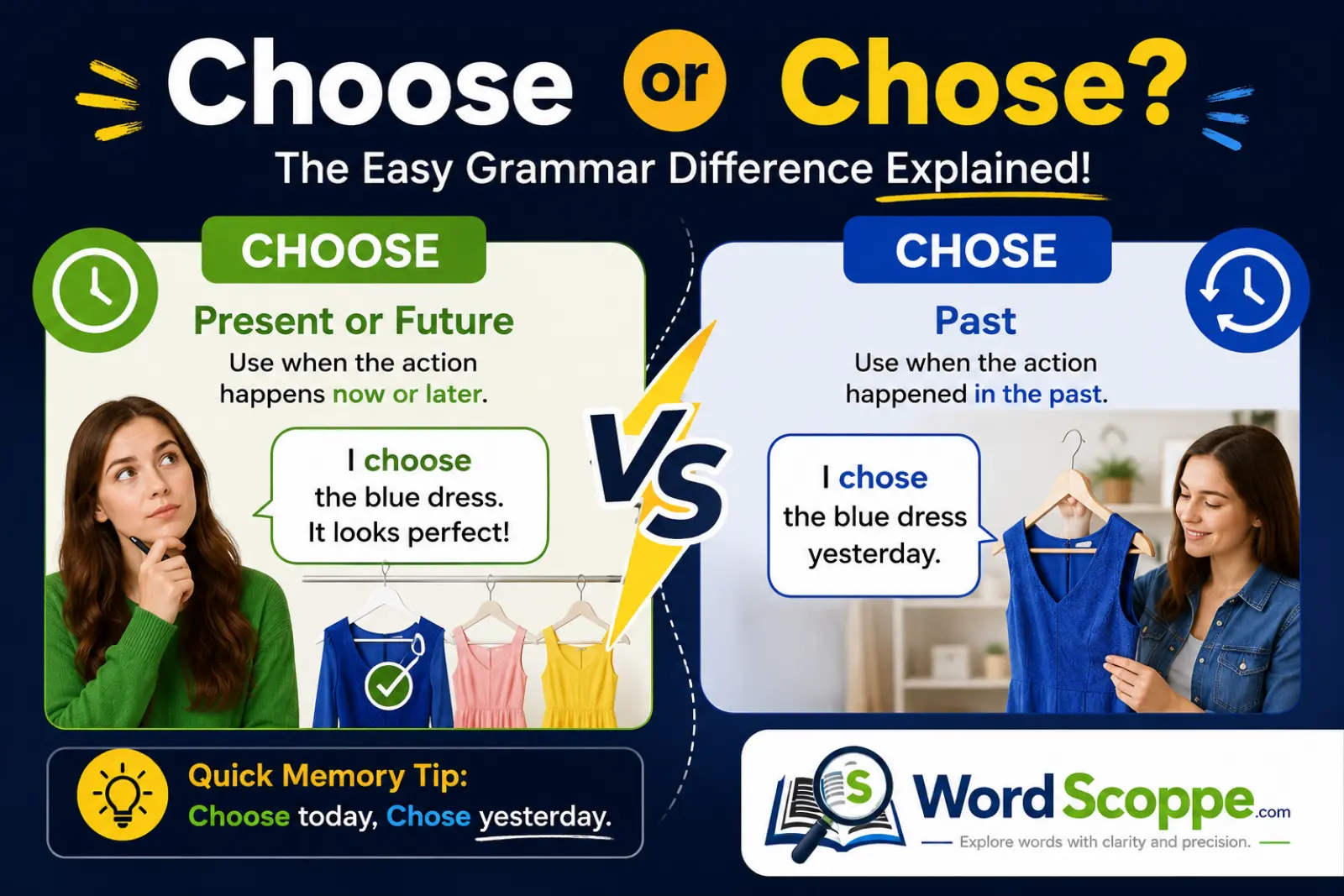
The good news is that the rule is simple. You only need to remember when the action happens. If the choice happens now or later, use choose. If it already happened, use chose.
This guide explains the rule in easy words. You will also see real-life examples, common mistakes, memory tricks, and a comparison table. By the end, you will know which word fits every sentence.
Quick Summary Box
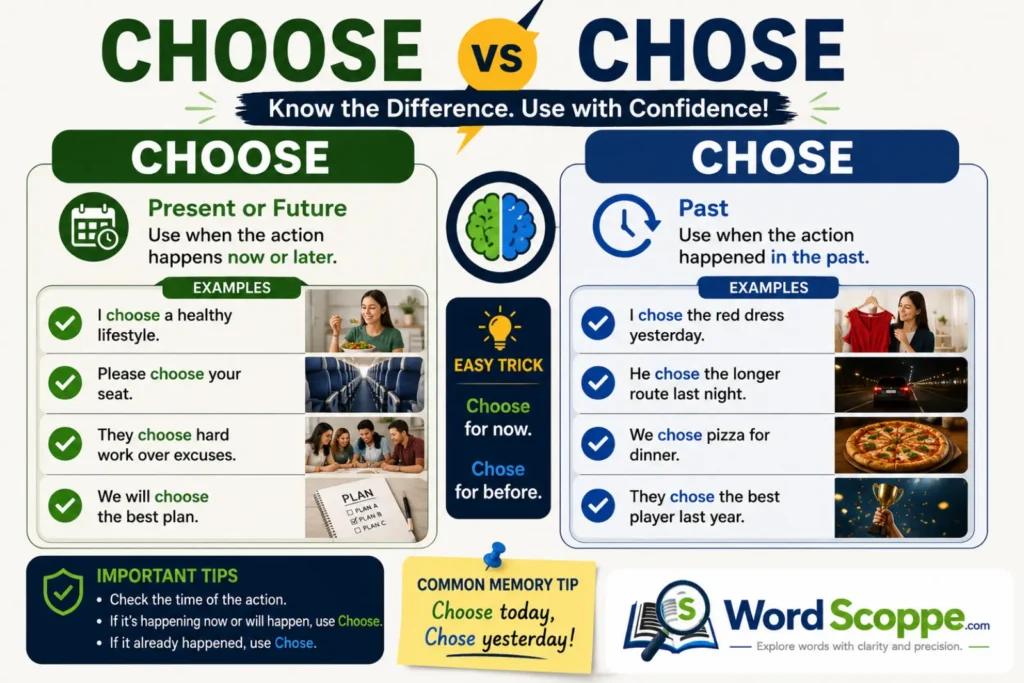
- Choose = present or future action.
- Chose = past action.
- Both words come from the verb choose.
- Use choose when making a choice now.
- Use chose when the choice already happened.
- Think: Choose today. Chose yesterday.
What Does “Choose” Mean?
Choose means to pick one option from two or more choices.
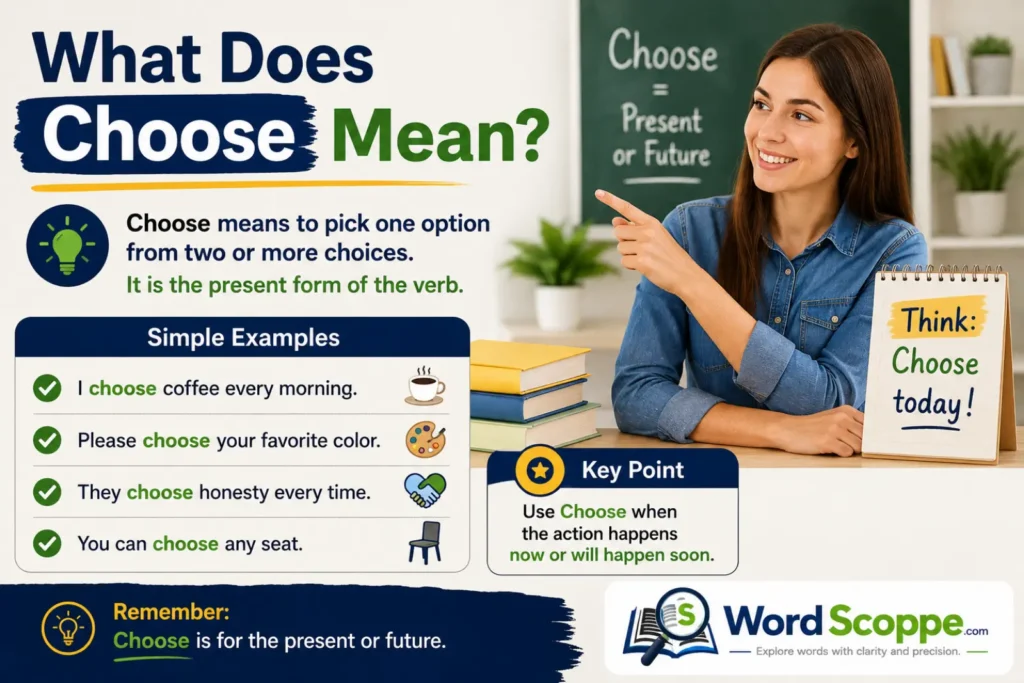
It is the present form of the verb.
Simple examples
- I choose coffee every morning.
- Please choose your favorite color.
- They choose honesty every time.
- You can choose any seat.
In each sentence, the choice happens now or will happen soon.
What Does “Chose” Mean?
Chose is the past tense of choose.
It means someone already made a choice.
Simple examples
- I chose the blue shirt yesterday.
- She chose the faster route.
- We chose pizza for dinner.
- They chose the best player.
The decision is already finished.
Choose vs Chose: Quick Comparison Table
| Feature | Choose | Chose |
| Tense | Present | Past |
| Meaning | Make a choice now | Made a choice before |
| Time | Today or future | Yesterday or earlier |
| Example | I choose tea. | I chose tea yesterday. |
This table gives a quick answer for anyone searching choose or chose.
The Grammar Rule Behind Choose and Chose
The easiest way to remember the rule is to look at time.
- Choose happens now.
- Chose happened before now.
Think of this timeline:
Compare these sentences
- Today I choose to exercise.
- Yesterday I chose to exercise.
The action changes, so the verb changes too.
Real-Life Examples of Choose or Chose
Here are examples you may hear every day.
School
- I choose math today.
- I chose science last year.
At work
- We choose quality over speed.
- Our team chose a new leader.
At home
- She chooses fresh fruit every week.
- She chose apples yesterday.
While shopping
- Choose the size you like.
- I chose the black shoes.
These examples make the difference easy to see.
Common Mistakes People Make
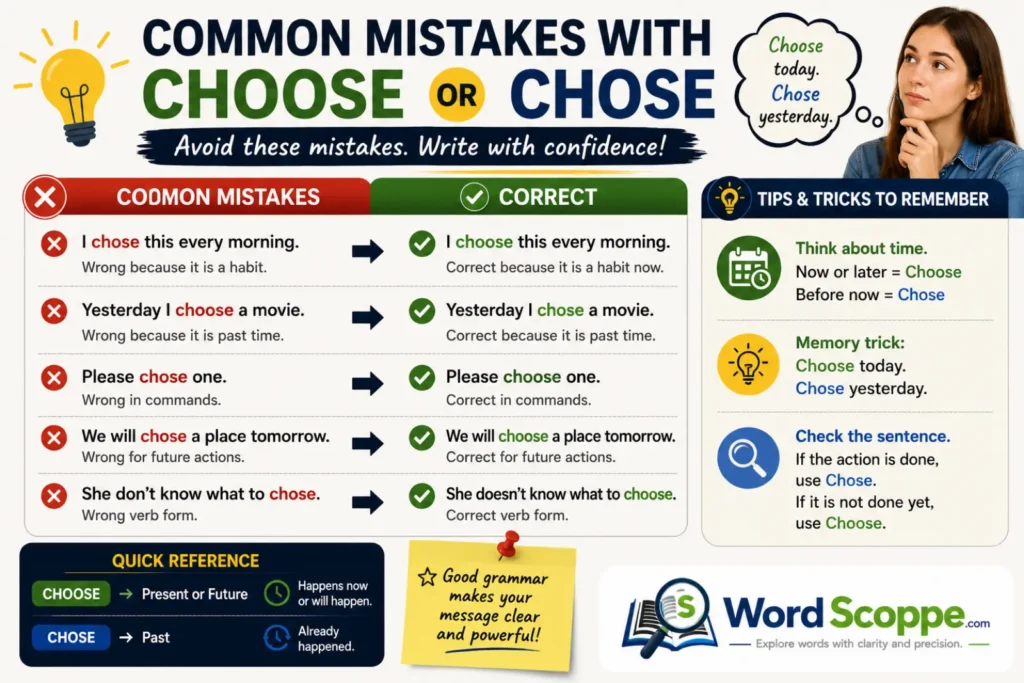
Many learners confuse these words because they sound similar.
Mistake 1
❌ I chose this every morning.
✅ I choose this every morning.
Reason: It is a regular habit.
Mistake 2
❌ Yesterday I choose a movie.
✅ Yesterday I chose a movie.
Reason: The action happened in the past.
Mistake 3
❌ Please chose one.
✅ Please choose one.
Reason: Commands use the base verb.
Avoiding these mistakes makes your writing more natural.
How to Remember the Difference
A simple memory trick works well.
Choose today. Chose yesterday.
Another helpful clue is the letters.
- Choose has extra letters, just like time that is still moving.
- Chose is shorter because the action is already finished.
You can also practice with pairs.
- Choose wisely today.
- Chose wisely yesterday.
Repeating this pattern helps it stick.
Using Choose and Chose in Daily Life
These words appear in many everyday situations.
Ordering food
- I choose soup.
- I chose soup yesterday.
When booking travel
- Choose your destination.
- We chose Paris last month.
When playing games
- Choose your character.
- He chose the strongest player.
The more you notice these examples, the easier the rule becomes.
Synonyms and Related Words
Using similar words improves your vocabulary.
Synonyms for “choose”
- Pick
- Select
- Decide
- Prefer
- Elect
Related word forms
| Word | Meaning |
| Choose | Present tense |
| Chose | Past tense |
| Chosen | Past participle |
| Choosing | Present participle |
Example:
- I have chosen a new phone.
- She is choosing a gift.
These related forms often appear in English writing.
Expert Insight: Why This Small Grammar Rule Matters
Small grammar choices create a big difference.
Using the correct tense makes your message clear. Readers understand your meaning faster. Teachers also notice accurate verb forms. In professional writing, correct grammar builds trust.
Writers who master simple verb changes often make fewer mistakes overall. That is why learning choose or chose is worth the effort.
FAQs About Choose or Chose
Is choose present tense?
Yes. Choose is the present tense form.
Is chose past tense?
Yes. Chose is the past tense of choose.
Which is correct: “I choose” or “I chose”?
Both are correct. Use choose for now. Use chose for the past.
What is the past participle of choose?
The past participle is chosen.
Example: I have chosen a winner.
Is “Please chose one” correct?
No. The correct sentence is “Please choose one.”
Why do people confuse choose and chose?
They look and sound similar. However, they belong to different tenses.
Can I use chose for future events?
No. Future events use choose with words like “will.”
Example: I will choose tomorrow.
Practice Sentences
Try these quick examples.
- I _____ a new backpack yesterday.
- Please _____ your favorite song.
- We _____ honesty every day.
- They _____ the winning team last week.
Answers
- chose
- choose
- choose
- chose
Practicing short sentences helps you remember the rule.
Conclusion
Understanding choose or chose becomes easy once you remember the time of the action. Use choose for present or future decisions. Use chose for decisions already made. This small grammar rule makes your writing clearer and more professional.
Keep practicing with everyday examples. Read sentences aloud and notice when the choice happens. Soon, picking the correct word will feel natural. The next time you wonder about choose or chose, remember one simple line: Choose today. Chose yesterday.

Sophia Hayes is a language researcher and content writer at WordsCoppe.com, specializing in word comparisons, spelling differences, grammar explanations, and vocabulary insights. She is passionate about making English easier to understand through clear, accurate, and practical content. By breaking down complex language topics into simple explanations, Sophia helps readers improve their writing and communication skills. Her goal is to make learning English more accessible, engaging, and confidence-building for learners worldwide.