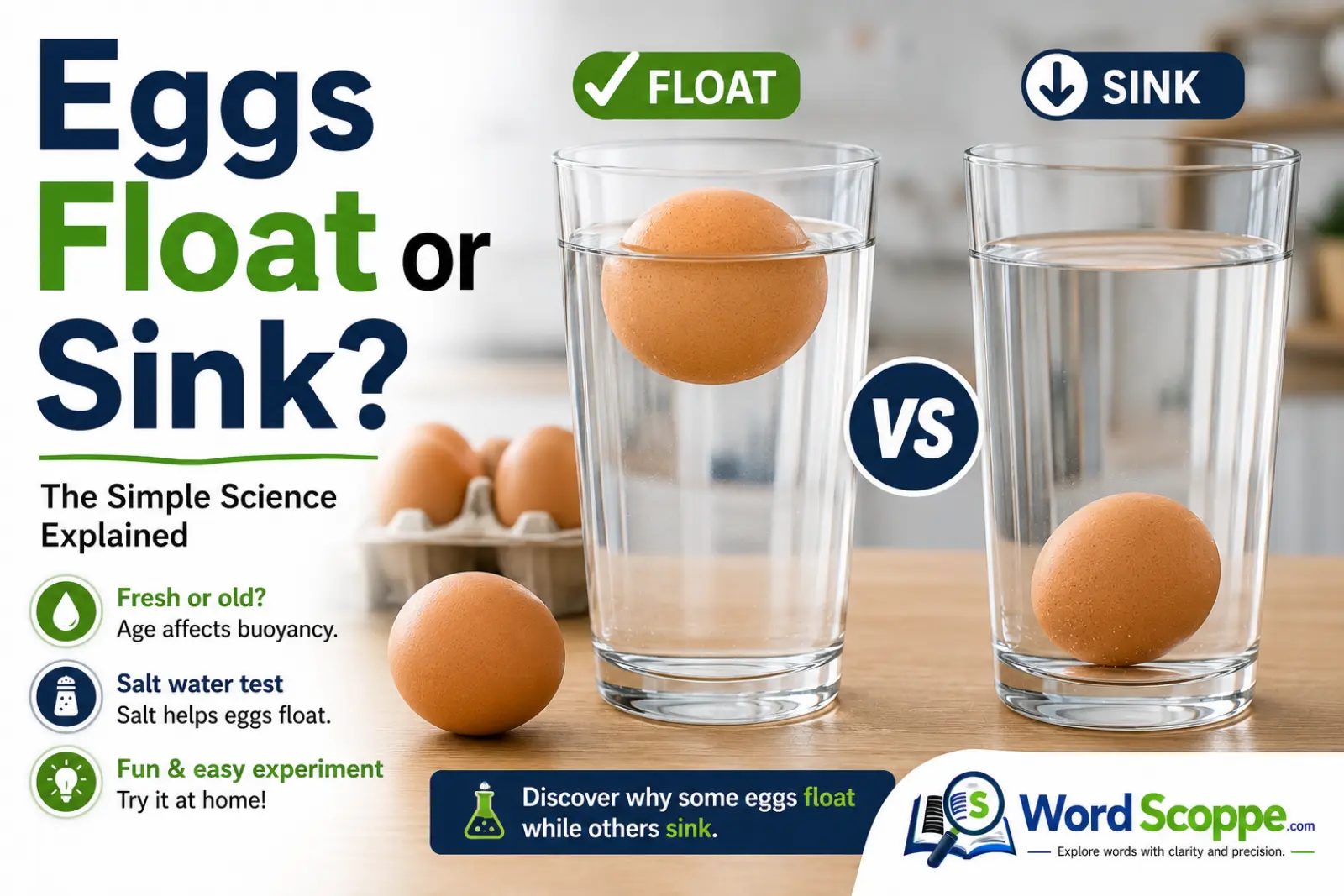
Eggs float or sink is a simple kitchen test that many people use to check egg freshness. The test works because an egg slowly changes as it ages. A fresh egg usually sinks in plain water. An older egg may stand upright or float. This change happens because air enters the egg through tiny pores in its shell. Over time, the air pocket inside becomes larger. That extra air changes the egg’s overall density. As a result, an older egg may float more easily. However, the water test does not prove that an egg is safe to eat. It mainly gives you a clue about its age. In this guide, you will learn why eggs sink or float, how to perform the test, what different results mean, and when you should throw an egg away.
Quick Summary
- Fresh eggs usually sink and lie flat in water.
- Older eggs may stand upright at the bottom.
- Very old eggs may float.
- Eggs develop a larger air pocket as they age.
- The larger air pocket makes an egg less dense.
- Salt water can make eggs float more easily.
- The float test shows age, not guaranteed food safety.
- Always check an egg for cracks, unusual smells, or strange appearance.
- When unsure about an egg, it is safer to discard it.
Why Do Eggs Float or Sink?
The main reason involves density.
An egg contains several parts, including the white, yolk, and air pocket.
Fresh eggs have a relatively small air pocket.
Therefore, the whole egg remains denser than water.
When you place it in water, gravity pulls it downward.
As an egg gets older, water slowly leaves through tiny shell pores.
Air enters the egg to replace some of that lost moisture.
This process increases the size of the air pocket.
Consequently, the egg becomes less dense.
Once its overall density becomes low enough, the egg can float.
That explains the basic science behind the water test.
What Happens to a Fresh Egg?
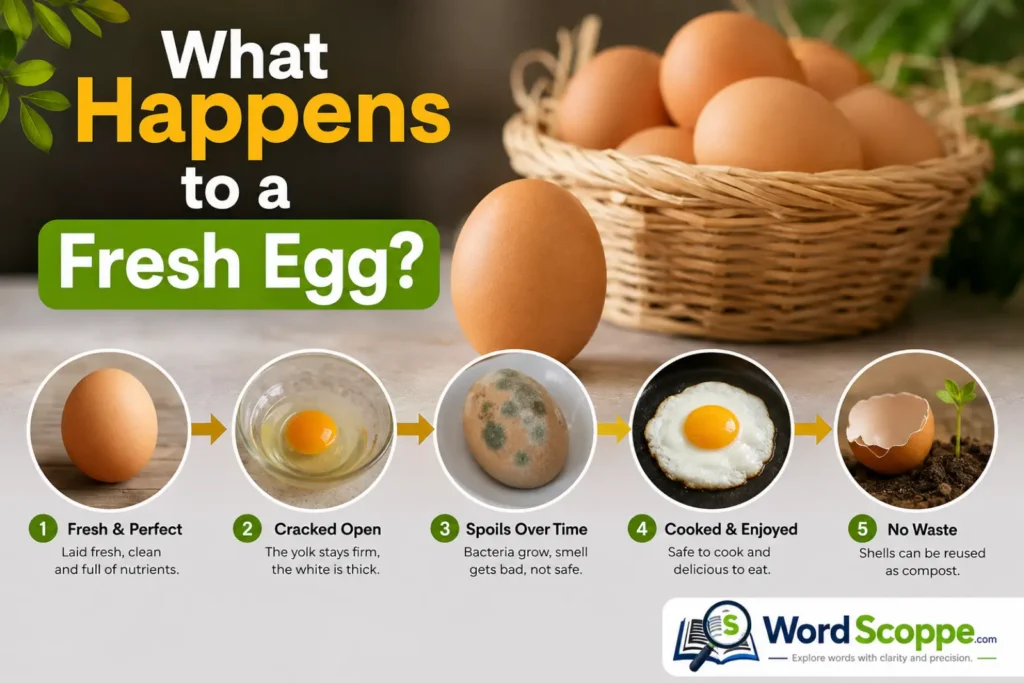
A fresh egg usually sinks quickly.
It often rests horizontally at the bottom of a bowl.
This happens because the egg remains denser than water.
For example, place a recently purchased egg into a glass of plain water.
You will usually see it drop to the bottom.
The egg may also lie on its side.
This result generally suggests that the egg is relatively fresh.
However, freshness and safety are not exactly the same thing.
Proper storage and handling also affect food safety.
Therefore, do not rely on the water test alone.
What Happens to an Older Egg?
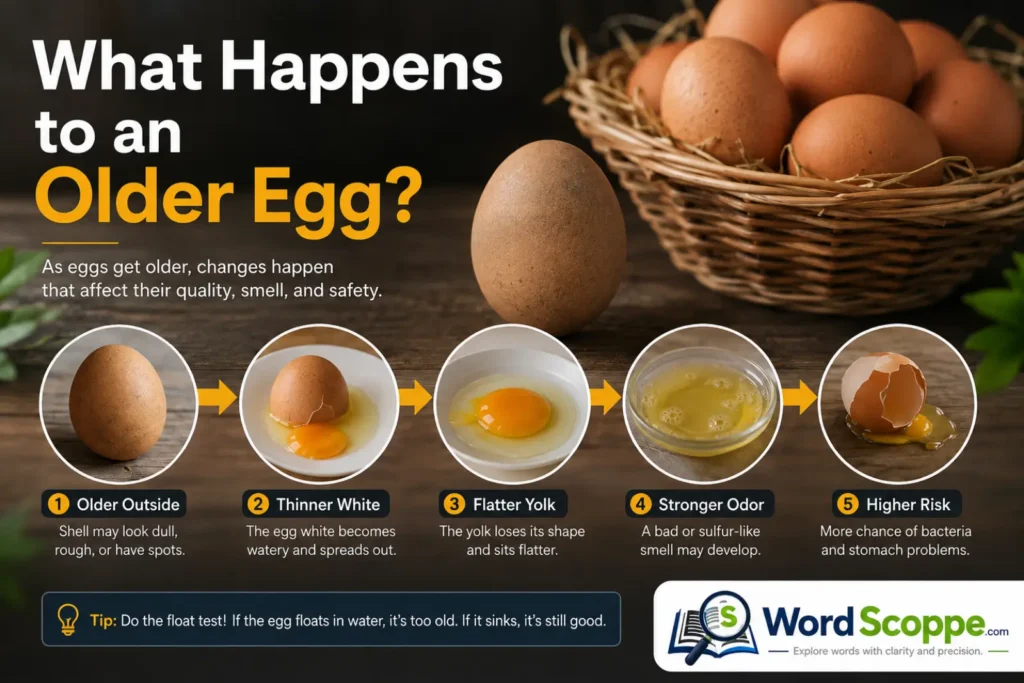
An older egg behaves differently.
Its internal air pocket becomes larger over time.
That extra air reduces the egg’s average density.
As a result, the egg may stand upright at the bottom.
It may also tilt upward slightly.
This usually means the egg is older than one that lies flat.
An older egg can still have useful cooking applications.
For example, older eggs can work well for hard-boiling.
Their larger air pockets can sometimes make peeling easier.
Still, you should inspect the egg before using it.
What Does It Mean When an Egg Floats?
A floating egg is usually older.
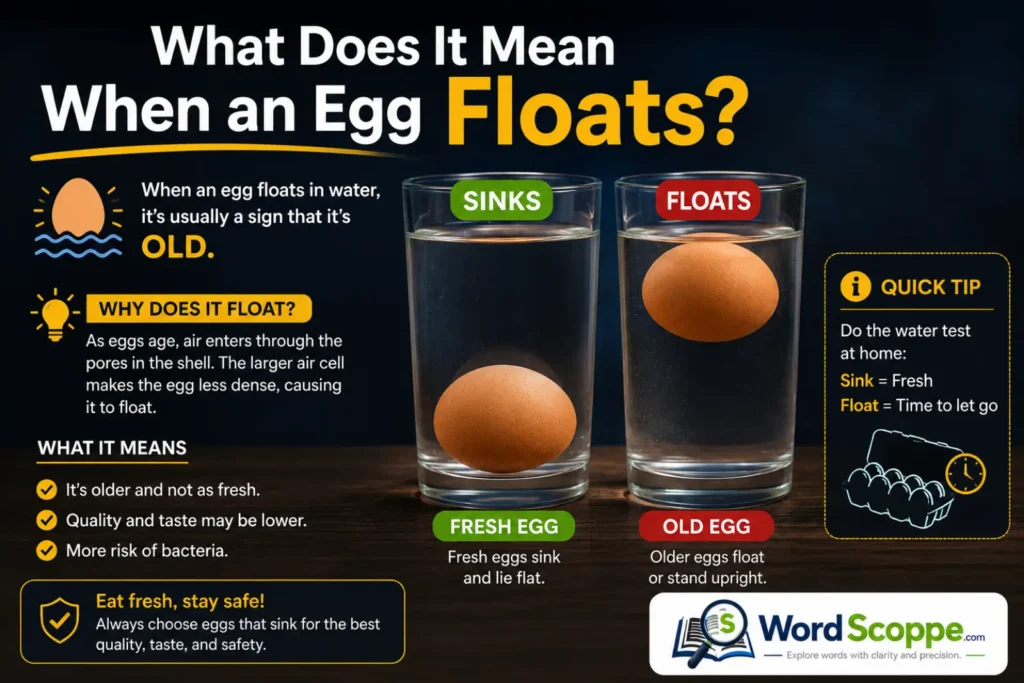
Its air pocket has grown enough to make the egg less dense than water.
However, floating does not automatically mean the egg has gone bad.
The test mainly tells you about the egg’s age.
Storage conditions also matter.
An egg stored properly can remain usable beyond the point when it starts floating.
On the other hand, an egg that smells bad should not be eaten.
Therefore, use several checks before deciding what to do.
The safest approach combines proper storage knowledge with visual and smell checks.
Eggs Float or Sink: Simple Comparison Table
| Water Test Result | What It Usually Means | General Interpretation |
| Sinks and lies flat | Very fresh or relatively fresh | Usually the freshest result |
| Sinks but stands upright | Older egg | Use additional freshness checks |
| Floats | Quite old | Inspect carefully before use |
| Floats high above water | Very large air pocket | Strong sign of age |
These results provide a useful freshness guide.
However, they do not replace food safety practices.
An egg can sink and still contain harmful bacteria.
Likewise, a floating egg may not automatically be unsafe.
That distinction is important.
How to Perform the Egg Water Test
The test requires only a few simple items.
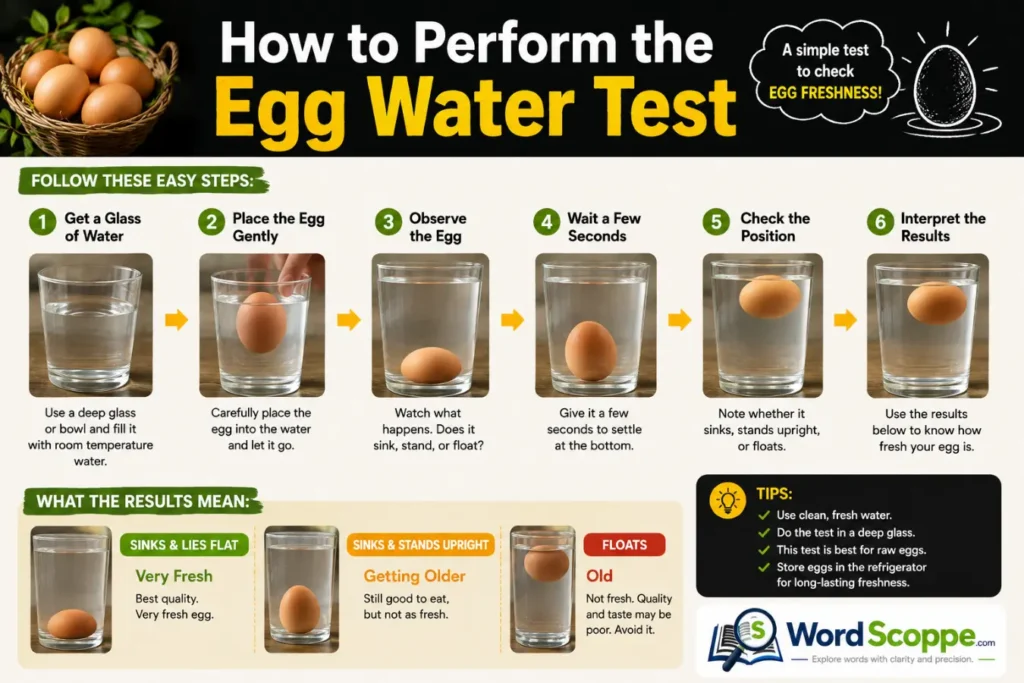
You need:
- A clear bowl or glass
- Cool or room-temperature water
- The egg you want to test
Follow these steps:
Step 1: Fill the Container
Fill a bowl with enough water to cover the egg completely.
Step 2: Add the Egg
Gently place the egg into the water.
Avoid dropping it because cracked shells can create problems.
Step 3: Observe Its Position
Watch whether the egg sinks, stands upright, or floats.
Step 4: Check the Egg Separately
If you plan to use it, crack it into a separate bowl.
Then check its smell and appearance.
This final step provides another useful check.
Why Does the Air Pocket Get Bigger?
Eggshells may look solid, but they contain thousands of tiny pores.
These pores allow gases and moisture to move through the shell.
After an egg is laid, moisture gradually escapes.
Air enters and collects inside.
The air pocket becomes larger as the egg ages.
This change affects the egg’s density.
The process explains why older eggs behave differently in water.
It also explains why the float test can provide a rough estimate of freshness.
However, the exact rate of change depends on storage conditions.
Temperature and humidity can influence how quickly an egg changes.
Does a Floating Egg Mean It Is Bad?
Not necessarily.
A floating egg is usually older, but age alone does not prove spoilage.
You should examine the egg after cracking it.
Look for unusual colors or textures.
Also, smell the egg carefully.
A strong unpleasant odor is a clear warning sign.
If the egg looks unusual or smells rotten, discard it.
Never taste a questionable raw egg to test whether it remains good.
Also, avoid using eggs with cracked shells unless you know they remained safely handled.
When food safety seems uncertain, throwing the egg away is the safer choice.
Does Salt Water Change the Result?
Yes.
Salt changes the density of water.
Salt water becomes denser than plain water.
That makes it easier for objects to float.
Therefore, an egg may float in salty water even when it would sink in fresh water.
For a basic freshness test, use plain water.
This keeps the test easier to interpret.
The same principle explains why people can float more easily in saltwater than freshwater.
Density determines whether an object sinks or floats.
Eggs Float or Sink in Different Liquids
The result depends on the liquid.
An egg may sink in fresh water.
However, it may float in salt water.
Other liquids can produce different results too.
The key factor is the liquid’s density compared with the egg.
If the egg has greater density, it sinks.
If the liquid has greater density, the egg can float.
This is a simple example of buoyancy.
The same science applies to many objects around us.
Common Mistakes When Testing Eggs
People often misunderstand the float test.
Mistake 1: Assuming Every Floating Egg Is Rotten
Floating usually indicates age.
It does not automatically prove spoilage.
Mistake 2: Assuming Every Sinking Egg Is Safe
A fresh egg can still carry harmful bacteria.
The water test cannot detect all food safety risks.
Mistake 3: Using Salt Water
Salt changes water density.
Therefore, use plain water for a simpler test.
Mistake 4: Ignoring the Smell
A bad smell can provide an important warning.
Always inspect the egg after cracking it.
Mistake 5: Washing Eggs Before Storage
Washing can affect the egg’s natural protective surface.
Follow the storage guidance used in your country.
How to Check an Egg Without the Water Test
You can use several other clues.
First, check the shell.
Avoid eggs with cracks, leaks, or unusual contamination.
Next, crack the egg into a separate clean bowl.
Look at the egg white and yolk.
Fresh eggs often have a firmer white and a yolk that holds its shape well.
Older eggs may have thinner whites.
However, appearance alone cannot guarantee safety.
Always consider the egg’s storage history.
Also, follow the use-by or best-before guidance on the package.
Expert Insight: What the Float Test Really Tells You
The float test works because aging changes an egg’s internal air space.
That change affects density.
So, the test has a real scientific basis.
However, it should not become your only safety check.
Food safety depends on more than age.
Storage temperature, handling, shell condition, and cooking all matter.
Therefore, think of the water test as a freshness clue.
Do not treat it as a laboratory safety test.
This distinction helps you use the method correctly.
Frequently Asked Questions
Do fresh eggs sink or float?
Fresh eggs usually sink and lie flat at the bottom of plain water.
Why do old eggs float?
Older eggs develop larger air pockets. This lowers their overall density and can make them float.
Can you eat an egg that floats?
A floating egg is usually older, but floating alone does not prove spoilage. Check its smell and appearance.
How long does it take for an egg to float?
There is no exact time. Storage conditions can change how quickly an egg develops a larger air pocket.
Does salt water make eggs float?
Yes. Salt increases water density, which can make an egg float more easily.
Is the egg float test accurate?
It can help estimate freshness, but it cannot confirm food safety.
What should a fresh egg look like in water?
A fresh egg usually sinks and rests horizontally on the bottom.
Should I throw away a floating egg?
Not automatically. Check the egg carefully and consider its storage history. Discard it if it smells bad or looks abnormal.
Conclusion
The eggs float or sink test offers a simple way to estimate an egg’s age. Fresh eggs usually sink and lie flat. Older eggs may stand upright or eventually float. This change happens because moisture leaves through the shell. Air then enters and expands the egg’s internal air pocket. That larger pocket lowers the egg’s overall density. Still, the water test cannot confirm whether an egg is safe to eat. Always check the shell, smell, appearance, storage history, and package guidance. Also, remember that salt water can change the result. The best takeaway is simple: sinking usually means fresher, while floating usually means older. Use the test as a helpful clue, not as the only food safety check.

Sophia Hayes is a language researcher and content writer at WordsCoppe.com, specializing in word comparisons, spelling differences, grammar explanations, and vocabulary insights. She is passionate about making English easier to understand through clear, accurate, and practical content. By breaking down complex language topics into simple explanations, Sophia helps readers improve their writing and communication skills. Her goal is to make learning English more accessible, engaging, and confidence-building for learners worldwide.