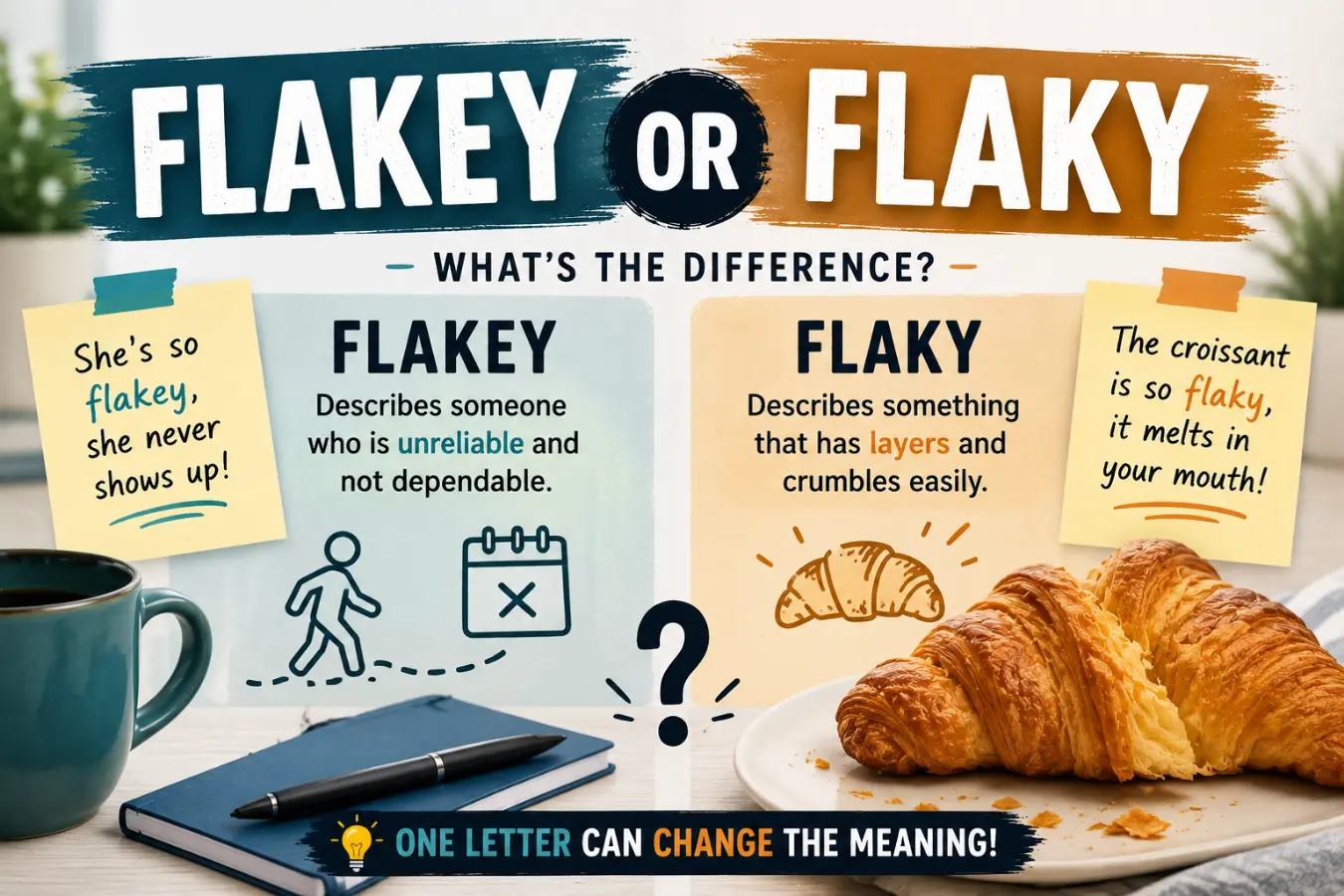
Flakey or flaky is a common spelling question in English. Many people wonder which version is correct. The answer is simple, but the confusion happens often. You may see both spellings online, in books, or on social media. However, one spelling is much more common in modern English. Knowing the correct form helps you write clearly and confidently. It also improves your grammar in school, work, and daily conversations. In this guide, you will learn the difference between flakey or flaky, when to use each spelling, real-life examples, common mistakes, and easy tips to remember the correct word.
Quick Summary Box
- Flaky is the standard and preferred spelling.
- Flakey is an accepted variant but is much less common.
- Both words have the same meaning.
- They can describe something that breaks into flakes.
- They can also describe a person who is unreliable.
- Use flaky in most formal and everyday writing.
Featured Snippet: Flakey or Flaky
Flaky is the correct and most widely accepted spelling in modern English. Flakey is an alternative spelling, but it appears far less often. Whether you describe pastry, skin, paint, or an unreliable person, flaky is usually the better choice for professional and everyday writing.
What Do Flaky and Flakey Mean?
Both flaky and flakey share the same meaning.
The word can describe something that easily breaks into small, thin pieces.
It can also describe someone who often changes plans or does not keep promises.
For example:
- Flaky skin
- Flaky pie crust
- A flaky friend
- Flaky paint
The meaning stays the same regardless of the spelling.
Is Flaky or Flakey the Correct Spelling?
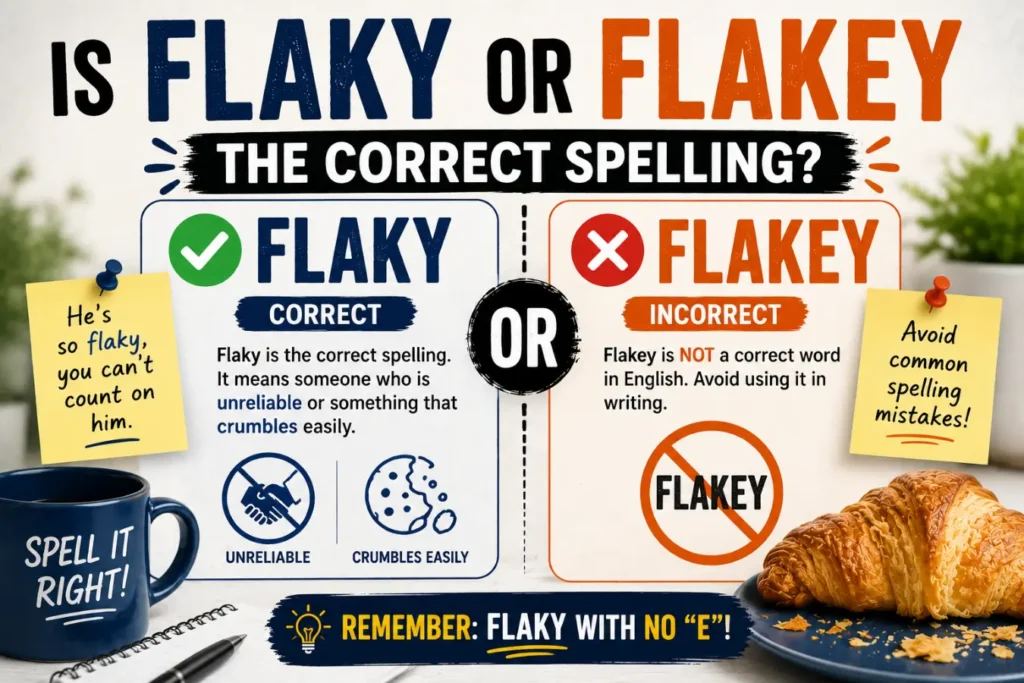
The simple answer is flaky.
Most dictionaries list flaky as the standard spelling.
Although flakey appears in some dictionaries, it is considered a less common variant.
If you write for school, work, business, or SEO content, choose flaky.
It looks more natural to most readers.
Flakey vs Flaky: Comparison Table
| Feature | Flaky | Flakey |
| Modern standard spelling | ✅ Yes | ❌ Less common |
| Accepted by dictionaries | ✅ Yes | ✅ Yes (variant) |
| Best for formal writing | ✅ Yes | ❌ Not recommended |
| Common in everyday English | ✅ Very common | ⚠ Rare |
| Meaning | Same | Same |
Why Do People Spell It “Flakey”?
Many English words ending with -y have similar forms.
People sometimes assume “flake” should become “flakey.”
However, English spelling rules do not always follow simple patterns.
The accepted spelling became flaky through common usage over many years.
That is why you see it more often in books, newspapers, and websites.
Flaky Explained in Simple Words
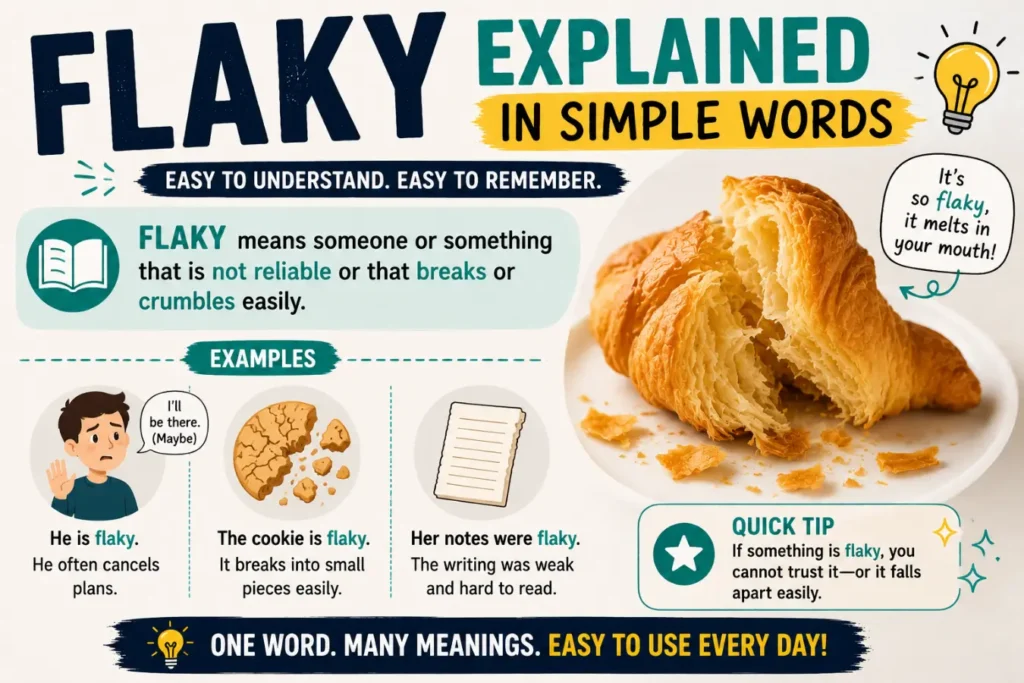
Think about a pie crust.
When you touch it, small pieces fall apart.
That pie crust is flaky.
Now think about a friend.
They promise to meet you but often cancel.
People may call that friend flaky because they are unreliable.
So, the word has two common meanings:
- Easily breaks into thin pieces.
- Does not keep plans or promises.
Real-Life Examples of Flaky
Here are simple examples.
Food
“The croissant has a flaky crust.”
Skin
“My hands become flaky during winter.”
Paint
“The old paint looks flaky.”
Friend
“He is flaky because he often forgets appointments.”
Employee
“She seems flaky because she misses meetings.”
How to Use Flaky in Daily Life
You can use flaky in many everyday situations.
Examples include:
- Talking about dry skin.
- Describing fresh pastries.
- Explaining peeling paint.
- Discussing unreliable people.
- Writing product reviews.
- Giving cooking instructions.
The word fits both spoken and written English.
Common Mistakes When Choosing Flakey or Flaky
Many learners make the same mistakes.
Using “flakey” in formal writing
Choose flaky instead.
Thinking both spellings are equally common
They are not.
Flaky appears much more often.
Confusing the meaning
Remember the word can describe both objects and people.
Assuming “flakey” is wrong
It is not completely wrong.
It is simply less preferred.
Easy Tips to Remember the Correct Spelling
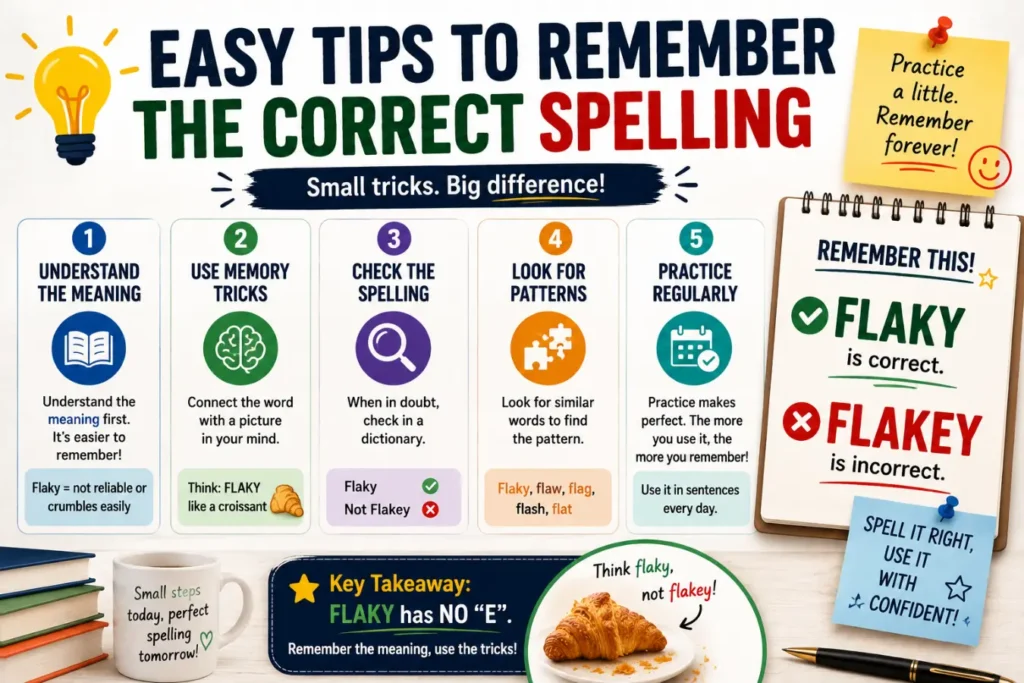
Use these tricks.
- Think of flake → flaky.
- Remember that most dictionaries prefer flaky.
- Use flaky in essays and business writing.
- If unsure, choose flaky every time.
These simple tips prevent spelling mistakes.
Synonyms of Flaky
The best synonym depends on the meaning.
For food or texture
- Crispy
- Crumbly
- Brittle
- Delicate
- Layered
For a person
- Unreliable
- Forgetful
- Inconsistent
- Unpredictable
- Undependable
Each synonym works in different situations.
Why Correct Spelling Matters
Correct spelling improves communication.
Readers understand your writing faster.
It also builds trust.
Search engines favor high-quality content with accurate language.
Whether you write emails, blogs, assignments, or reports, using flaky helps you appear more professional.
Small spelling choices create a better reading experience.
Expert Insights
Language experts recommend using the spelling that most readers recognize.
In this case, that spelling is flaky.
While flakey appears occasionally, it is uncommon in modern publishing.
Professional editors usually replace flakey with flaky for consistency.
If you want clear and polished writing, follow the standard spelling.
This simple choice improves readability and reduces confusion.
Frequently Asked Questions
Is flaky or flakey correct?
Both are correct, but flaky is the preferred spelling.
Which spelling should I use?
Use flaky in almost every situation.
Is flakey a real word?
Yes. It is an accepted variant but much less common.
Can flaky describe a person?
Yes. It describes someone who is unreliable or often changes plans.
Can flaky describe food?
Yes. It often describes pastries, biscuits, pie crusts, and baked goods.
Why is flaky more popular?
Modern dictionaries, publishers, and writers use it more often.
Is flakey wrong in American English?
No. However, flaky remains the standard spelling in American English.
Conclusion
The debate over flakey or flaky has a clear answer for most writers. Both spellings exist, but flaky is the standard choice in modern English. It appears more often in dictionaries, books, websites, and professional writing. Whether you describe a buttery pastry, dry skin, peeling paint, or an unreliable person, flaky is the spelling readers expect. Choosing the standard form makes your writing clearer and more polished. The next time you face this spelling question, remember one simple rule: when in doubt, write flaky.

Sophia Hayes is a language researcher and content writer at WordsCoppe.com, specializing in word comparisons, spelling differences, grammar explanations, and vocabulary insights. She is passionate about making English easier to understand through clear, accurate, and practical content. By breaking down complex language topics into simple explanations, Sophia helps readers improve their writing and communication skills. Her goal is to make learning English more accessible, engaging, and confidence-building for learners worldwide.