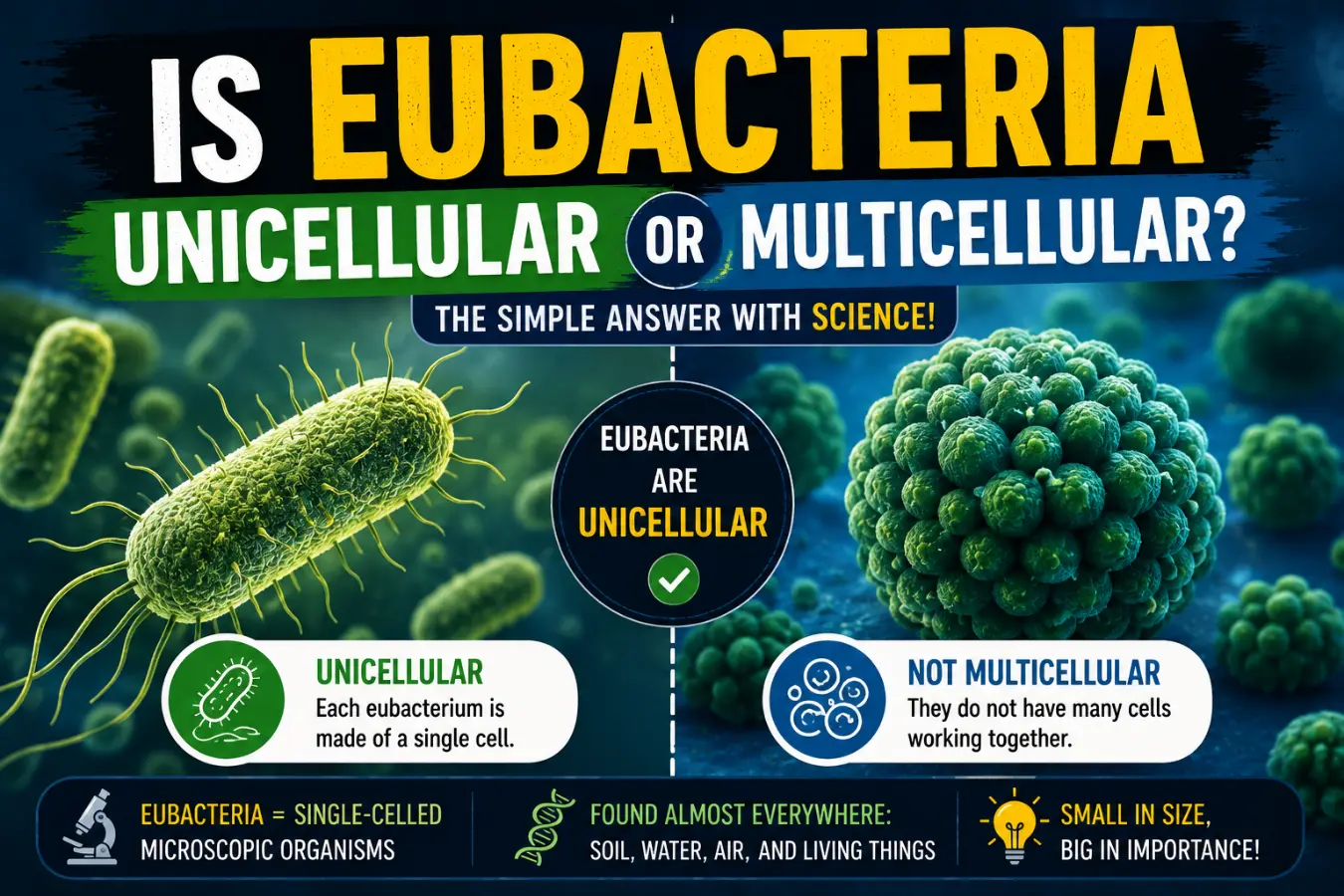
Is eubacteria unicellular or multicellular? This is a common biology question for students and science learners. The simple answer is that eubacteria are unicellular organisms. Each eubacterium consists of only one cell that performs all the functions needed for life. Even though some bacteria live together in large groups, each individual remains a single-celled organism. Understanding this fact makes it easier to learn about cells, living organisms, and classification in biology. In this guide, you will discover what eubacteria are, why they are unicellular, how they differ from multicellular organisms, and real-life examples. You will also find an easy comparison table, common mistakes, expert insights, and answers to frequently asked questions.
Quick Summary Box
- Eubacteria are unicellular organisms.
- Each bacterium has only one cell.
- One cell performs all life processes.
- Eubacteria do not have a nucleus.
- They belong to the prokaryotes group.
- Some form colonies, but they remain unicellular.
- They live in soil, water, air, and inside living organisms.
Featured Snippet: Is Eubacteria Unicellular or Multicellular?
Eubacteria are unicellular organisms. Each eubacterium consists of a single cell that carries out all life functions, including growth, reproduction, and metabolism. Although many bacteria can live together in colonies, every bacterium remains an individual single-celled organism rather than becoming multicellular.
What Are Eubacteria?
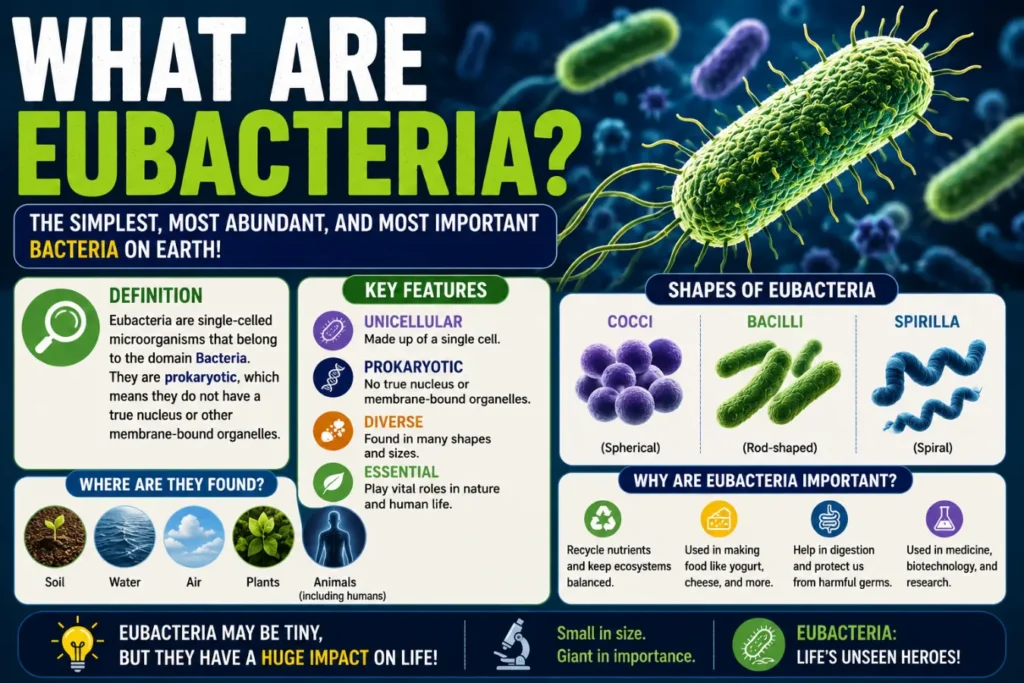
Eubacteria are microscopic living organisms.
They belong to the kingdom Eubacteria, also called true bacteria.
These organisms are among the oldest forms of life on Earth.
They exist almost everywhere.
You can find them in:
- Soil
- Water
- Air
- Plants
- Animals
- The human body
- Extreme environments
Most eubacteria are too small to see without a microscope.
What Does Unicellular Mean?
A unicellular organism has only one cell.
That single cell performs every important job.
It:
- Gets nutrients
- Produces energy
- Removes waste
- Grows
- Reproduces
Unlike larger organisms, it does not need different organs or tissues.
Examples include:
- Bacteria
- Amoeba
- Paramecium
- Some algae
- Certain yeasts
Why Are Eubacteria Unicellular?
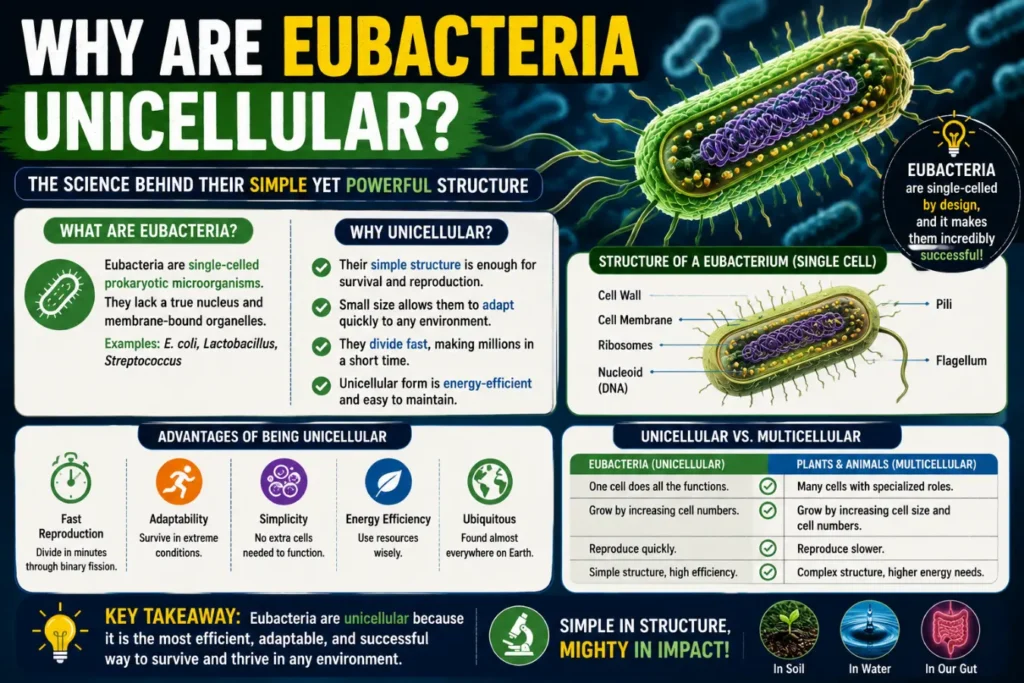
Every eubacterium contains only one cell.
This single cell has everything needed to survive.
Although bacterial cells are simple, they work very efficiently.
They contain:
- Cell wall
- Cell membrane
- Cytoplasm
- Ribosomes
- DNA
However, they do not have a true nucleus or membrane-bound organelles.
This simple structure allows bacteria to grow and reproduce quickly.
Eubacteria vs Multicellular Organisms
| Feature | Eubacteria | Multicellular Organisms |
| Number of cells | One cell | Many cells |
| Cell type | Prokaryotic | Usually eukaryotic |
| Nucleus | No | Yes |
| Specialized tissues | No | Yes |
| Examples | Escherichia coli, Lactobacillus | Humans, dogs, trees |
| Size | Microscopic | Usually visible |
This comparison shows why eubacteria belong to the unicellular group.
Can Eubacteria Live in Colonies?
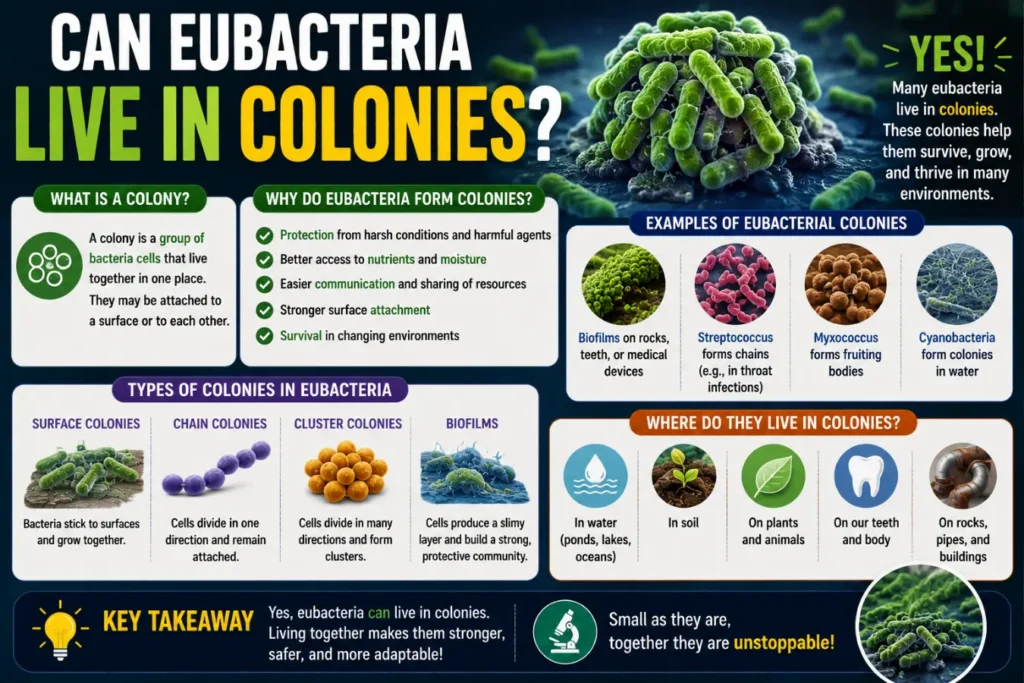
Yes.
Many eubacteria gather into colonies.
However, this often causes confusion.
Each bacterium still remains an individual cell.
The colony is simply a group of separate unicellular organisms living close together.
For example, some bacteria form chains or clusters.
Even then, they do not become multicellular organisms.
Real-Life Examples of Unicellular Eubacteria
Many common bacteria are unicellular.
Here are a few examples.
Escherichia coli (E. coli)
- Lives in the human intestine.
- Helps digestion.
- Some strains can cause illness.
Lactobacillus
- Found in yogurt.
- Helps produce fermented foods.
- Supports gut health.
Streptococcus
- Forms chains of bacterial cells.
- Some species cause infections.
Cyanobacteria
- Perform photosynthesis.
- Produce oxygen.
- Live in water and moist environments.
Each example consists of individual single cells.
How Eubacteria Help Us in Daily Life
Many people think bacteria only cause disease.
In reality, many eubacteria are helpful.
They assist in:
- Making yogurt
- Producing cheese
- Breaking down waste
- Improving soil fertility
- Helping digestion
- Recycling nutrients in nature
Without beneficial bacteria, many natural processes would stop working properly.
Common Mistakes About Eubacteria
Students often make these mistakes.
Thinking colonies are multicellular
A colony contains many separate unicellular bacteria.
Believing all bacteria cause disease
Many bacteria benefit humans and the environment.
Confusing bacteria with viruses
Viruses are not cells.
Bacteria are living cells.
Assuming bacteria have a nucleus
Eubacteria are prokaryotes.
They do not have a true nucleus.
Easy Tips to Remember
Use these simple tricks.
- “Uni” means one.
- One bacterium equals one cell.
- Bacteria are prokaryotes.
- No nucleus means simple cell structure.
- Colonies do not change bacteria into multicellular organisms.
These memory tips help during biology exams.
Synonyms
These terms often appear with this topic.
- True bacteria
- Prokaryotes
- Single-celled organisms
- Microorganisms
- Microbes
- Bacterial cells
- Living organisms
- Cell structure
- Microscopic organisms
Learning these related terms improves biology understanding.
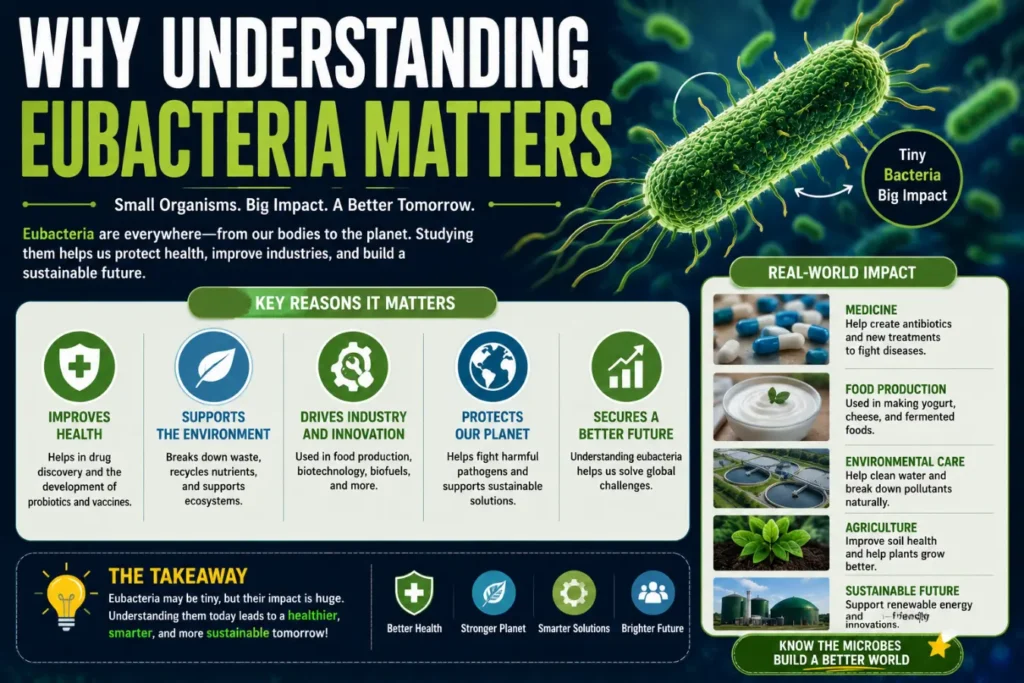
Why Understanding Eubacteria Matters
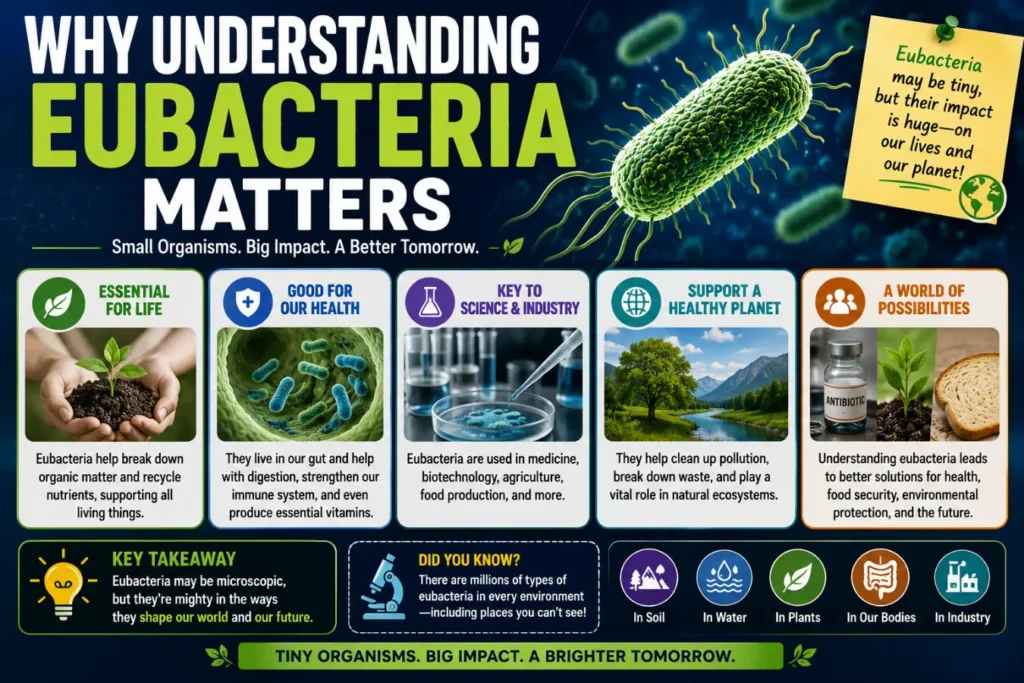
Knowing that eubacteria are unicellular helps explain many biology concepts.
It also makes classification easier.
Students better understand:
- Cell biology
- Microbiology
- Evolution
- Human health
- Ecosystems
This knowledge also supports topics in medicine, agriculture, and environmental science.
Expert Insights
Biologists classify eubacteria as prokaryotic unicellular organisms because each individual consists of one simple cell without a nucleus. Although some species form colonies, this behavior does not make them multicellular. Understanding this distinction is important for studying microbiology, genetics, infectious diseases, and environmental science. Learning the difference between unicellular and multicellular organisms also builds a strong foundation for advanced biology topics.
Frequently Asked Questions
Is eubacteria unicellular or multicellular?
Eubacteria are unicellular organisms.
Why are eubacteria called unicellular?
Each bacterium has only one cell that performs every life function.
Do eubacteria have a nucleus?
No. They are prokaryotes and lack a true nucleus.
Can eubacteria form colonies?
Yes. However, each bacterium remains a separate unicellular organism.
Are all bacteria unicellular?
Yes. All known bacteria are single-celled organisms.
What is the difference between bacteria and multicellular organisms?
Bacteria have one cell, while multicellular organisms have many specialized cells.
Where do eubacteria live?
They live almost everywhere, including soil, water, air, food, plants, animals, and the human body.
Conclusion
The answer to is eubacteria unicellular or multicellular is simple: eubacteria are unicellular organisms. Every bacterium consists of one cell that performs all essential life processes. Although many bacteria grow in colonies, each cell remains independent and does not become part of a multicellular body. Understanding this basic concept helps students learn cell biology, microbiology, and organism classification more easily. It also explains why bacteria can reproduce quickly and survive in many different environments. Remember this simple rule: one bacterium equals one cell, making eubacteria an excellent example of unicellular life.

Sophia Hayes is a language researcher and content writer at WordsCoppe.com, specializing in word comparisons, spelling differences, grammar explanations, and vocabulary insights. She is passionate about making English easier to understand through clear, accurate, and practical content. By breaking down complex language topics into simple explanations, Sophia helps readers improve their writing and communication skills. Her goal is to make learning English more accessible, engaging, and confidence-building for learners worldwide.