Foundation or concealer first is one of the most common makeup questions. Many beginners feel confused about the correct order. The good news is that there is a simple answer. In most cases, you should apply foundation before concealer. Foundation creates an even skin tone and covers light redness or discoloration. As a result, you often need less concealer afterward.
However, there are a few exceptions. Some makeup styles work better when you use concealer first. Knowing the difference helps you save product and achieve a natural finish. This guide explains the correct makeup order, when to break the rule, and mistakes to avoid. By the end, you will know exactly which product to apply first for your skin type and makeup goal.
Quick Summary
- Foundation usually comes before concealer.
- Foundation evens out your skin tone first.
- Concealer hides dark circles, acne, and stubborn spots.
- Applying foundation first often reduces the amount of concealer you need.
- Concealer first works in a few special situations.
- Blend each product well for a natural finish.
What Does Foundation or Concealer First Mean?
The phrase foundation or concealer first refers to the order of applying face makeup. Both products improve your complexion, but they have different jobs.
- Foundation creates an even base across your entire face.
- Concealer covers small areas that need extra attention.
- Using the correct order helps your makeup look smoother and last longer.
Most professional makeup artists recommend foundation first because it does much of the coverage on its own.
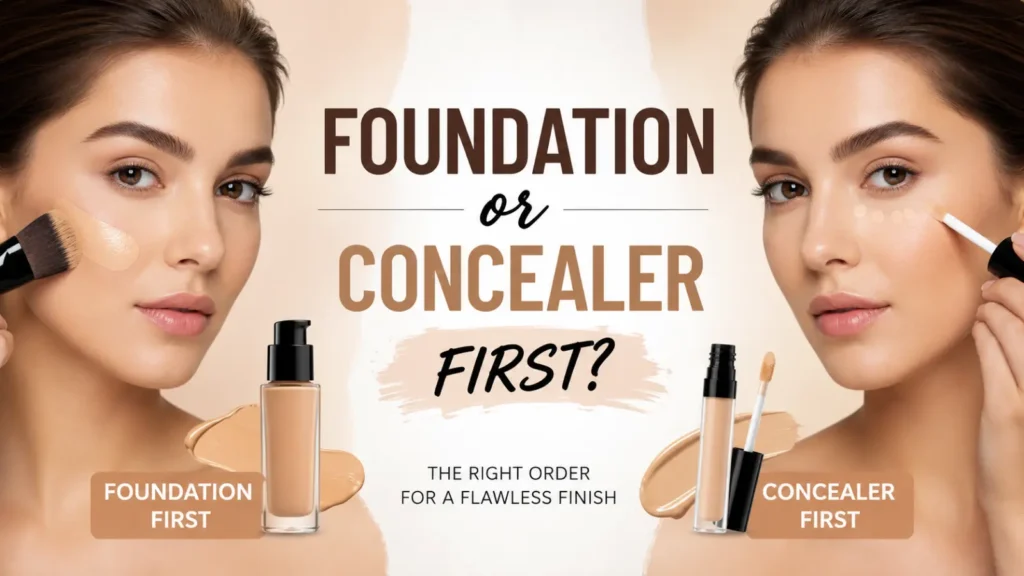
Foundation vs. Concealer: What’s the Difference?
| Feature | Foundation | Concealer |
| Main purpose | Creates an even skin tone | Covers specific imperfections |
| Coverage | Light to full | Medium to full |
| Where to apply | Entire face | Small targeted areas |
| Texture | More liquid or creamy | Usually thicker |
| Best for | Redness, uneven tone | Dark circles, acne, blemishes |
| Amount needed | More | Less |
Winner for order: Foundation first, then concealer.
Should You Apply Foundation Before Concealer?
Yes. In most makeup routines, foundation should come first.
Foundation covers much of the redness, uneven tone, and discoloration. After blending it, you can see which areas still need extra coverage. Then you apply concealer only where necessary.
This method gives several benefits.
- Uses less concealer.
- Looks more natural.
- Prevents cakey makeup.
- Saves makeup products.
- Creates a smoother finish.
That is why most beauty experts recommend this order for everyday makeup.
When Should You Apply Concealer First?
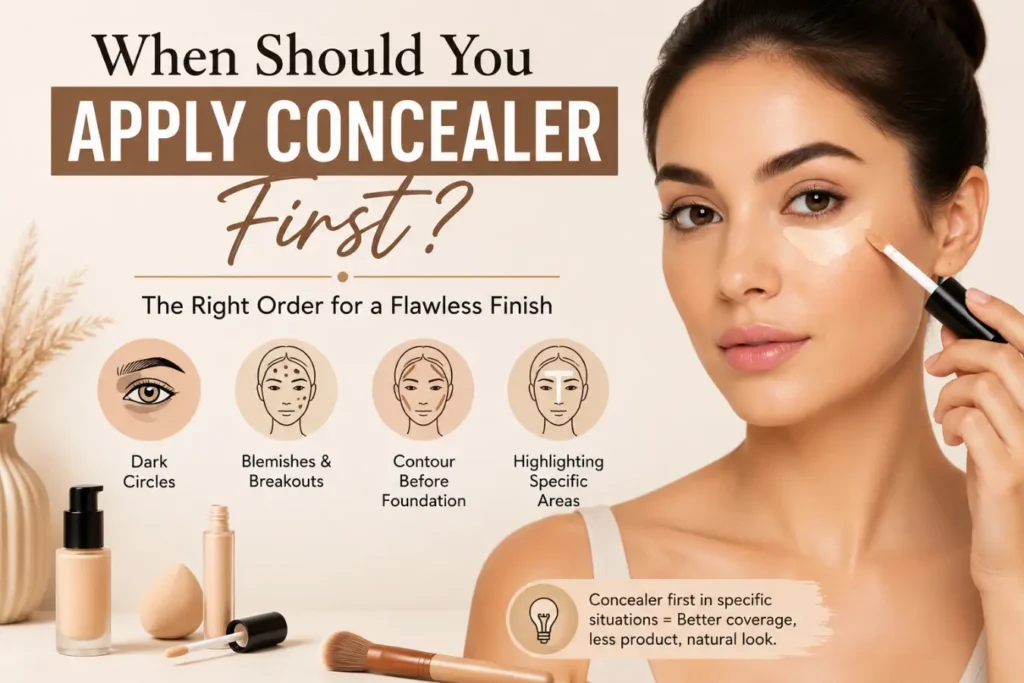
Although foundation usually comes first, there are times when concealer first makes sense.
Color Correcting
If you have very dark under-eye circles, you may apply a color corrector or concealer before foundation.
Heavy Blemishes
Large pimples or scars sometimes need a thin layer of concealer before foundation for better coverage.
Spot Concealing Without Foundation
Some people skip foundation completely. They only use concealer on problem areas for a natural “no-makeup” look.
These situations are exceptions, not the general rule.
Why Makeup Artists Recommend Foundation First
Professional makeup artists often begin with foundation because it creates a balanced canvas.
Instead of covering every small mark with concealer, they first blend foundation over the face. This reduces redness and uneven tone naturally.
Next, they use concealer only on areas that still need extra help, such as:
- Under-eye circles
- Acne spots
- Dark pigmentation
- Small scars
- Red patches
This technique keeps makeup fresh instead of heavy.
How to Apply Foundation and Concealer Step by Step
Step 1: Clean Your Face
Wash your face and remove excess oil.
Step 2: Moisturize
Hydrated skin helps makeup blend better.
Step 3: Apply Primer
Primer creates a smooth base and improves makeup wear.
Step 4: Apply Foundation
Blend foundation evenly across your face using a brush, sponge, or fingertips.
Step 5: Apply Concealer
Place small dots under your eyes and on blemishes.
Step 6: Blend Carefully
Pat gently instead of rubbing.
Step 7: Set With Powder
A light setting powder helps reduce shine and keeps makeup in place.
Real-Life Examples
Example 1: Everyday Office Makeup
Sarah applies foundation first. It hides most redness. She only needs a little concealer under her eyes.
Example 2: Acne Coverage
Emma uses foundation first. Then she adds concealer only to a few acne spots for extra coverage.
Example 3: Natural Makeup
Lily skips foundation. She applies concealer only on dark circles and around her nose for a fresh, lightweight look.
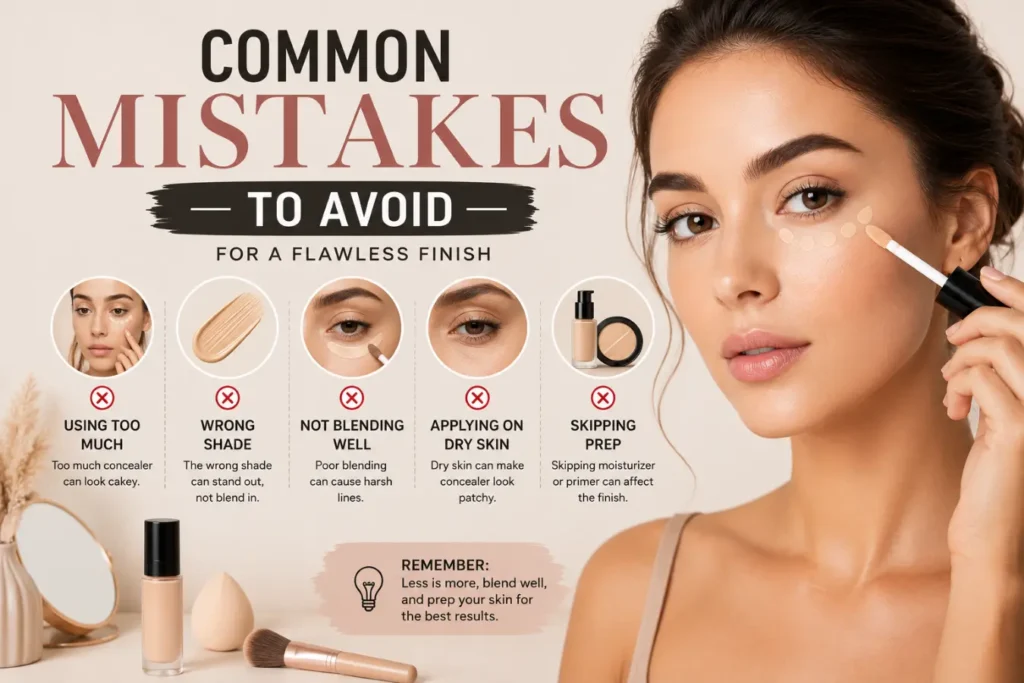
Common Mistakes to Avoid
Many people make small mistakes that affect the final result.
Applying Too Much Concealer
Using large amounts can make makeup look thick and dry.
Skipping Foundation
If you plan to wear both products, foundation should usually come first.
Choosing the Wrong Shade
A concealer that is too light can create obvious patches.
Forgetting to Blend
Harsh lines make makeup look uneven.
Using Too Much Powder
Too much powder can make the skin appear dry and cakey.
Tips for Better Makeup Results
- Match foundation to your neck.
- Choose concealer one shade lighter for under-eyes.
- Use a damp makeup sponge for blending.
- Apply thin layers instead of one thick layer.
- Let each product settle before adding the next.
- Always set oily areas with powder.

How This Makeup Order Helps in Daily Life
Following the correct makeup order makes your routine easier.
It saves time because you use less concealer. It also helps your makeup last longer throughout the day. Whether you are going to work, school, a party, or a wedding, foundation first usually gives a cleaner and more polished finish.
For people who prefer natural makeup, this method prevents heavy-looking skin while still hiding imperfections.
Synonyms
When reading beauty blogs or watching makeup tutorials, you may also see these related terms:
- Base makeup
- Face makeup routine
- Makeup application order
- Makeup layering
- Skin-perfecting products
- Complexion makeup
- Full coverage makeup
- Spot concealing
- Under-eye concealer
- Makeup base
Expert Insight
Professional makeup artists recommend applying products from the largest area to the smallest area. That means foundation comes before concealer in most situations. This method creates balanced coverage and reduces product buildup. It also helps makeup blend naturally under different lighting conditions. If you need extra coverage, build it slowly instead of applying thick layers at once.
Frequently Asked Questions
Is it better to apply foundation or concealer first?
Yes. Foundation should usually come first because it evens out the skin before you hide remaining imperfections.
Can I apply concealer before foundation?
Yes, but only in special cases, such as color correcting or spot concealing.
Do professionals apply foundation first?
Yes. Most professional makeup artists use foundation first and then add concealer where needed.
Can I wear concealer without foundation?
Yes. Many people wear concealer alone for a natural, lightweight look.
Which covers dark circles better?
Concealer provides better coverage for dark circles because it is thicker than foundation.
Does foundation replace concealer?
No. Foundation evens skin tone, while concealer hides specific imperfections.
Should beginners use foundation first?
Yes. It is the easiest method and usually gives the most natural finish.
Conclusion
When deciding foundation or concealer first, the answer is simple for most people. Apply foundation before concealer. Foundation creates an even base and hides much of the redness and uneven skin tone. Then, use concealer only where you need extra coverage. This order helps your makeup look smooth, natural, and long-lasting. Although a few situations call for concealer first, they are the exception rather than the rule. If you follow the right makeup order, blend each product carefully, and use thin layers, you will achieve a polished finish every time. Whether you wear makeup every day or only for special occasions, this technique will help you get better results with less effort.

Sophia Hayes is a language researcher and content writer at WordsCoppe.com, specializing in word comparisons, spelling differences, grammar explanations, and vocabulary insights. She is passionate about making English easier to understand through clear, accurate, and practical content. By breaking down complex language topics into simple explanations, Sophia helps readers improve their writing and communication skills. Her goal is to make learning English more accessible, engaging, and confidence-building for learners worldwide.