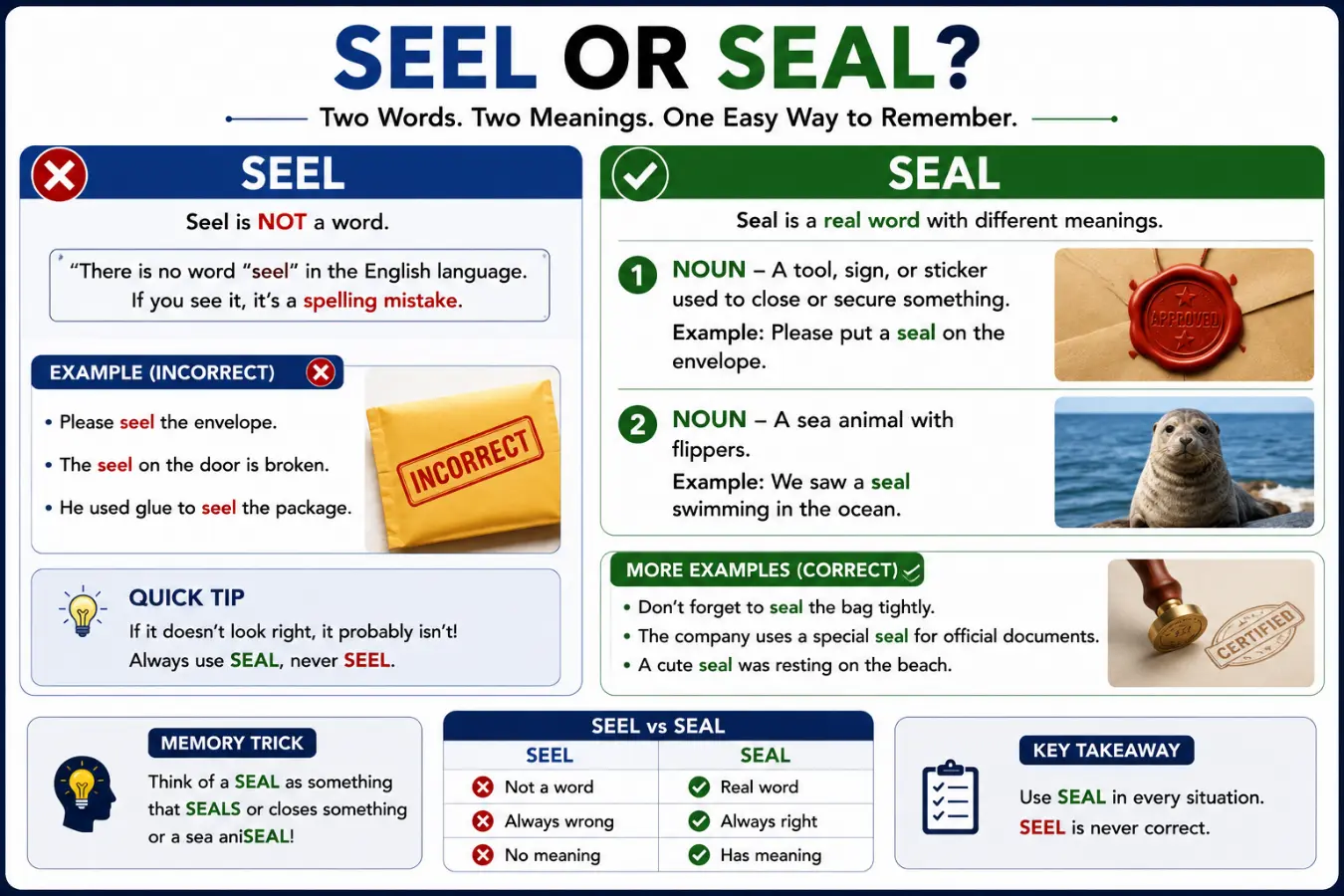
Seel or seal is a common spelling question because the two words look and sound similar. Many people type seel when they actually mean seal. In modern English, seal is the correct spelling for almost every everyday situation. It can refer to an animal, a stamp, or the act of closing something tightly. Seel, however, is a very old word that most people never use today. Knowing the difference helps you avoid spelling mistakes and write with confidence. In this guide, you will learn the meaning of seel and seal, see a clear comparison table, read real-life examples, and discover simple tips to remember the correct spelling.
Quick Summary
- Seal is the correct spelling in modern English.
- Seel is an old and very rare English word.
- Most people should use seal.
- Seal can be a noun or a verb.
- Seel appears mainly in historical or literary texts.
- When unsure, choose seal.
Quick Answer:
Seal is the correct spelling for everyday English. Seel is an outdated word that is rarely used today.
What Do “Seel” and “Seal” Mean?
Although the words look alike, they have very different meanings.
Seal
Seal is a common English word.
It can mean:
- A marine animal
- An official stamp or mark
- To close something tightly
- To confirm or secure something
Seel
Seel is an old English verb.
Historically, it meant to close or sew a bird’s eyelids during falconry. This practice is no longer common and the word is now considered archaic.
Today, most English speakers never use seel.
Seel vs Seal: What’s the Difference?
The easiest way to understand the difference is to compare them side by side.
| Word | Meaning | Modern Usage | Example |
| Seal | Animal, stamp, or close tightly | Very common | Please seal the envelope. |
| Seel | An old falconry term | Very rare | The ancient text mentioned how to seel a hawk. |
Simple Rule
- Use seal in everyday English.
- Use seel only when discussing historical writing or old literature.
If you are writing for school, work, or a website, seal is almost always correct.
When Should You Use “Seal”?
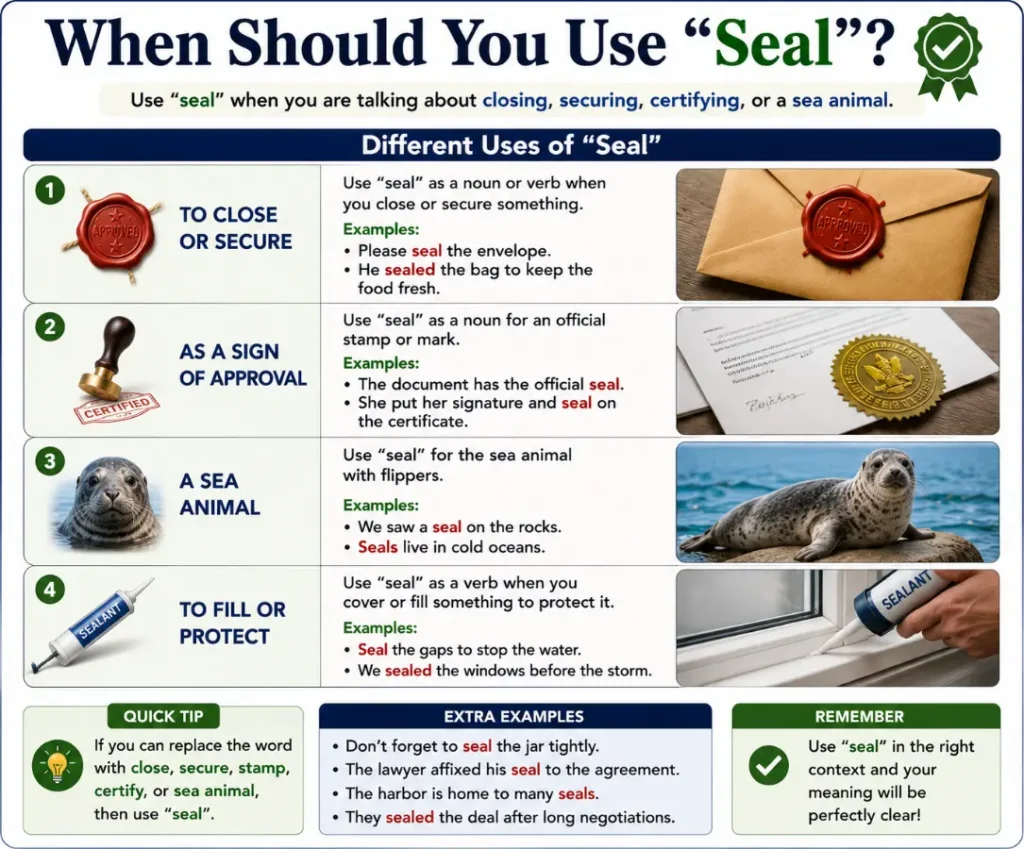
Use seal whenever you mean to close something, describe the marine animal, or refer to an official mark.
Examples
- Please seal the package before shipping it.
- We watched a seal swimming near the beach.
- The company placed its official seal on the document.
- Make sure you seal the food container tightly.
- The broken window needs a new seal to stop water leaks.
These are the meanings most people use every day.
When Should You Use “Seel”?
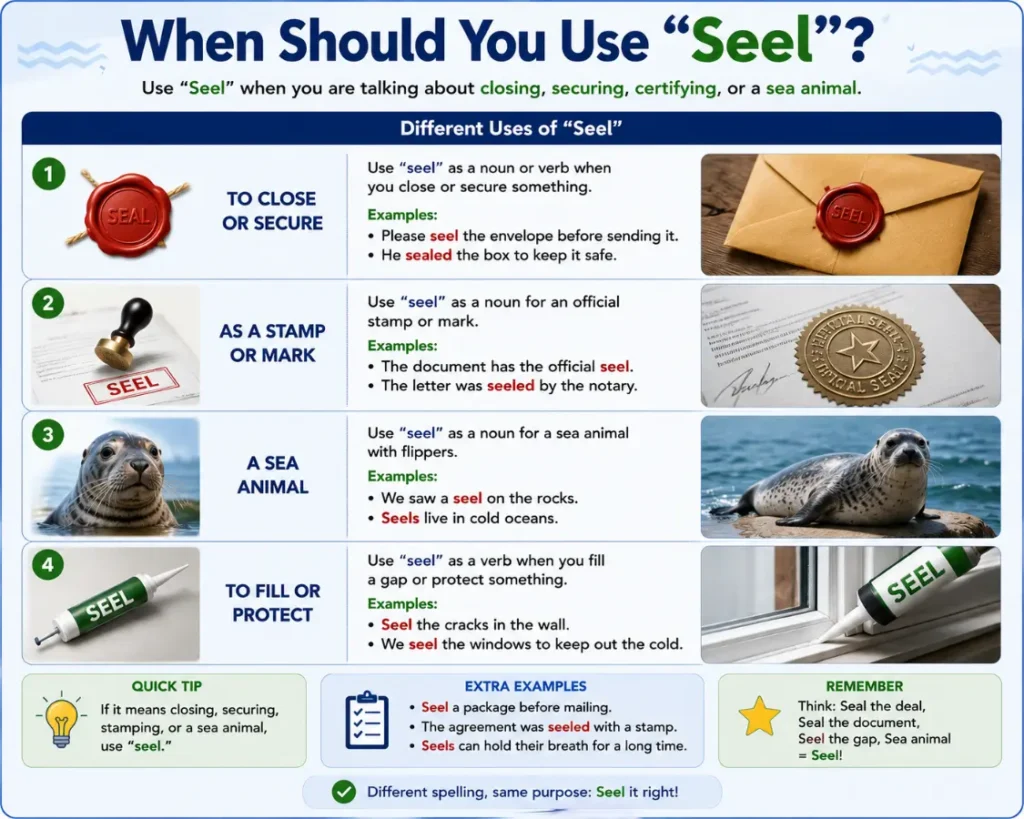
You will rarely need seel in modern English.
It mainly appears in:
- Historical books
- Old English literature
- Falconry discussions
- Academic writing about medieval practices
Examples
- The old manuscript explained how to seel a hunting bird.
- Historians studied the traditional method used to seel falcons.
Outside these special topics, seel is almost never the right choice.
Real-Life Examples of Seel and Seal
These examples show how each word is used.
| Situation | Correct Sentence |
| Mailing | Please seal the envelope. |
| Wildlife | We saw a seal resting on the rocks. |
| Food Storage | Always seal the container after opening. |
| Business | The contract carries the company’s official seal. |
| History | The book described how trainers would seel hawks. |
| Literature | The ancient poem used the word seel in its original sense. |
These examples show why seal is the word you will use almost every day.
Why Do People Confuse “Seel” and “Seal”?
The confusion happens because the words sound almost the same.
However, one spelling is modern while the other is historical.
Here are the main reasons people mix them up:
- Both words have similar pronunciation.
- Spell-check tools may not explain the difference.
- Typing errors often change seal into seel.
- Few people know that seel is an archaic word.
- Learners assume both words are equally common.
The easiest solution is simple:
If you mean the animal, a stamp, or closing something, always use seal.
Common Meanings of “Seal”
The word seal has several everyday meanings.
| Meaning | Example |
| Marine animal | A seal swam beside the boat. |
| Close tightly | Seal the bag to keep the food fresh. |
| Official stamp | The certificate has the official seal. |
| Protective barrier | The rubber seal prevents leaks. |
| Confirm or finalize | They sealed the agreement with a handshake. |
Learning these meanings helps you understand why seal is such a common English word.
Common Mistakes When Using Seel or Seal
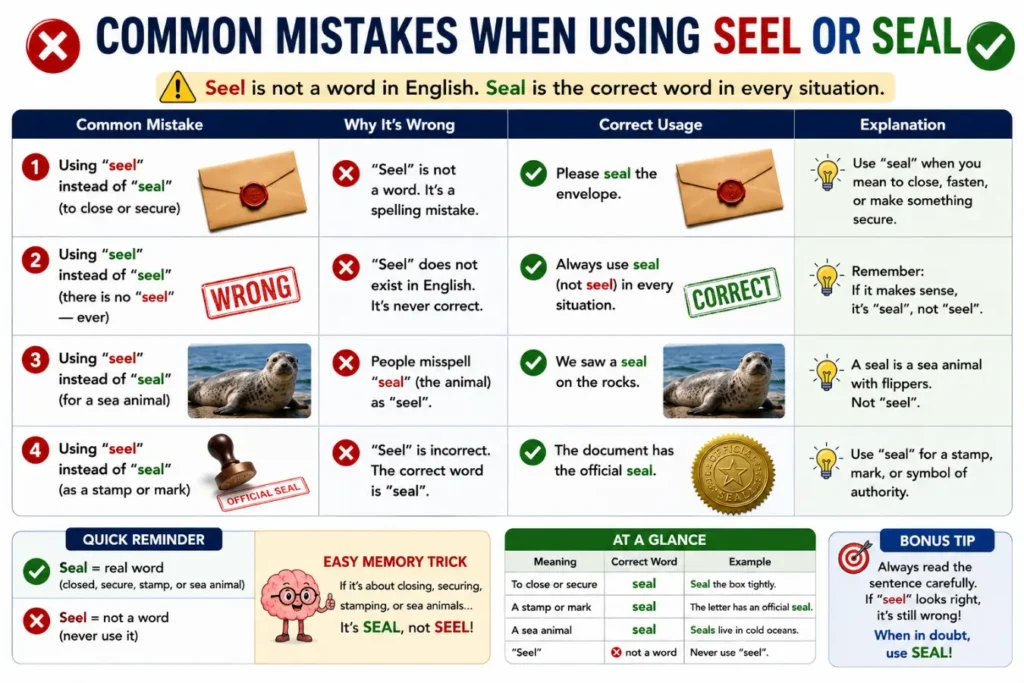
Many writers confuse these two words because they sound alike. However, one spelling is correct for almost every modern situation.
1. Writing Seel Instead of Seal
Incorrect:
- Please seel the envelope.
Correct:
- Please seal the envelope.
Why?
The verb seal means to close something securely. Seel does not have this meaning in modern English.
2. Thinking Seel Is a Modern Alternative
Some people believe seel is simply another spelling of seal.
This is incorrect.
Seel is an archaic English word. It survives mainly in historical texts and discussions of falconry.
3. Using Seel for the Marine Animal
Incorrect:
- We saw a seel at the zoo.
Correct:
- We saw a seal at the zoo.
The animal is always spelled seal.
4. Confusing Old English with Modern English
Older books sometimes contain words that are no longer common today.
If you are writing for modern readers, seal is almost always the correct choice.
Tips to Remember the Difference Between Seel and Seal
These simple tips help you choose the right spelling.
- Use seal for everyday English.
- Remember that seal can be both a noun and a verb.
- Think of seal whenever you write about animals, envelopes, containers, or official stamps.
- Use seel only when discussing historical texts or falconry.
Memory Trick
Remember this easy phrase:
Seal something shut. ✅
If the sentence means close, protect, or secure, the correct spelling is seal.
Using Seal in Daily Life
You will see seal in many everyday situations.
At Home
- Seal the food container after using it.
- Replace the rubber seal if water leaks.
Work
- The manager placed the official seal on the certificate.
- Please seal the package before shipping it.
At School
- Students learned about the Arctic seal.
- The teacher asked everyone to seal their envelopes.
While Traveling
- Always seal your luggage before checking it.
- We watched a seal swimming near the shore.
These examples show why seal is one of the most common English words.
Synonyms of Seal
The best synonym depends on how you use the word.
| Word | Best Used For |
| Close | Closing an opening |
| Secure | Locking or protecting something |
| Fasten | Joining or attaching |
| Lock | Securing doors or containers |
| Stamp | Official documents |
| Mark | Official approval |
| Waterproof | Preventing leaks |
Choose the synonym that matches your sentence.
Expert Insight
The confusion between seel and seal comes from spelling, not grammar. Modern English dictionaries list seal as the standard spelling for everyday use. In contrast, seel is marked as archaic, meaning it belongs to older forms of English and rarely appears in modern communication.
Professional writers, editors, and teachers recommend using seal unless you are quoting historical sources or discussing traditional falconry. Following current usage makes your writing clearer, more accurate, and easier for readers to understand.
Frequently Asked Questions
Is it seel or seal?
Seal is the correct spelling for modern English. Seel is an old word that is rarely used today.
Is seel a real word?
Yes. Seel is a real English word, but it is archaic and mainly appears in historical or literary contexts.
Which spelling should I use in everyday writing?
Use seal for almost every modern situation.
What does seal mean?
Seal can mean a marine animal, an official stamp, a protective barrier, or the act of closing something tightly.
Why do people type seel instead of seal?
The words sound similar, and typing mistakes are common. However, seal is the correct spelling in modern English.
Is seel used in dictionaries?
Yes. Most dictionaries include seel, but they label it as an archaic or historical word.
How can I remember the correct spelling?
Use this simple rule:
- Seal = Modern English ✅
- Seel = Historical English ✅
Conclusion
Understanding seel or seal is simple once you know the difference. Seal is the standard spelling in modern English and fits almost every everyday situation. You can use it for the marine animal, official stamps, protective barriers, or the act of closing something securely. Seel, on the other hand, is an archaic word that survives mainly in historical writing and traditional falconry.
If you are writing for school, work, or online readers, choose seal with confidence. It is the spelling that dictionaries, teachers, and professional writers recommend. Keeping this distinction in mind will help you avoid common spelling mistakes and improve the clarity of your writing.

Sophia Hayes is a language researcher and content writer at WordsCoppe.com, specializing in word comparisons, spelling differences, grammar explanations, and vocabulary insights. She is passionate about making English easier to understand through clear, accurate, and practical content. By breaking down complex language topics into simple explanations, Sophia helps readers improve their writing and communication skills. Her goal is to make learning English more accessible, engaging, and confidence-building for learners worldwide.