iPhone or Android is a common question when people plan to buy a new smartphone. Both options offer powerful features, great cameras, and modern designs. However, they work in different ways and suit different types of users.
An iPhone runs on Apple’s iOS operating system. Android phones use Google’s Android system. Each platform offers unique benefits for daily tasks, work, entertainment, and communication.
Your choice depends on your budget, habits, preferred apps, and device needs. Some users want simple software and strong security. Others prefer more freedom, customization, and wider phone choices.
This guide compares both platforms in simple terms. It covers their features, prices, cameras, performance, security, and everyday use. By the end, you can choose the option that fits your needs best.
Quick Summary
- iPhone uses Apple’s iOS operating system.
- Android phones use Google’s Android operating system.
- iPhone offers a simple and consistent user experience.
- Android provides more customization and device choices.
- iPhones usually offer strong long-term software support.
- Android offers budget, mid-range, and premium smartphones.
- Both platforms provide excellent cameras and performance.
- Your budget and personal needs should guide your choice.
What Do iPhone and Android Mean?
An iPhone is a smartphone made by Apple. It uses Apple’s iOS software and connects closely with other Apple products.
Android refers to a mobile operating system developed by Google. Many companies use Android in their smartphones.
These include Samsung, Google, OnePlus, Xiaomi, Motorola, and other brands. Therefore, Android gives buyers many hardware options.
The main difference comes from software and the companies behind each platform. Apple controls both the iPhone hardware and iOS software. Android runs across phones from many manufacturers.
How Are the Two Smartphone Platforms Different?
The biggest difference involves control and flexibility.
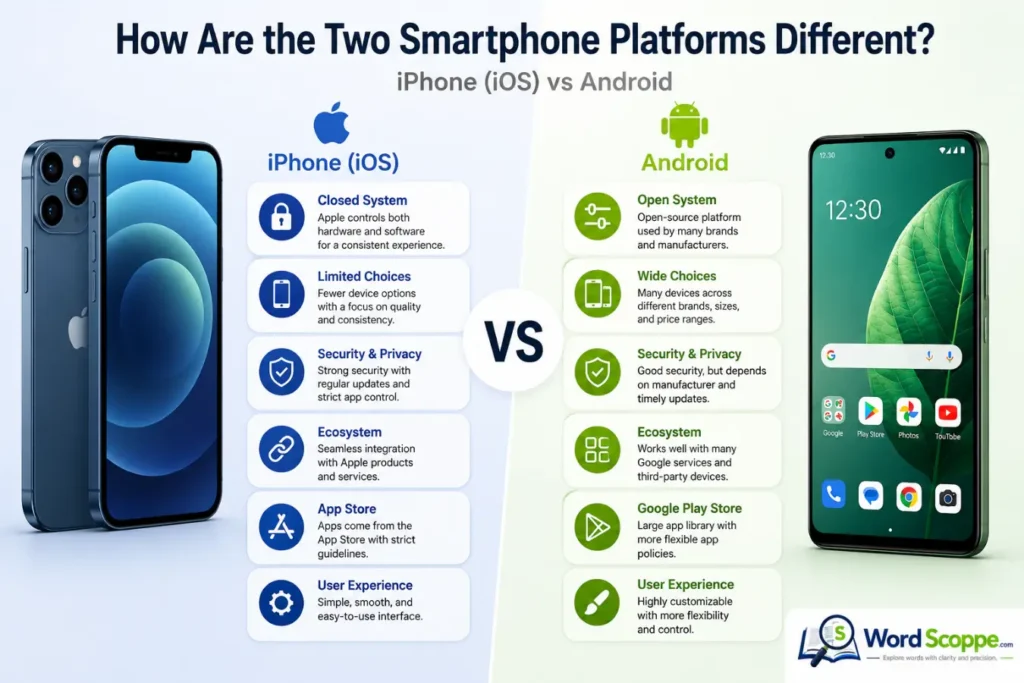
Apple controls the iPhone experience from hardware to software. This creates a consistent interface across supported devices.
Android takes a more flexible approach. Manufacturers can change the design and add their own features.
For example, Samsung adds its own software features to Android phones. Google offers a cleaner Android experience on Pixel devices.
As a result, iPhone feels more uniform. Android can feel more personalized.
iPhone vs Android: Key Differences
| Feature | iPhone | Android |
| Operating system | iOS | Android |
| Phone brands | Apple only | Many brands |
| Price range | Mostly mid to premium | Budget to premium |
| Customization | Limited | Extensive |
| App ecosystem | Strong | Strong |
| Security | Strong | Strong, varies by device |
| File management | More controlled | More flexible |
| Device choices | Limited | Very wide |
| Software experience | Consistent | Varies by manufacturer |
| Accessories | Large selection | Large selection |
Both platforms perform well. Still, their strengths appeal to different users.
Which Is Better for Everyday Use?
For everyday tasks, both choices work well.
You can call friends, send messages, browse websites, stream videos, and use social media. Popular apps support both platforms.
However, the experience can feel different.
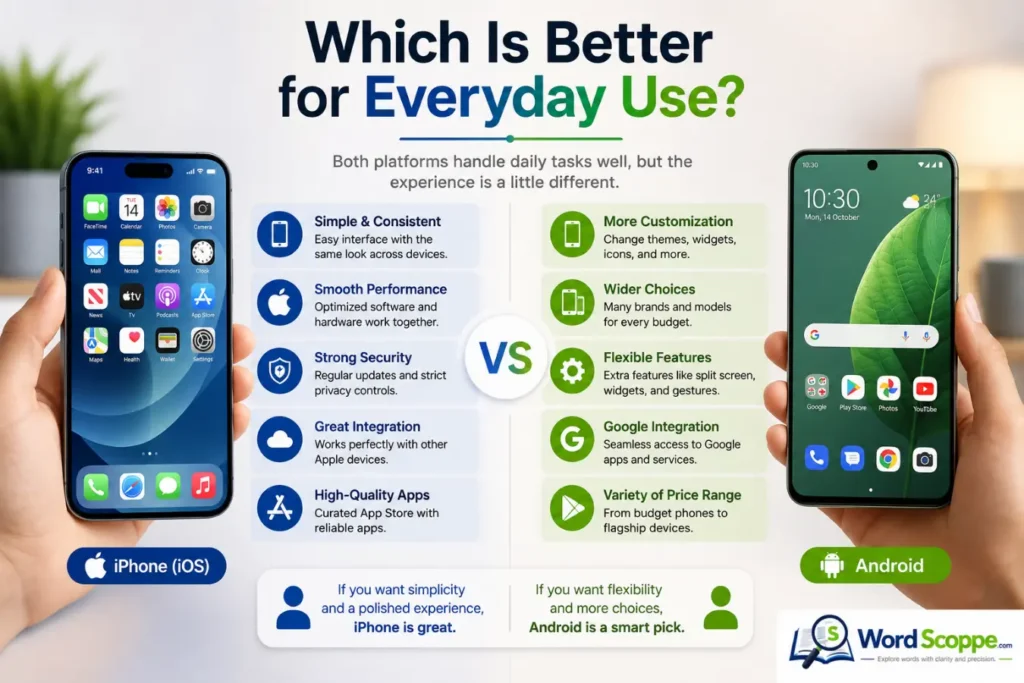
iPhone focuses on simplicity. Menus remain consistent, and Apple controls the overall interface.
Android gives users more control. You can change launchers, widgets, icons, and other parts of the interface.
Therefore, people who want fewer settings may prefer iPhone. Users who enjoy customization may prefer Android.
Which Platform Offers Better Performance?
Performance depends on the specific phone.
Apple designs its own smartphone chips for iPhone models. These chips often deliver strong performance and power efficiency.
Android phones use processors from companies such as Qualcomm and MediaTek. Premium Android models can also deliver excellent speed.
For normal tasks, most modern phones feel fast enough. Gaming, video editing, and demanding apps may need a more powerful model.
Therefore, compare individual phone models rather than judging the entire platform.
iPhone or Android for Camera Quality
Both platforms offer excellent smartphone cameras.
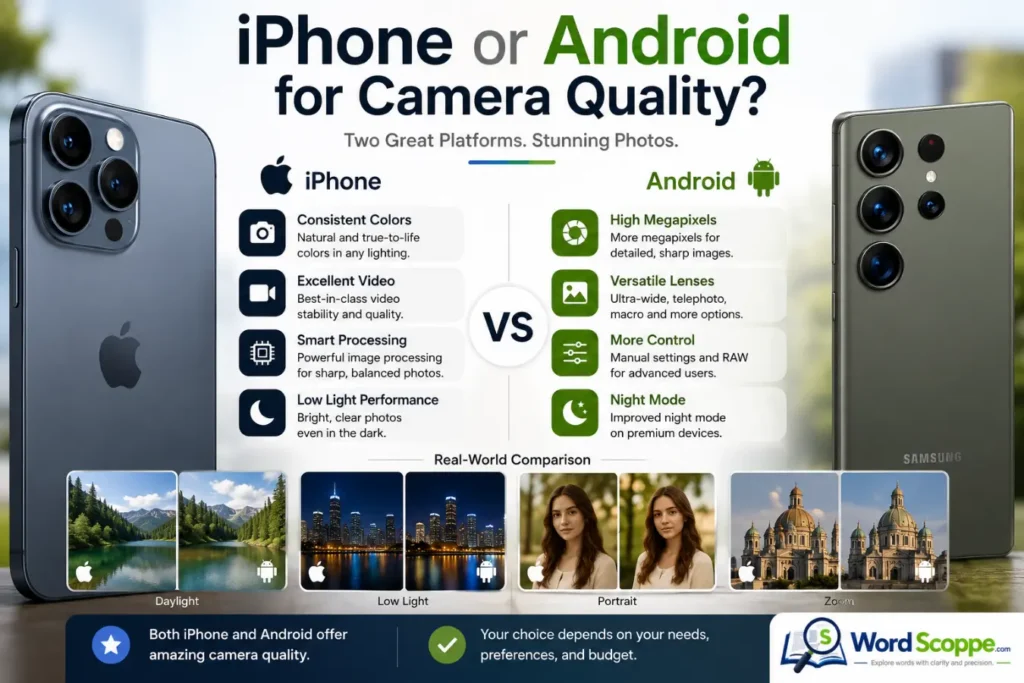
iPhones often produce consistent results across different lighting conditions. Apple’s video recording also remains a major strength.
Android phones can offer impressive camera hardware. Some premium models provide high-resolution sensors, powerful zoom, and advanced photography tools.
Camera performance also depends on the phone model.
A premium Android device can outperform an older iPhone. Likewise, a newer iPhone can beat a cheaper Android phone.
So, check camera samples and specifications before buying.
Which One Is Better for Gaming?
Gaming performance depends on the phone’s processor, display, cooling, and battery.
Premium iPhones handle demanding games smoothly. Apple’s chips also provide strong graphics performance.
Android has many gaming-focused devices. Some offer high refresh-rate displays, large batteries, cooling systems, and gaming controls.
Android also provides more hardware variety.
Casual gamers can choose affordable devices. Serious players can select powerful gaming smartphones.
Thus, both platforms can support mobile gaming. Your budget and preferred games matter more than the platform name.
Which Smartphone Gives You More Customization?
Android clearly offers more customization.
Users can change home screens, widgets, icons, launchers, and other interface elements. Some phones also provide advanced multitasking tools.
iOS has become more flexible over time. Users can now customize several parts of the home screen and lock screen.
Still, Apple’s system keeps more controls within its design rules.
If you enjoy changing how your phone looks and works, Android offers greater freedom. If you prefer a cleaner setup, iPhone may feel easier.
Which Is Better for Security and Privacy?
Security matters when choosing any smartphone.
Apple places strong focus on privacy and system control. iOS uses strict rules for apps and system access.
Android also includes strong security features. Google regularly improves Android security and provides tools that protect users.
However, Android security can vary between manufacturers and models. Software update policies also differ across brands.
For this reason, choose a phone with reliable security updates. Keep your operating system and apps updated as well.
Never install unknown apps from unsafe sources.
What About Price and Value?
Android provides the widest range of prices.
You can find basic smartphones for simple tasks. You can also buy premium Android phones with advanced cameras and powerful processors.
Apple focuses more heavily on the mid-range and premium market. Older iPhone models can provide a lower-cost entry point.
However, purchase price does not tell the whole story.
Consider battery life, software support, repair costs, accessories, and resale value. A slightly more expensive phone may offer better long-term value.
Common Mistakes When Choosing a Smartphone
Many buyers focus on the wrong features.
One common mistake involves choosing based only on camera megapixels. More megapixels do not always mean better photos.
Another mistake involves buying a phone without checking software support. Updates can affect security and long-term usability.
Some buyers also ignore storage needs. Photos, videos, games, and apps can quickly use available space.
Finally, people sometimes choose a phone because friends recommend it.
Your needs may differ from theirs. Always compare the device with your own daily habits.
Tips for Choosing the Right Smartphone
Start by setting a realistic budget.
Next, list the features you use most. These may include photography, gaming, work apps, social media, or video streaming.
Then check battery life and charging speed.
Consider the other devices you already own. Apple products work closely together through features such as AirDrop and iCloud.
Android phones can also work well with Windows computers and many other devices.
Finally, compare specific models within your price range. This approach gives you a better result than choosing by brand alone.
iPhone or Android: Real-Life Examples
Consider a student who needs a reliable phone for messaging, study apps, photos, and social media. Either platform can meet these needs.
Now imagine a user who owns a MacBook and Apple Watch. An iPhone may provide a smoother connected experience.
Another buyer may have a limited budget. Android gives this person more choices across different price levels.
A mobile gamer may want a high-refresh-rate screen and advanced cooling. In that case, a premium Android gaming phone could make sense.
These examples show why there is no universal winner.
Synonyms and Related Search Terms
People often use different phrases when searching for this topic.
Common related terms include:
- iPhone vs Android
- Apple vs Android
- iOS vs Android
- best smartphone platform
- best phone for everyday use
- Android phone comparison
- iPhone comparison
- best smartphone to buy
- iPhone or Android for gaming
- iPhone or Android for photography
- Android vs iOS features
These phrases describe similar search intent. However, each user may have a different buying goal.
Expert Insights: What Should You Choose?
There is no single smartphone that suits everyone.
Choose iPhone if you value a simple interface, strong ecosystem integration, and consistent software.
Choose Android if you want more device choices, customization, and flexible pricing.
Most importantly, compare the exact models you plan to buy.
Check processor performance, battery capacity, camera quality, storage, update support, and display quality. Also consider how long you expect to keep the phone.
A phone that matches your habits will usually provide better value.
Frequently Asked Questions
Is iPhone better than Android?
Neither platform is always better. iPhone suits users who prefer simplicity and Apple’s ecosystem. Android suits users who want flexibility and choice.
Is Android cheaper than iPhone?
Android offers more affordable phones. It also includes many premium models that compete directly with iPhones.
Which has better camera quality?
Both platforms offer excellent cameras. The exact phone model matters more than the operating system.
Which is easier to use?
Many users find iPhone simple because Apple keeps the interface consistent. Android can also feel easy after a short adjustment period.
Which is better for gaming?
Both can provide excellent gaming performance. Premium phones usually offer the best results on either platform.
Which has better battery life?
Battery life varies by model, screen, processor, and software. Compare individual devices rather than brands.
Can Android phones use Apple services?
Many Apple services work across platforms, but some features work best within Apple’s ecosystem.
Can iPhone users switch to Android?
Yes. Users can transfer many contacts, photos, messages, and other data. The exact process depends on the devices involved.
Conclusion
Choosing between iPhone or Android depends on what you need from your smartphone. Both platforms offer strong performance, useful apps, excellent cameras, and modern features.
iPhone stands out for its simple experience and close connection with Apple’s products. Android offers more flexibility, customization, and choices across different budgets.
Therefore, do not choose a phone only because one brand seems more popular. Think about your budget, daily activities, preferred features, and future needs.
Also, compare individual models before making your final decision. A well-chosen phone can remain useful for several years.
The best smartphone is not always the most expensive one. It is the device that fits your lifestyle, priorities, and budget.

Sophia Hayes is a language researcher and content writer at WordsCoppe.com, specializing in word comparisons, spelling differences, grammar explanations, and vocabulary insights. She is passionate about making English easier to understand through clear, accurate, and practical content. By breaking down complex language topics into simple explanations, Sophia helps readers improve their writing and communication skills. Her goal is to make learning English more accessible, engaging, and confidence-building for learners worldwide.