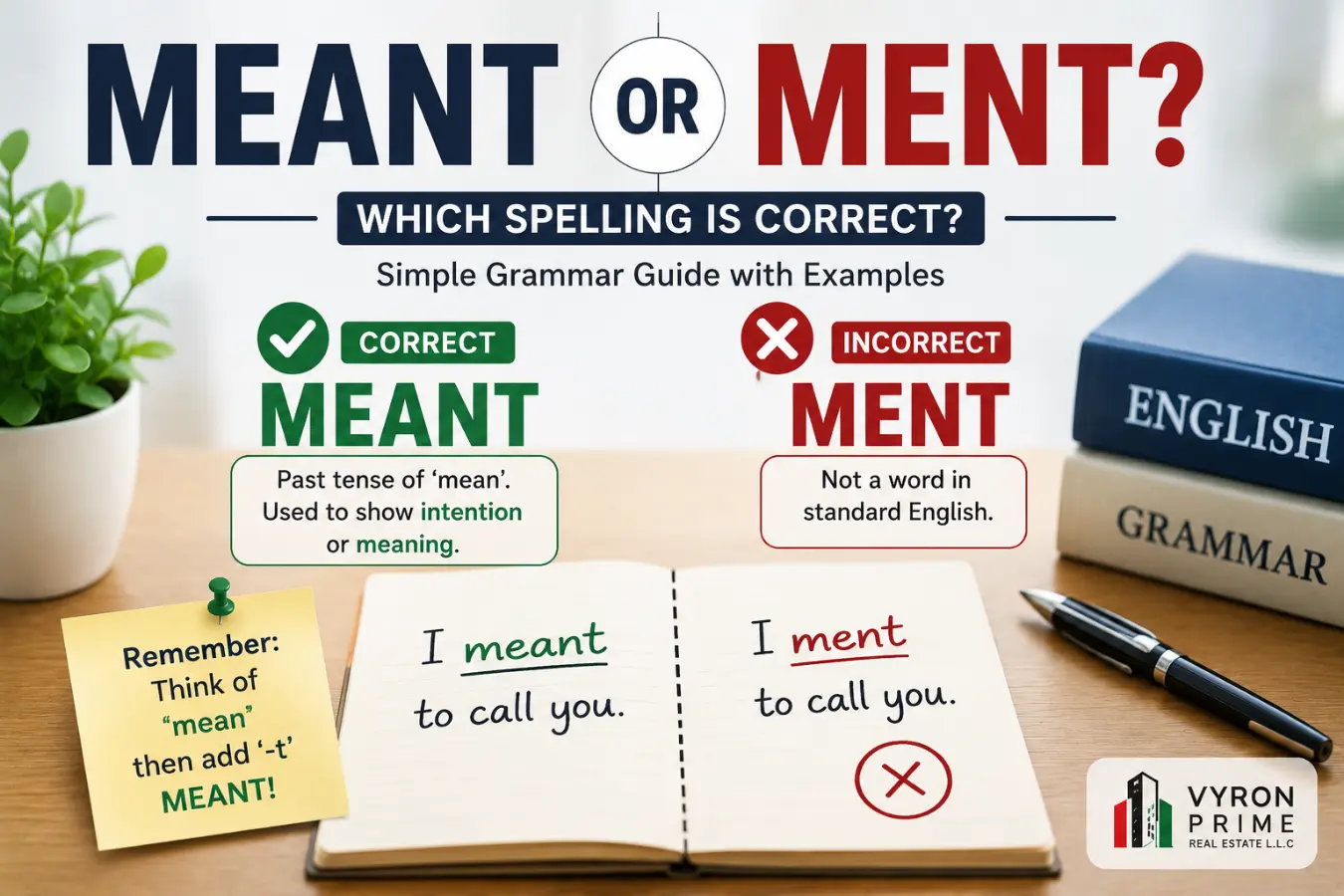
Meant or ment is a common spelling question, especially for English learners. These two words sound almost the same when spoken. Because of that, many people type ment when they actually mean meant. However, only one spelling is correct in standard English. Knowing the right form helps you write clearly and avoid mistakes in school, work, and daily conversations.
This guide explains the difference in simple words. You will learn the correct spelling, why people confuse these words, and how to remember the right one. You will also find a comparison table, real-life examples, common mistakes, expert tips, and answers to frequently asked questions. By the end, you will feel confident every time you use this word.
Quick Summary Box
- Meant is the correct spelling.
- Ment is a spelling mistake in standard English.
- Meant is the past tense and past participle of mean.
- Use meant in formal and informal writing.
- Never use ment in essays, emails, or professional documents.
- Remember: if you are talking about intention or meaning, choose meant.
What Does “Meant” Mean?
Meant is the past tense and past participle of the verb mean.
It describes something that someone intended, wanted to say, or planned.
Here are a few examples:
- I meant to call you yesterday.
- She meant every word she said.
- They meant no harm.
In every example, meant refers to intention or meaning.
Is “Ment” a Real English Word?
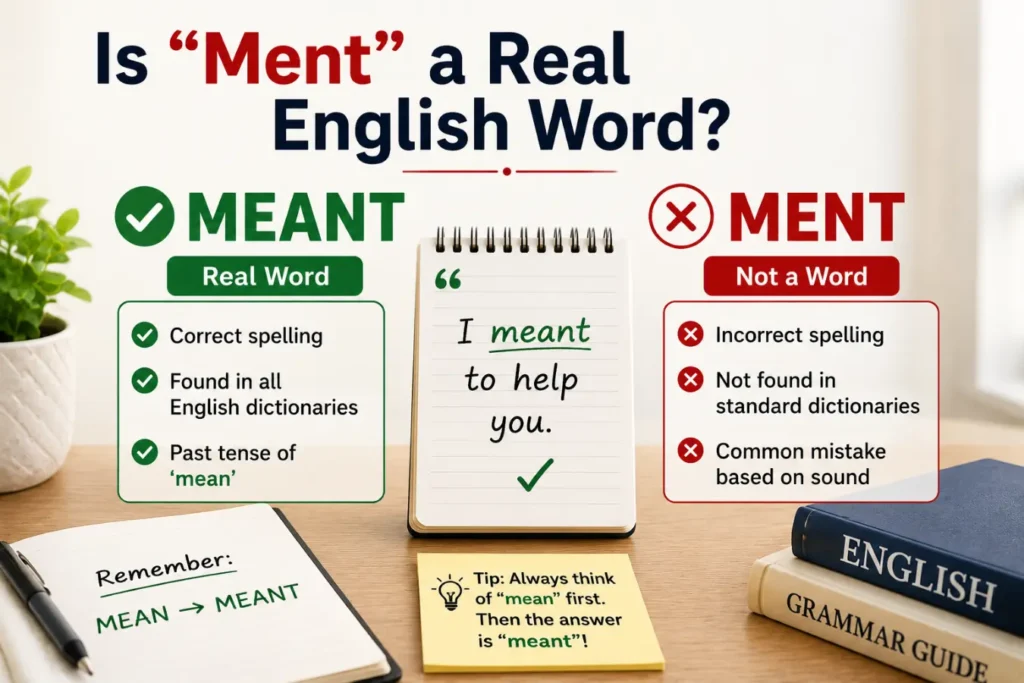
The simple answer is no.
Ment is not a correct English word. It does not appear as a standard spelling in English dictionaries.
People usually write ment because it sounds like meant when spoken quickly. This mistake often happens while typing or learning English.
If you are writing in English, always replace ment with meant.
Meant or Ment: Side-by-Side Comparison
The table below makes the difference easy to understand.
| Feature | Meant | Ment |
| Correct English spelling | ✅ Yes | ❌ No |
| Dictionary accepted | ✅ Yes | ❌ No |
| Past tense of “mean” | ✅ Yes | ❌ No |
| Formal writing | ✅ Yes | ❌ Never |
| Everyday writing | ✅ Yes | ❌ Never |
| Grammar correct | ✅ Yes | ❌ Incorrect |
Bottom line: Whenever you choose between meant or ment, always use meant.
Why Do People Spell “Meant” as “Ment”?
English pronunciation often causes spelling mistakes.
The word meant sounds almost like ment. The silent letters make the correct spelling harder to remember.
Other reasons include:
- Fast typing
- Autocorrect errors
- Learning English as a second language
- Writing words exactly as they sound
Although the mistake is common, it is still incorrect.
How to Use “Meant” Correctly
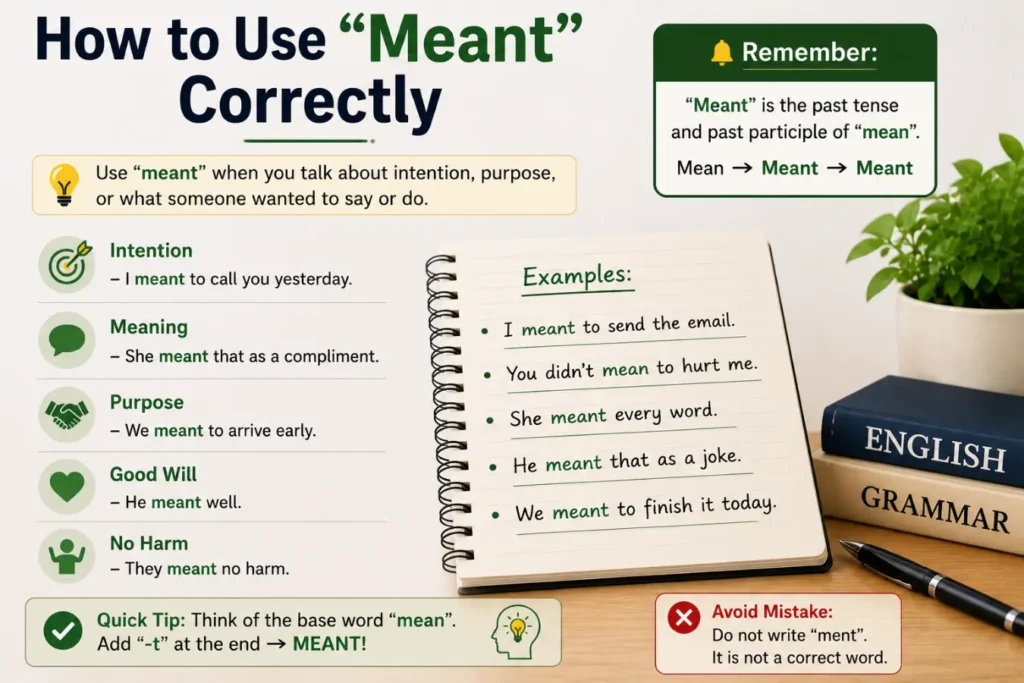
Use meant whenever you talk about intention, purpose, or what someone wanted to say.
Examples:
- I meant to send the email.
- We meant to arrive earlier.
- She meant that as a compliment.
- He meant well.
- They meant exactly what they said.
These examples all use the correct spelling.
Everyday Examples of Meant in Sentences
Here are situations where people naturally use meant.
Home
- I meant to wash the dishes.
At work
- She meant to finish the report today.
At school
- The teacher meant that homework was optional.
Between friends
- I never meant to hurt your feelings.
While texting
- Sorry, I meant to reply sooner.
These examples show how often this word appears in daily life.
Common Mistakes to Avoid
Many writers make small spelling errors with this word.
Mistake 1: Writing ment instead of meant
❌ I ment to help.
✅ I meant to help.
Mistake 2: Forgetting that meant comes from mean
Remember the verb:
- Mean
- Meant
- Meant
Mistake 3: Trusting pronunciation
English spelling does not always match pronunciation.
Always check the spelling before sending important messages.
Easy Tricks to Remember the Correct Spelling
Simple memory tips can help.
- Think of mean before writing meant.
- Notice that meant keeps the letters ea.
- Read your writing before submitting it.
- Use spell check, but do not depend on it completely.
- Practice writing the word in full sentences.
These habits make the correct spelling easier to remember.
Where You Will See “Meant” Every Day

The word meant appears in many places.
You may see it in:
- Emails
- School assignments
- Storybooks
- News articles
- Text messages
- Business communication
- Social media posts
Because it is common, learning the correct spelling is important.
Synonyms
These words have similar meanings, depending on the sentence.
- Intended
- Planned
- Wanted
- Referred
- Implied
- Expressed
- Signified
Choose the best word based on the context.
Expert Insight: Why Correct Spelling Matters
Correct spelling improves communication.
Readers understand your message faster when every word is accurate. Small grammar mistakes can also reduce confidence in your writing.
Using meant instead of ment shows attention to detail. It also helps students, professionals, and content creators produce polished English.
Clear writing builds trust with both readers and search engines.
Frequently Asked Questions
Is meant the correct spelling?
Yes. Meant is the correct spelling in English.
Is ment ever correct?
No. Ment is considered a spelling mistake.
Why do people write ment?
Many people spell the word the way it sounds.
What verb does meant come from?
It comes from the verb mean.
Can I use ment in formal writing?
No. Always use meant.
How do I remember the spelling?
Think of the base word mean. Then add -t to form meant.
Is meant used in American and British English?
Yes. Both varieties use the spelling meant.
Conclusion
Choosing between meant or ment is simple once you know the rule. In fact, meant is the only correct spelling in standard English. It is the past tense and past participle of mean, so it works in every type of writing. On the other hand, ment is only a spelling mistake and should never appear in formal or casual English. By learning this small difference, you can improve your grammar, strengthen your writing, and communicate with greater confidence. So, whenever you feel unsure, remember the base word mean. That way, you will always choose meant correctly.

Sophia Hayes is a language researcher and content writer at WordsCoppe.com, specializing in word comparisons, spelling differences, grammar explanations, and vocabulary insights. She is passionate about making English easier to understand through clear, accurate, and practical content. By breaking down complex language topics into simple explanations, Sophia helps readers improve their writing and communication skills. Her goal is to make learning English more accessible, engaging, and confidence-building for learners worldwide.