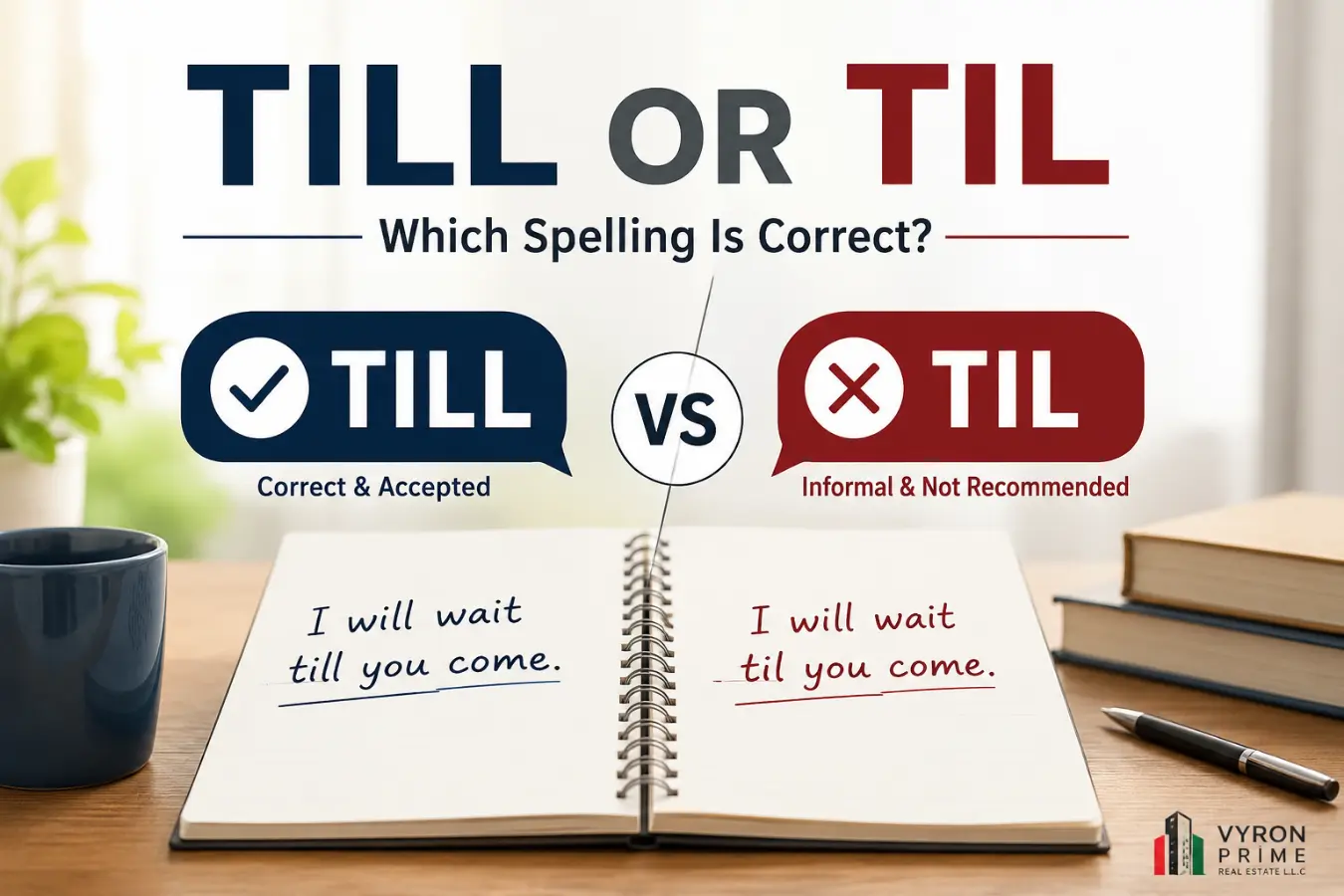
Till or til is a common question for anyone who writes English. Many people think til is just a shorter way to write till. However, that is not always true. The two words look similar, but they have different levels of acceptance in standard English. Knowing the difference helps you write more clearly and avoid simple mistakes.
In this guide, you will learn what till and til mean, which spelling dictionaries recommend, and when each one works best. You will also see real-life examples, a comparison table, common mistakes, expert tips, and answers to popular questions. By the end, you will know exactly which spelling fits your writing.
Quick Summary Box
- Till is a correct English word that means until.
- Til is an informal spelling.
- Most dictionaries and style guides prefer till.
- Until is the safest choice in formal writing.
- Use til only in casual writing if your audience accepts it.
- The apostrophe form ’til is more accepted than til, but it is still informal.
What Does “Till” Mean?
Till means the same thing as until. It tells us when something continues up to a certain time.
For example:
- I’ll stay here till noon.
- Wait till I finish.
- The store stays open till 9 p.m.
Although many people think till is a shortened form of until, it is actually an older English word. It has existed for hundreds of years.
What Does “Til” Mean?
Til is an informal spelling that people often use instead of till or until.
Examples include:
- I’ll see you til tomorrow.
- She worked til midnight.
Many writers use til in text messages, social media posts, and casual conversations. However, most dictionaries do not recommend it for formal writing.
If you want a shortened form of until, many editors prefer ’til because it shows that letters were omitted.
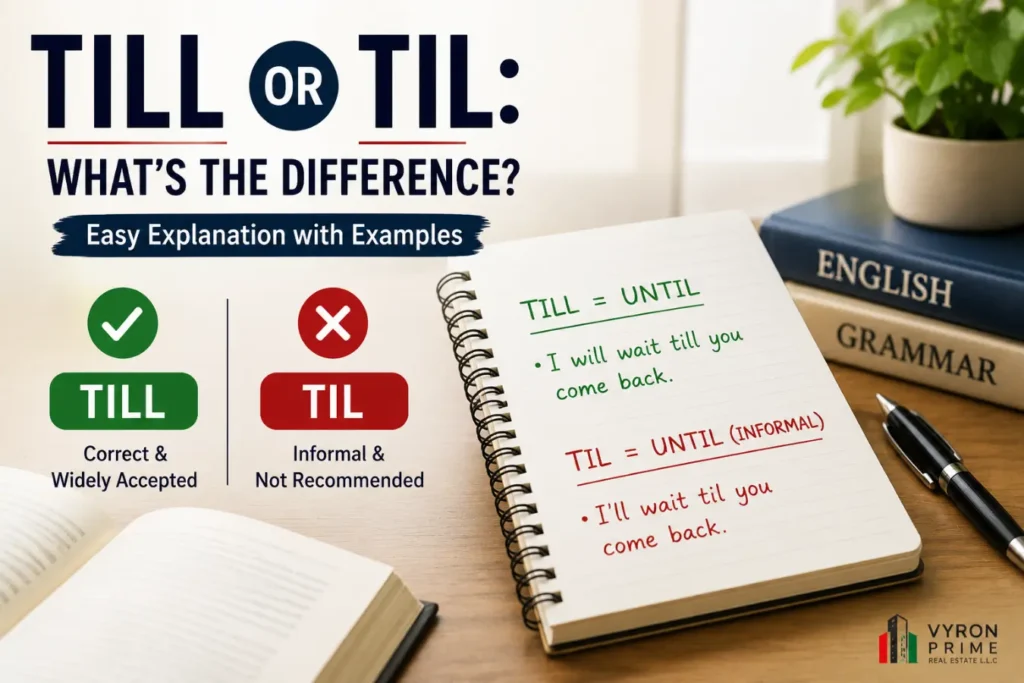
Till or Til: What’s the Difference?
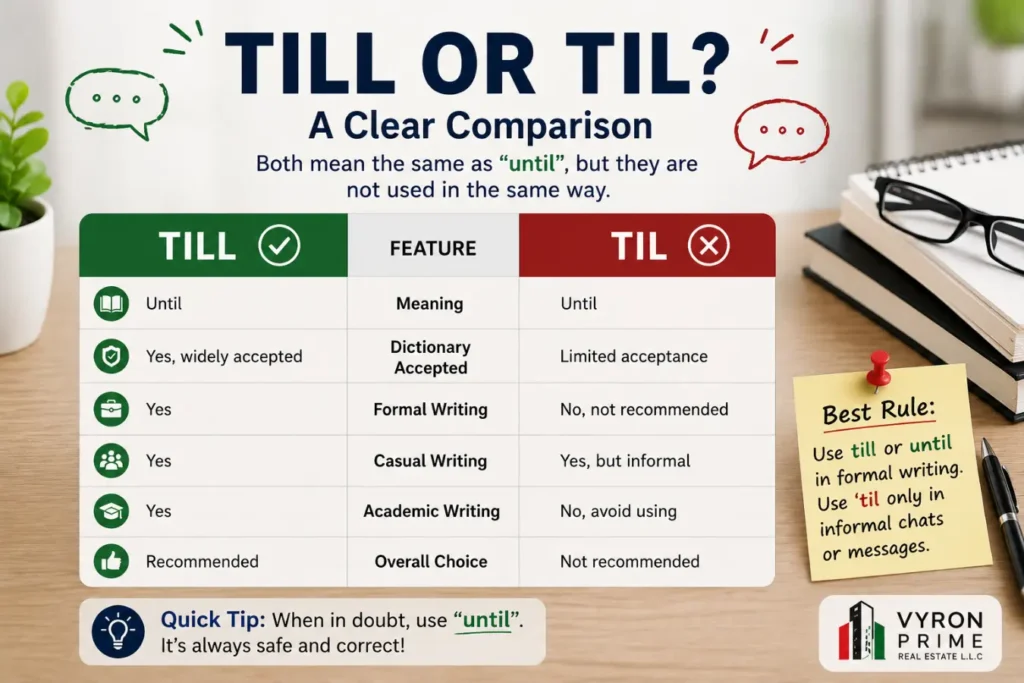
Although both words express the same idea, they are not equally accepted.
| Feature | Till | Til |
| Meaning | Until | Until |
| Dictionary accepted | Yes | Limited acceptance |
| Formal writing | Yes | No |
| Casual writing | Yes | Yes |
| Academic writing | Recommended | Not recommended |
| Business writing | Recommended | Avoid |
Winner: If you must choose between till or til, till is the better option in most situations.
Why Is “Till” More Common in Standard English?
Many people assume till came from until. Surprisingly, history shows the opposite.
The word till appeared in English before until became common. Later, until developed by adding the prefix un-.
Because of this history, dictionaries recognize till as a complete word, not a shortened version.
That is why professional writers often choose till instead of til.
When Should You Use “Till”?
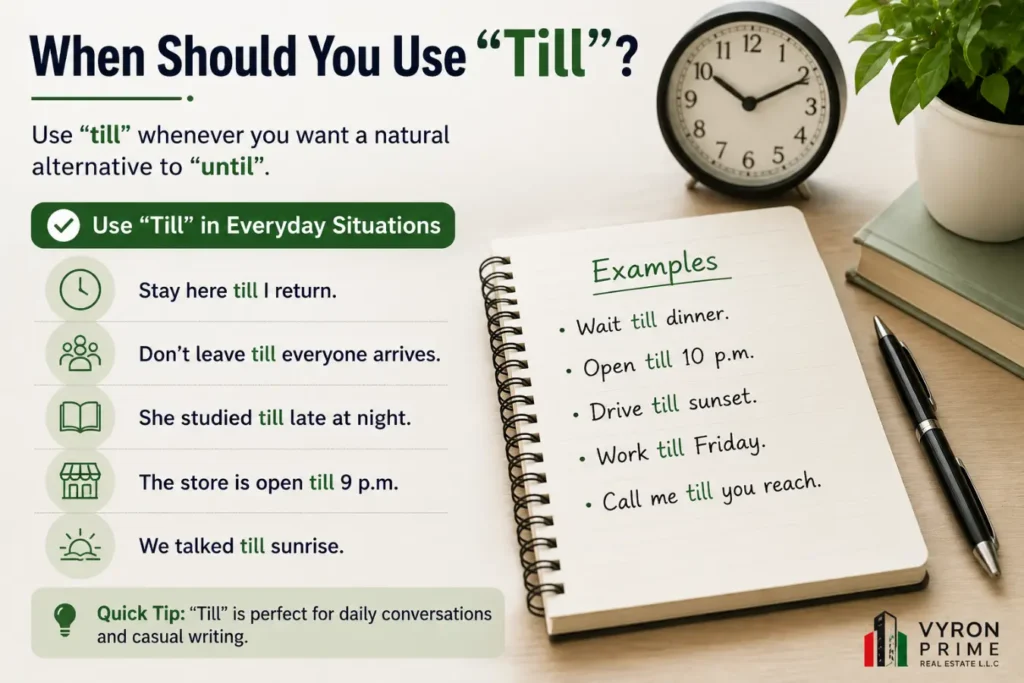
Use till whenever you want a natural alternative to until.
Good examples:
- Stay here till I return.
- We talked till sunrise.
- Don’t leave till everyone arrives.
- She studied till late at night.
These sentences sound natural in everyday English.
When Is “Til” Acceptable?
You may use til in relaxed situations.
For example:
- Text messages
- Personal notes
- Social media captions
- Friendly chats
Even then, many editors still prefer ’til because it reflects the shortened form of until.
For school assignments, professional emails, reports, and business documents, choose till or until instead.
Real-Life Examples of Till and Til
Here are common situations where people use these words.
At school
- Wait till the teacher arrives.
At work
- I’ll finish this project till Friday.
While texting
- See you til later!
In a formal email
- Please submit your report until Friday.
- Please submit your report by Friday.
Notice that formal writing usually favors until or till, depending on the sentence.
Common Mistakes People Make
Many learners make the same errors.
Mistake 1: Thinking till is incorrect
It is completely correct.
Mistake 2: Using til in formal writing
Most style guides discourage this.
Mistake 3: Believing till is a modern shortcut
Actually, till is older than until.
Mistake 4: Confusing till with the cash register meaning
Till can also mean the drawer where money is stored in a store.
Example:
- The cashier counted the money in the till.
Context tells you which meaning is intended.
Easy Tips to Remember the Correct Spelling
Remember these simple tricks.
- Choose until for very formal writing.
- Choose till for everyday writing.
- Avoid til in professional documents.
- If you shorten until, write ’til instead of til.
- When unsure, use until because everyone accepts it.
These tips help you avoid spelling mistakes.
How People Use Till in Everyday Life
You will hear till almost everywhere.
Examples include:
- Wait till dinner.
- Open till 10 p.m.
- Study till bedtime.
- Drive till sunset.
- Work till Friday.
Native speakers use till naturally in daily conversations.
Synonyms and Similar Words
Depending on the sentence, these words may replace till.
- Until
- Up to
- Before
- Through
- By (in some contexts)
Choose the word that best fits your sentence.
Expert Insight: Why This Difference Matters
Using the correct spelling improves your writing.
Readers notice small language details. Correct spelling also builds trust, especially in business, education, and professional communication.
Search engines value high-quality content that follows standard English conventions. Using accepted forms like till or until helps create clear, reliable writing.
If your goal is polished English, till is a stronger choice than til.
Frequently Asked Questions
Is till a real word?
Yes. Till is a complete English word and has existed for centuries.
Is til grammatically correct?
It is considered informal. Most formal writing avoids it.
Which is better, till or til?
Till is the better choice because dictionaries widely accept it.
Should I write till or until?
Both are correct. Until sounds more formal, while till feels more conversational.
Is ’til correct?
Yes. ‘Til is an accepted contraction, but it remains informal.
Can till mean something other than until?
Yes. It can also refer to a cash drawer in a store.
Do professional writers use til?
Most professional writers choose till or until instead.
Conclusion
Choosing between till or til becomes easy once you know the difference. Till is a proper English word with a long history and works well in both everyday and professional writing. Til, on the other hand, is informal and is best saved for casual messages or social media. If you want the safest option, use until in formal situations and till in natural everyday writing. Understanding these small spelling differences makes your writing clearer, more accurate, and easier for readers to trust. The next time you wonder whether to write till or til, you will know exactly which spelling to choose.

Sophia Hayes is a language researcher and content writer at WordsCoppe.com, specializing in word comparisons, spelling differences, grammar explanations, and vocabulary insights. She is passionate about making English easier to understand through clear, accurate, and practical content. By breaking down complex language topics into simple explanations, Sophia helps readers improve their writing and communication skills. Her goal is to make learning English more accessible, engaging, and confidence-building for learners worldwide.