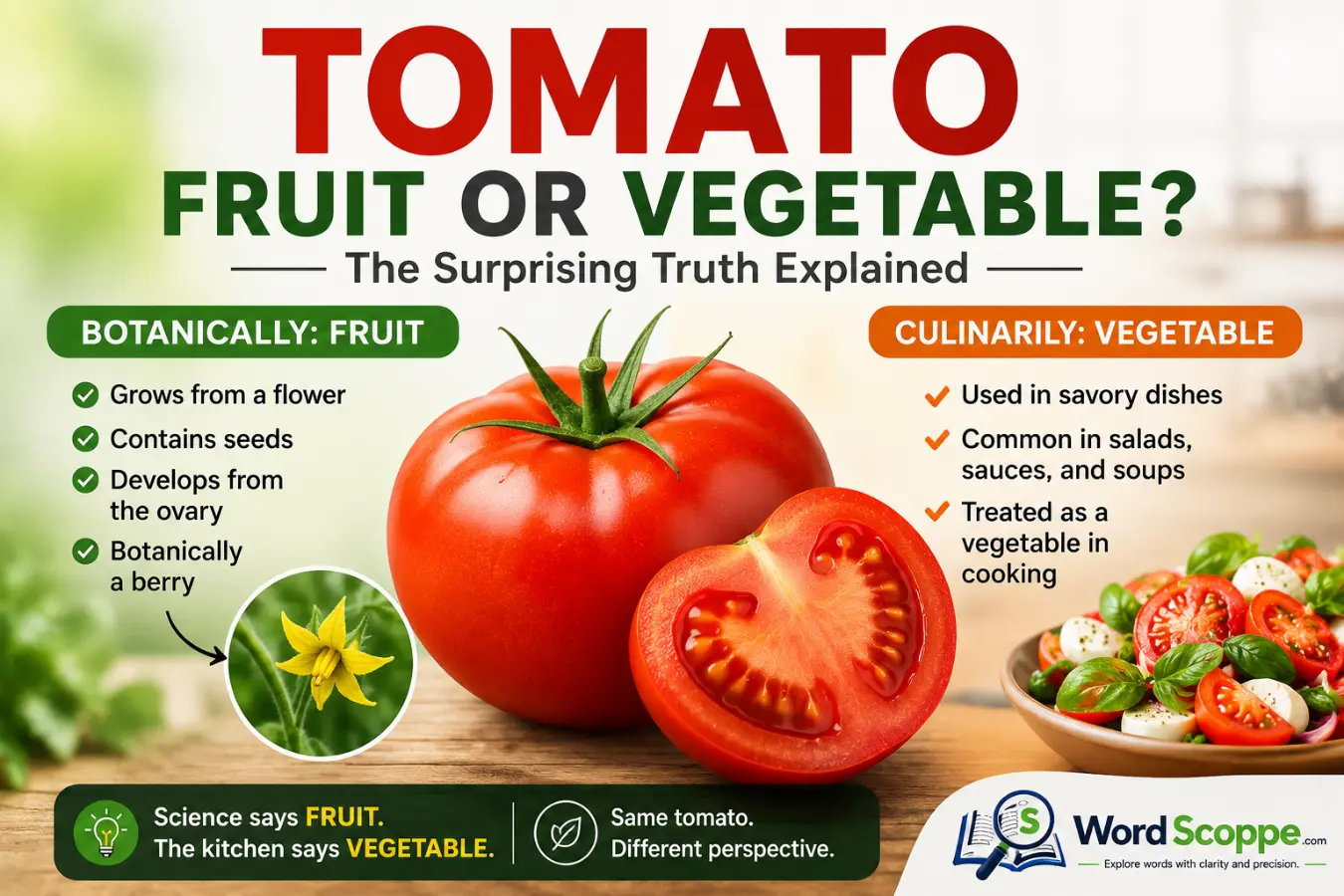
Tomato fruit or vegetable is a common question with a surprisingly interesting answer. Botanically, a tomato is a fruit because it develops from a flower’s ovary. In cooking, people usually treat tomatoes as vegetables. They appear in salads, sauces, soups, sandwiches, and many savory meals. This difference comes from two ways of classifying food. Science looks at how a plant grows and reproduces. Cooking looks at taste, texture, and common food use. Therefore, both answers can make sense in different situations. In this guide, you will learn why tomatoes count as fruits. You will also discover why cooks often call them vegetables. We will cover simple examples, botanical facts, common mistakes, and everyday uses. By the end, the answer will be easy to remember.
Quick Summary
- A tomato is botanically a fruit.
- It develops from the flower of the tomato plant.
- Tomatoes contain seeds inside their fleshy body.
- Botanists classify tomatoes as fruits based on plant structure.
- Cooks usually treat tomatoes as vegetables.
- Their savory taste makes them common in main dishes.
- The tomato belongs to the nightshade family.
- In botany, a tomato counts as a type of berry.
- Both classifications depend on the context.
What Is the Botanical Definition?
Botany uses plant structure to classify fruits and vegetables. A fruit develops from the reproductive part of a flowering plant.
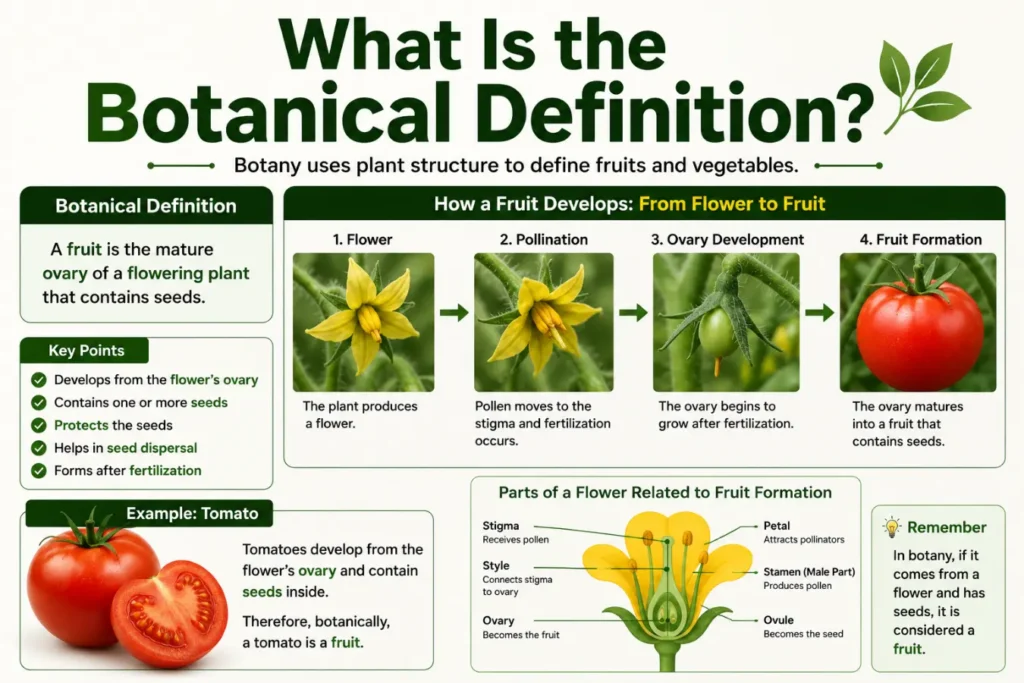
The flower’s ovary plays an important role in this process. After fertilization, the ovary can develop into a fruit.
The tomato follows this pattern.
A tomato flower produces a fleshy structure that contains seeds. Therefore, botanists classify the tomato as a fruit.
This definition does not depend on sweetness. A fruit can taste sweet, sour, bitter, or savory.
That point explains why several familiar foods create confusion.
Why Is a Tomato a Fruit?
The answer comes from how the tomato grows.
Tomatoes develop from flowers on the tomato plant. Their flesh surrounds seeds that form during reproduction.
This structure matches the botanical definition of a fruit.
For example, apples and peaches also develop from flowers. Their fruits protect seeds and help continue the plant’s life cycle.
Tomatoes follow the same basic process.
So, from a scientific viewpoint, the classification remains clear.
A tomato is a fruit because it develops from a flower’s ovary and contains seeds.
Why Do People Call Tomatoes Vegetables?
Cooking uses a different system.
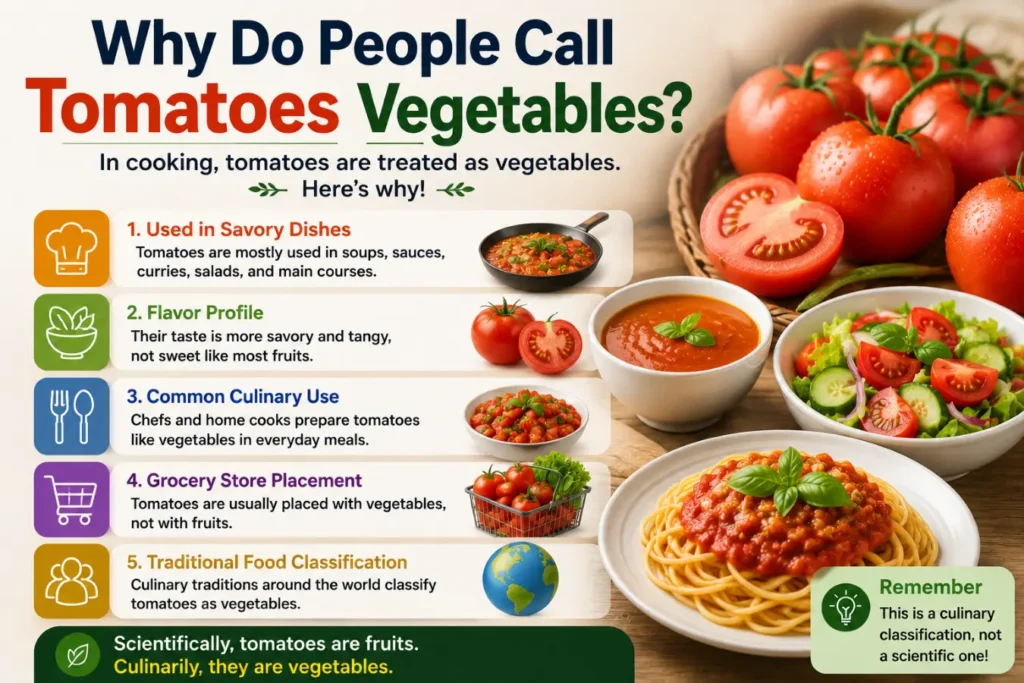
Chefs often group foods according to their flavor and how people prepare them. Tomatoes usually appear in savory recipes rather than desserts.
People commonly combine tomatoes with onions, garlic, herbs, meat, rice, and pasta.
They also use tomatoes in sauces, curries, soups, and salads.
As a result, many people naturally call them vegetables.
This does not make the botanical classification wrong. Instead, it reflects everyday food language.
Therefore, science and cooking simply use different classification systems.
Tomato Fruit or Vegetable: What Is the Difference?
The answer depends on the field you are discussing.
| Classification | Tomato | Main Reason |
| Botanical | Fruit | Develops from a flower’s ovary |
| Culinary | Vegetable | Used mainly in savory dishes |
| Plant science | Fruit | Contains seeds and develops after flowering |
| Everyday language | Vegetable | Commonly prepared like vegetables |
Both categories describe the same food.
The difference comes from the purpose behind each classification.
Botanists focus on plant development. Cooks focus on food preparation and flavor.
Therefore, context determines which label makes more sense.
Are Tomatoes Technically Berries?
Yes. Botanically, tomatoes qualify as berries.
A berry develops from a single flower’s ovary. It usually has fleshy tissue and seeds inside.
Tomatoes fit this description.
However, everyday language rarely calls tomatoes berries. Most people associate berries with foods like strawberries and blueberries.
Interestingly, botanical berry rules can differ from everyday definitions.
For example, bananas also qualify as berries under botanical classification.
Meanwhile, strawberries do not fit the strict botanical definition of a true berry.
These examples show why scientific categories can differ from common food terms.
What Makes a Tomato Different From Other Fruits?
Tomatoes have several features that make them useful examples in plant science.
They grow on flowering plants. Their flowers produce the fruit after pollination and fertilization.
The mature fruit contains seeds surrounded by juicy flesh.
Tomatoes also come in many varieties. Their shapes, sizes, colors, and flavors can vary greatly.
Common varieties include:
- Cherry tomatoes
- Grape tomatoes
- Roma tomatoes
- Beefsteak tomatoes
- Plum tomatoes
- Heirloom tomatoes
Despite their differences, these varieties share the same basic botanical classification.
Real-Life Examples of Tomato Classification
Consider a fresh tomato in a garden.
A botanist sees a seed-bearing structure that developed from a flower. Therefore, the botanist calls it a fruit.
Now imagine a chef preparing dinner.
The chef chops tomatoes for a pasta sauce. The chef treats them like other savory vegetables.
Both people describe the same tomato.
Their answers differ because their goals differ.
Another example involves a grocery store. Stores often place tomatoes near lettuce, cucumbers, and peppers.
That arrangement follows shopping habits rather than strict botanical rules.
Common Mistakes About Tomatoes
Several myths make this topic more confusing than necessary.
Mistake 1: Thinking Every Fruit Must Taste Sweet
Taste does not determine botanical classification.
Tomatoes can taste sweet, sour, or savory. Their flavor does not change their plant structure.
Mistake 2: Assuming Seeds Automatically Make Something a Fruit
Seeds alone do not provide the complete botanical test.
The fruit must also develop from the appropriate part of a flowering plant.
Tomatoes meet this requirement.
Mistake 3: Thinking Culinary Terms Are Scientific Terms
Food labels often follow cooking traditions.
Therefore, culinary vegetables do not always match botanical vegetables.
Mistake 4: Believing There Is Only One Correct Answer
The answer changes with context.
Botany calls tomatoes fruits. Culinary language commonly treats them as vegetables.
How Are Tomatoes Used in Daily Life?
Tomatoes play an important role in many cuisines.
People eat them raw, cooked, dried, roasted, or blended.
Fresh tomatoes work well in salads and sandwiches. Cooked tomatoes form the base of many sauces and soups.
People also use tomato paste to add rich flavor to meals.
In some cultures, tomatoes appear in curries, stews, chutneys, and rice dishes.
Their wide range of uses explains their popularity.
The tomato’s culinary role also explains why people usually place it in the vegetable category.
Are Tomatoes Healthy Fruits?
Tomatoes provide several useful nutrients.
They contain vitamin C, vitamin K, potassium, and folate. They also provide a natural compound called lycopene.
Lycopene gives many tomatoes their red color.
Tomatoes also contain water and fiber. Their nutritional value can vary between varieties and preparation methods.
Eating a varied diet provides the best overall nutrition.
Therefore, tomatoes can fit easily into a balanced eating pattern.
However, nutrition advice should consider your individual dietary needs.
Synonyms and Related Terms
“Tomato” does not have many true synonyms in standard English. However, several related terms help explain the topic.
Botanically, the tomato belongs to the fruit category.
In everyday cooking, however, people usually use it like a vegetable.
The tomato plant produces these fruits after flowering.
Solanum lycopersicum is the scientific name for the cultivated tomato.
Botanical fruit describes a structure that develops from a flower.
Culinary vegetable describes foods commonly prepared in savory meals.
These terms can help you understand search results and scientific discussions.
Expert Insight: Why Does the Classification Matter?
The classification matters because science and everyday language serve different purposes.
Botanical categories help scientists describe plant structures consistently.
Culinary categories help cooks organize ingredients according to their use.
Neither system needs to replace the other.
Understanding both viewpoints also improves your general science knowledge.
The tomato offers a simple example of how language can change across fields.
This distinction appears with other foods too. Cucumbers, pumpkins, and peppers also create similar questions.
Learning the context helps you understand why different sources may use different labels.
Frequently Asked Questions
Is a tomato a fruit or a vegetable?
Botanically, a tomato is a fruit. Cooks usually treat it as a vegetable.
Why is a tomato considered a fruit?
A tomato develops from a flower’s ovary and contains seeds. These features meet the botanical definition of fruit.
Is a tomato technically a berry?
Yes. Botanically, a tomato qualifies as a berry because of its structure and development.
Why do chefs call tomatoes vegetables?
Chefs classify foods based on culinary use, flavor, and preparation. Tomatoes usually appear in savory dishes.
Are tomatoes related to potatoes?
Yes. Tomatoes and potatoes belong to the same plant family, called Solanaceae.
Do tomatoes have seeds?
Yes. The seeds sit inside the fleshy part of the mature tomato.
Are cherry tomatoes also fruits?
Yes. Cherry tomatoes have the same basic botanical classification as other tomatoes.
What is the scientific name of a tomato?
The scientific name of the cultivated tomato is Solanum lycopersicum.
Conclusion
So, tomato fruit or vegetable has two valid answers depending on the context. Botanically, tomatoes are fruits because they develop from flowers and contain seeds. More specifically, scientists classify them as berries. In the kitchen, however, people usually treat tomatoes as vegetables. Their savory flavor makes them useful in sauces, salads, soups, and many main dishes. This difference shows how classification can depend on the purpose behind a definition. Science focuses on plant structure, while cooking focuses on food use. Therefore, you do not need to choose one answer for every situation. When discussing botany, call the tomato a fruit. When discussing cooking, calling it a vegetable makes perfect sense.

Sophia Hayes is a language researcher and content writer at WordsCoppe.com, specializing in word comparisons, spelling differences, grammar explanations, and vocabulary insights. She is passionate about making English easier to understand through clear, accurate, and practical content. By breaking down complex language topics into simple explanations, Sophia helps readers improve their writing and communication skills. Her goal is to make learning English more accessible, engaging, and confidence-building for learners worldwide.