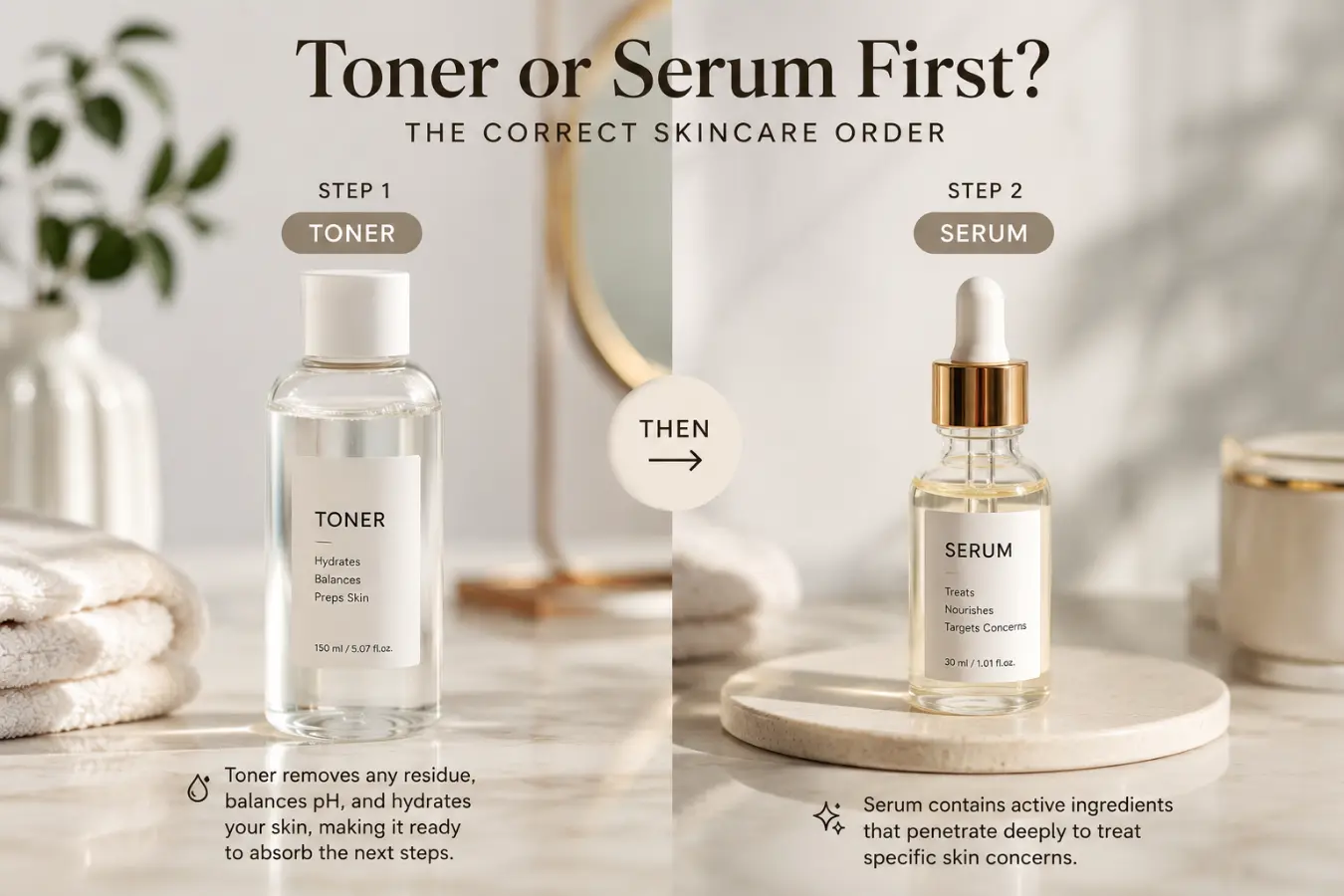
Toner or serum first is a common skincare question. Many people feel confused about the correct order. Using products the right way helps your skin get the best results. It also prevents wasting expensive skincare products.
A toner prepares your skin after cleansing. A serum delivers active ingredients deep into the skin. Each product has a different job. Therefore, using them in the correct order matters.
Whether your skin is dry, oily, sensitive, or combination, following the right routine can improve hydration and skin health. In this guide, you will learn the difference between toner and serum, why the order matters, and how to build a simple skincare routine that works.
Quick Summary
Featured Snippet Answer
- Apply toner before serum.
- Toner comes right after cleansing.
- Toner removes leftover dirt and oil.
- It balances your skin’s pH level.
- Serum follows toner because it contains concentrated active ingredients.
- Applying toner first helps your skin absorb serum better.
- Finish with moisturizer and sunscreen during the day.
Toner vs Serum: Quick Comparison
| Feature | Toner | Serum |
| Used After | Cleanser | Toner |
| Main Purpose | Refreshes and prepares skin | Treats specific skin concerns |
| Texture | Thin and watery | Slightly thicker |
| Active Ingredients | Hydrating or soothing ingredients | High-strength active ingredients |
| Absorption | Very fast | Fast but deeper into skin |
| Best Time | Morning and night | Morning and night |
| Followed By | Serum | Moisturizer |
What Is a Toner?
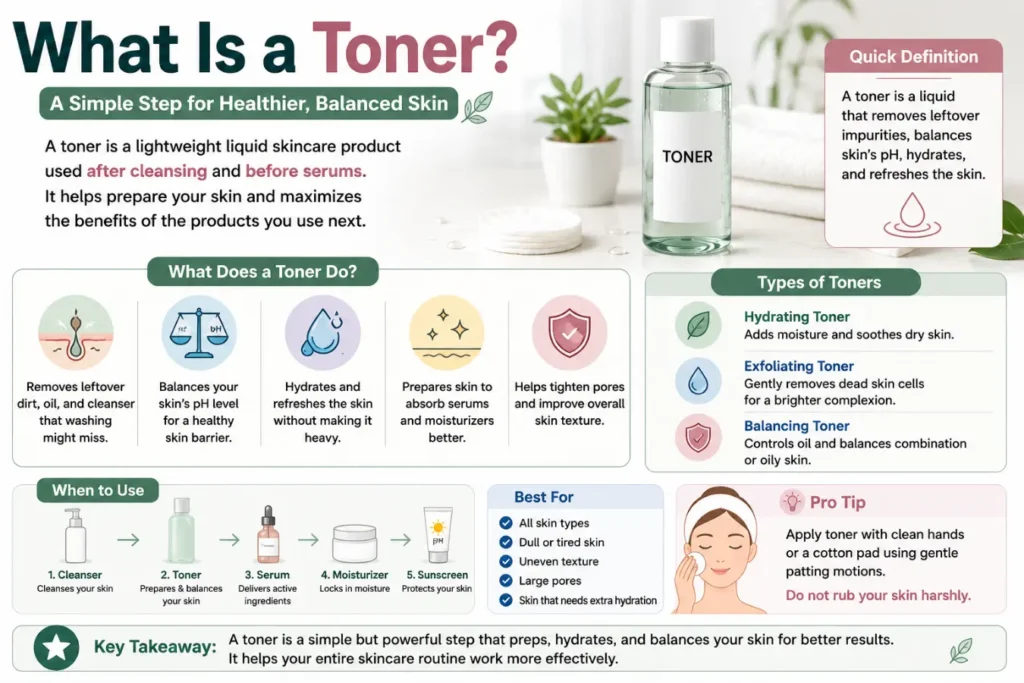
A toner is a lightweight skincare product used after washing your face. It refreshes your skin and removes any remaining dirt, oil, or cleanser.
Modern toners do much more than clean your skin. Many contain hydrating ingredients like:
- Hyaluronic acid
- Glycerin
- Aloe vera
- Rose water
- Niacinamide
A good toner prepares your skin for the next skincare steps. It creates a smooth base so other products absorb better.
Benefits of Toner
- Removes leftover impurities
- Restores skin balance
- Adds light hydration
- Helps reduce dryness
- Prepares skin for serum
- Makes skincare products absorb more effectively
What Is a Serum?
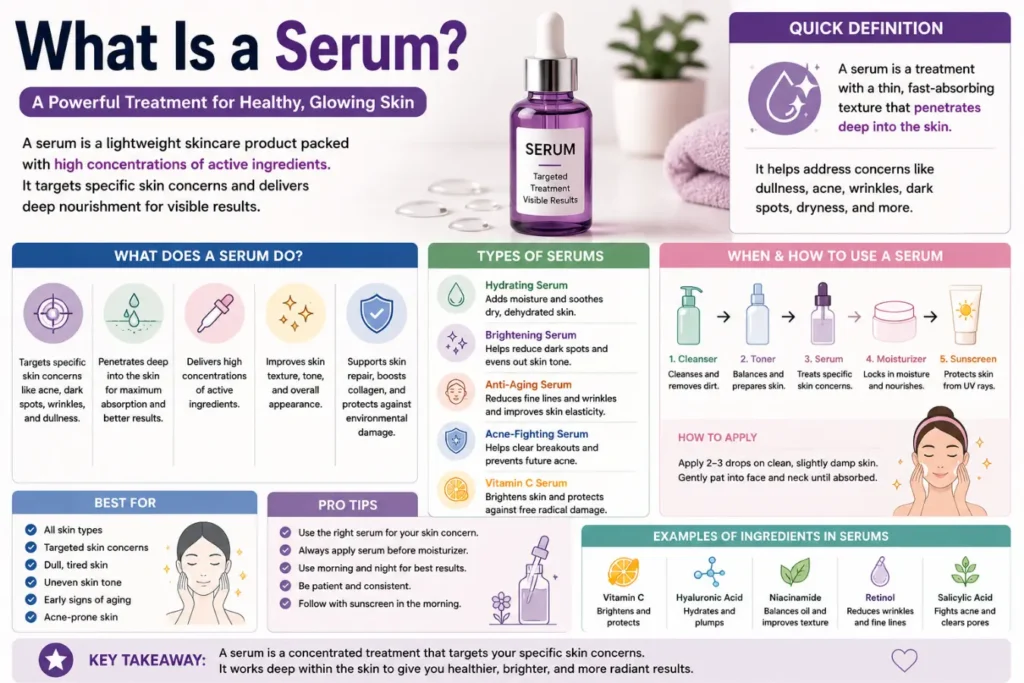
A serum is a concentrated skincare product designed to target specific skin concerns. It contains powerful ingredients that work deeper than a toner.
Different serums solve different problems.
Common examples include:
- Vitamin C serum for brightening
- Hyaluronic acid serum for hydration
- Retinol serum for fine lines
- Niacinamide serum for oily skin
- Peptide serum for firmness
Since serums contain active ingredients, they should be applied after toner and before moisturizer.
Benefits of Serum
- Hydrates deeply
- Brightens dull skin
- Reduces dark spots
- Improves skin texture
- Supports collagen production
- Helps reduce fine lines
Toner or Serum First?
The correct order is simple:
Apply toner first, then serum.
This order gives your skincare products the best chance to work.
Toner refreshes your skin after cleansing. It also removes anything left behind on the surface. Then, your skin becomes ready to absorb the active ingredients inside your serum.
If you apply serum before toner, the toner may remove or dilute some of the serum. As a result, your serum may not work as well.
Correct Skincare Order
- Cleanser
- Toner
- Serum
- Moisturizer
- Sunscreen (morning only)
This routine works for almost every skin type.
Why Does the Order Matter?
Skincare products are designed from the thinnest texture to the thickest texture.
Toner has a watery consistency. Serum is usually thicker. Moisturizer is thicker than both.
Applying products in this order helps each layer absorb properly.
Think of your skin like a sponge.
A slightly damp sponge absorbs water more easily than a dry one. Likewise, skin that has just received toner absorbs serum better.
Using products in the wrong order can reduce their effectiveness.
How to Apply Toner and Serum Correctly
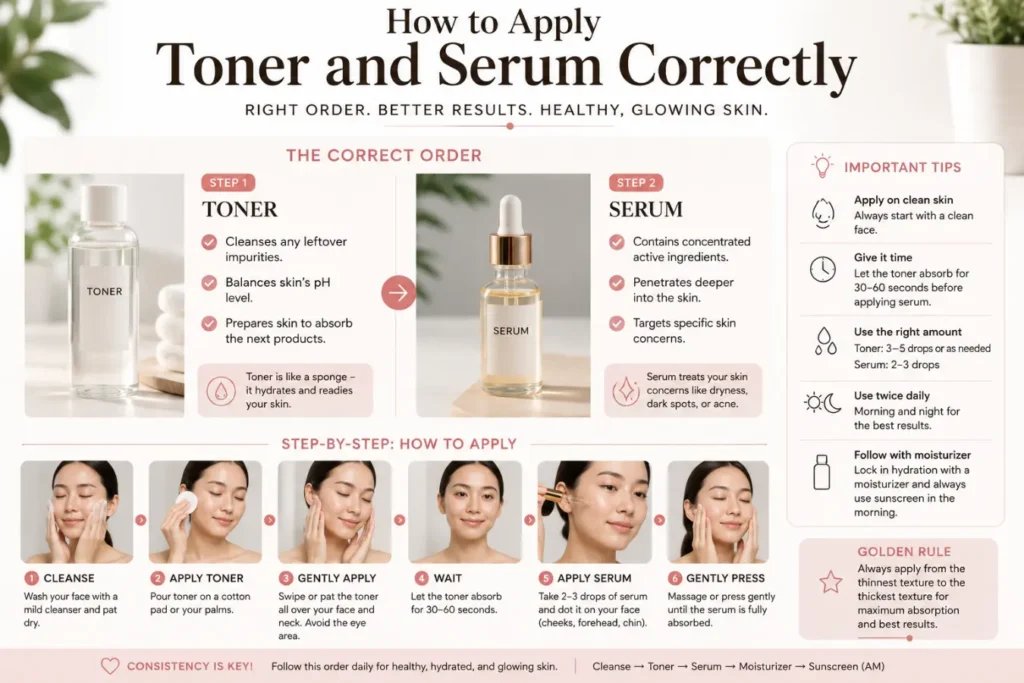
Following the right technique is just as important as using the right products.
Step 1: Clean Your Face
Wash your face with a gentle cleanser that matches your skin type.
Pat your skin dry with a soft towel.
Step 2: Apply Toner
Pour a small amount of toner onto your hands or a cotton pad.
Gently press or sweep it across your face.
Allow it to absorb for about 20 to 30 seconds.
Step 3: Apply Serum
Take two or three drops of serum.
Spread it evenly over your face.
Press it gently into your skin using your fingertips.
Avoid rubbing too hard.
Step 4: Moisturize
Apply a moisturizer to lock in hydration.
This step helps reduce moisture loss throughout the day.
Step 5: Finish With Sunscreen
During the daytime, always apply sunscreen with SPF 30 or higher.
This protects your skin from harmful UV rays and helps maintain the results of your skincare routine.
Does Every Skin Type Follow the Same Order?
Yes. The order remains the same for almost everyone.
However, the type of toner and serum may change depending on your skin.
| Skin Type | Recommended Toner | Recommended Serum |
| Dry Skin | Hydrating toner | Hyaluronic acid serum |
| Oily Skin | Balancing toner | Niacinamide serum |
| Sensitive Skin | Alcohol-free toner | Centella or ceramide serum |
| Acne-Prone Skin | Salicylic acid toner | Acne treatment serum |
| Combination Skin | Gentle hydrating toner | Lightweight balancing serum |
Choosing products made for your skin type helps improve results while reducing irritation.
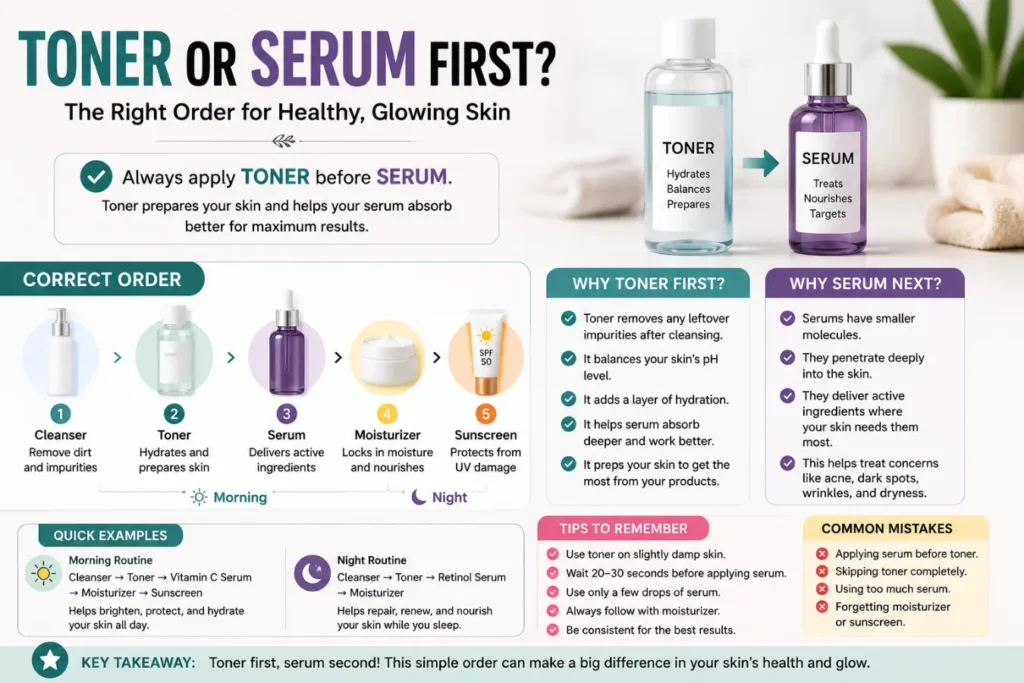
Real-Life Examples of Using Toner and Serum
Knowing the correct order is easier when you see it in everyday situations.
Example 1: Morning Routine
Sarah washes her face after waking up.
She applies a hydrating toner first. Next, she uses a vitamin C serum to brighten her skin. Then, she applies moisturizer and sunscreen.
Her skin feels fresh and protected all day.
Example 2: Night Routine
Ali cleans his face before bed.
He applies toner to refresh his skin. Then, he uses a retinol serum to reduce fine lines. Finally, he applies a nourishing moisturizer.
This routine supports skin repair while he sleeps.
Example 3: Dry Skin Routine
Emma has dry skin.
She starts with a moisturizing toner. Then, she applies a hyaluronic acid serum to lock in hydration. After that, she finishes with a rich moisturizer.
Her skin feels softer and less tight.
Common Mistakes When Using Toner and Serum
Many people do not see results because they make simple mistakes.
1. Applying Serum Before Toner
This is the most common mistake.
Always apply toner first to prepare your skin.
2. Skipping Toner Completely
A toner is not always required, but it can improve hydration and help your serum absorb more evenly.
3. Using Too Much Serum
Only two or three drops are usually enough.
More product does not mean better results.
4. Mixing Too Many Active Ingredients
Using several strong serums together may irritate your skin.
Introduce one active ingredient at a time.
5. Forgetting Moisturizer
Serum is not a replacement for moisturizer.
Moisturizer seals in hydration and supports the skin barrier.
6. Ignoring Sunscreen
Some serums, especially retinol and vitamin C, work best when paired with daily sunscreen.
Tips to Get Better Results
Small habits can make a big difference.
- Clean your face before applying skincare products.
- Apply toner while your skin is slightly damp.
- Wait about 20 to 30 seconds before applying serum.
- Use only a few drops of serum.
- Massage products gently instead of rubbing.
- Store vitamin C serum away from heat and sunlight.
- Follow your routine every day for the best results.
- Always patch-test a new product before regular use.
Consistency often matters more than using many products.
How This Skincare Order Helps in Daily Life
Using toner before serum offers practical benefits for everyday skincare.
Better Hydration
Toner adds light moisture, making your skin feel fresh before serum application.
Improved Product Absorption
Prepared skin absorbs active ingredients more effectively.
Healthier Skin Barrier
A balanced routine helps protect your skin from dryness and irritation.
Easier Makeup Application
Hydrated skin creates a smoother base for foundation and other makeup products.
Long-Term Skin Benefits
Following the correct order every day may improve skin texture, brightness, and overall appearance over time.
Synonyms
These related terms often appear when learning about skincare routines.
- Facial toner
- Skin toner
- Face serum
- Hydrating serum
- Vitamin C serum
- Hyaluronic acid serum
- Niacinamide serum
- Skincare routine
- Layering skincare products
- Morning skincare routine
- Evening skincare routine
- Skin hydration
- Active skincare ingredients
- Moisturizing routine
These terms help you understand how different skincare products work together.
Expert Insights
Dermatologists generally recommend applying skincare products from the thinnest texture to the thickest.
That is why toner comes before serum.
Toner prepares your skin by adding light hydration and balancing its surface. Serum then delivers concentrated ingredients where they are needed most.
Choosing products that match your skin type is equally important. A simple routine followed every day usually produces better results than using many products at once.
If you have sensitive skin or a skin condition, consult a dermatologist before adding strong active ingredients such as retinol or exfoliating acids.
Frequently Asked Questions (FAQs)
Should I use toner before serum?
Yes. Toner should always come before serum. It prepares your skin and improves product absorption.
Can I skip toner and use serum directly?
Yes. You can apply serum after cleansing if you do not use toner. However, a hydrating toner may improve your skincare routine.
How long should I wait between toner and serum?
Wait about 20 to 30 seconds or until the toner feels mostly absorbed.
Can I use toner and serum every day?
Yes. Most hydrating toners and serums are safe for daily use. Follow the product instructions for active ingredients.
Which comes first, toner or vitamin C serum?
Apply toner first. Then use your vitamin C serum before moisturizer.
Does toner help serum absorb better?
Yes. Toner lightly hydrates and prepares the skin, helping many serums absorb more effectively.
Should oily skin use toner before serum?
Yes. Oily skin also benefits from applying toner before serum. Choose lightweight, oil-free products designed for oily skin.
Can I apply moisturizer before serum?
No. Moisturizer should come after serum because it seals in hydration and active ingredients.
Conclusion
Understanding toner or serum first is simple once you know how skincare products work. The correct order is cleanser, toner, serum, moisturizer, and sunscreen during the day. This method helps your skin absorb active ingredients more effectively and supports a healthy skin barrier.
Toner refreshes and prepares your skin, while serum targets concerns such as dryness, dullness, dark spots, or w. Together, they create a balanced skincare routine that works for most skin types.
Choose products that suit your skin, apply them consistently, and avoid common layering mistakes. Over time, this simple routine can help your skin look healthier, smoother, and more radiant. Following the correct order every day allows you to get the most value from your skincare products while keeping your routine easy and effective.

Sophia Hayes is a language researcher and content writer at WordsCoppe.com, specializing in word comparisons, spelling differences, grammar explanations, and vocabulary insights. She is passionate about making English easier to understand through clear, accurate, and practical content. By breaking down complex language topics into simple explanations, Sophia helps readers improve their writing and communication skills. Her goal is to make learning English more accessible, engaging, and confidence-building for learners worldwide.