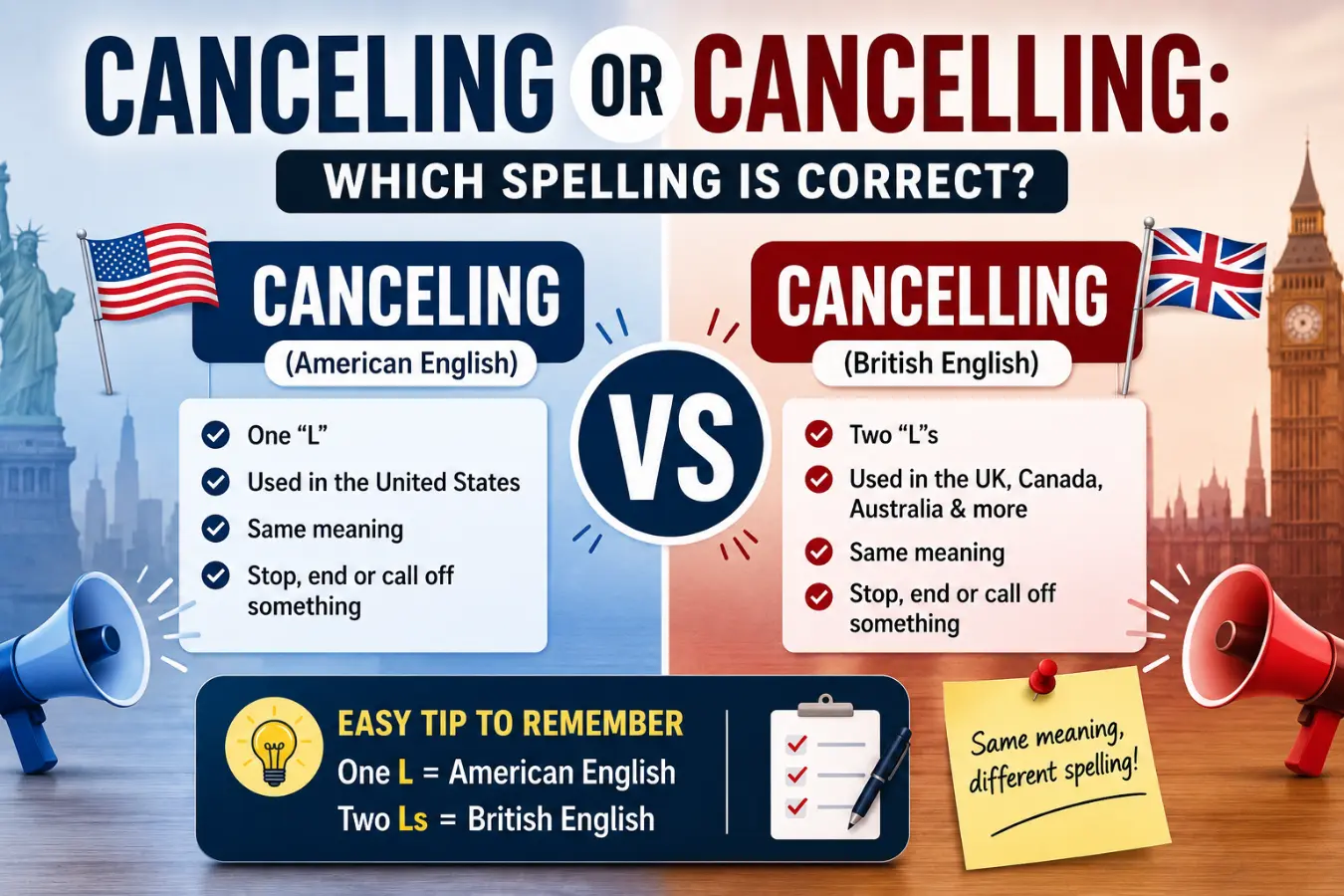
Canceling or cancelling is a common spelling question that confuses many English writers. The good news is that both spellings are correct. However, the right choice depends on whether you use American English or British English.
In the United States, canceling with one l is the standard spelling. In the United Kingdom, Canada, Australia, and many other English-speaking countries, cancelling with two l’s is preferred. Although the spelling changes, the meaning stays exactly the same.
This guide explains the difference in simple words. You’ll also find examples, comparison tables, memory tips, and common mistakes. By the end, you’ll know which spelling fits your writing style and audience.
Quick Summary
- Canceling is the American English spelling.
- Cancelling is the British English spelling.
- Both words mean to stop, end, or call something off.
- The meaning does not change.
- Choose one spelling based on your audience.
- Stay consistent throughout your writing.
What Does “Canceling” Mean?
Canceling is the present participle and gerund form of the verb cancel in American English.
It means stopping an event, ending a plan, or deciding that something will not happen.
Examples
- We are canceling our trip because of the weather.
- She is canceling her gym membership.
- They started canceling unnecessary meetings.
- The airline is canceling several flights today.
- He regrets canceling the appointment.
In American English, this spelling appears in schools, businesses, newspapers, and official documents.
What Does “Cancelling” Mean?
Cancelling has the same meaning as canceling, but it follows British English spelling rules.
It also means stopping or ending something before it happens or finishes.
Examples
- They are cancelling tomorrow’s concert.
- She keeps cancelling lunch plans.
- The school is cancelling outdoor activities.
- We are cancelling our holiday this year.
- The company announced it was cancelling the event.
If you write for readers in the UK, Australia, New Zealand, or Canada, this spelling is usually the better choice.
Canceling or Cancelling: What’s the Difference?
The only difference is the variety of English you use.
| Feature | Canceling | Cancelling |
| English Style | American English | British English |
| Meaning | Stop or end something | Stop or end something |
| Pronunciation | Same | Same |
| Correct? | ✅ Yes | ✅ Yes |
| Used in the USA | ✅ Yes | Rare |
| Used in the UK | Rare | ✅ Yes |
The pronunciation stays the same. Only the spelling changes.
Which Spelling Should You Use?
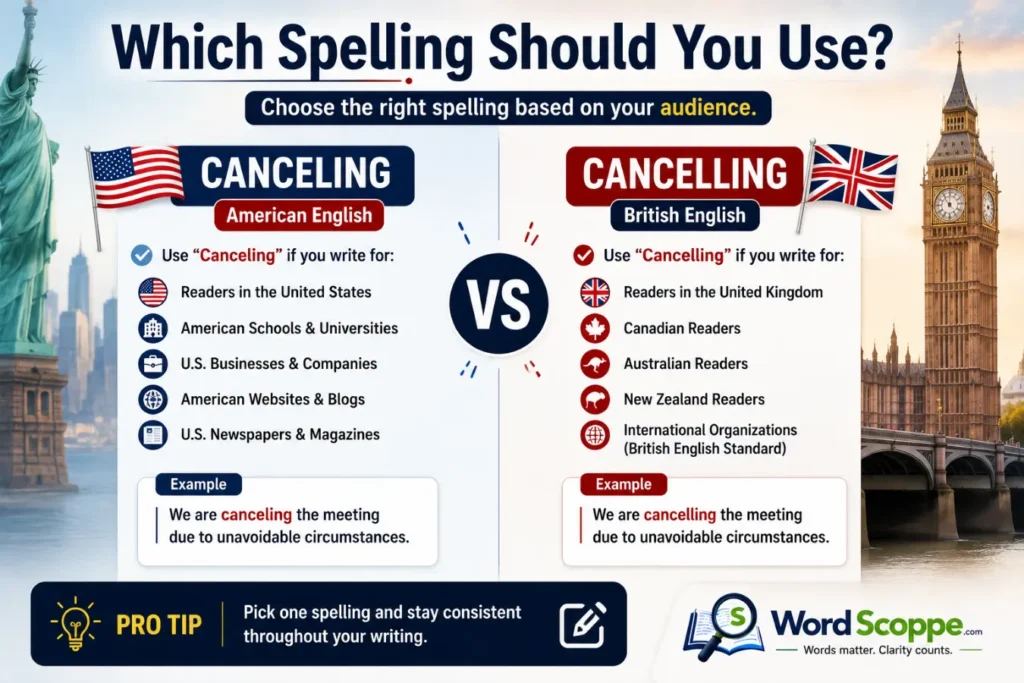
The best spelling depends on your audience.
Use Canceling If You Write For:
- Readers in the United States
- American schools
- U.S. businesses
- American websites
- U.S. newspapers
Use Cancelling If You Write For:
- Readers in the United Kingdom
- Canada
- Australia
- New Zealand
- International organizations that follow British English
If your website targets a global audience, choose one style and use it consistently.
Real-Life Examples of Canceling and Cancelling
These everyday situations make the difference easier to understand.
Travel
🇺🇸 The airline is canceling today’s flight.
🇬🇧 The airline is cancelling today’s flight.
School
🇺🇸 The principal is canceling the football game.
🇬🇧 The headteacher is cancelling the football match.
Business
🇺🇸 We are canceling the meeting because of the storm.
🇬🇧 We are cancelling the meeting because of the storm.
Entertainment
🇺🇸 The theater is canceling tonight’s show.
🇬🇧 The theatre is cancelling tonight’s performance.
Although the spelling changes, every sentence has the same meaning.
Common Mistakes People Make
Even experienced writers sometimes make spelling mistakes with these words.
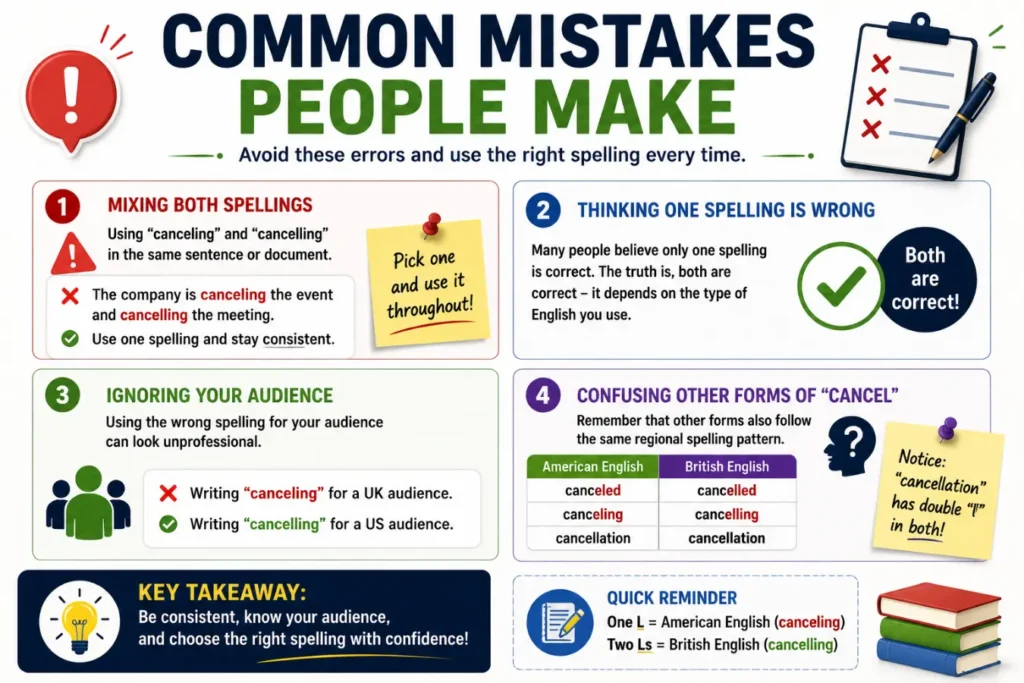
Mistake 1: Mixing Both Spellings
❌ The company is canceling today’s event and cancelling tomorrow’s meeting.
✅ Choose one spelling style and use it throughout your article.
Mistake 2: Thinking One Spelling Is Wrong
Many people believe only one spelling is correct.
The truth is that both are correct. The difference depends on regional English.
Mistake 3: Ignoring Your Audience
If you write for American readers, canceling looks more natural.
If your audience uses British English, cancelling is the expected spelling.
Mistake 4: Confusing Other Forms of “Cancel”
Remember that other forms also follow the same regional spelling pattern.
| American English | British English |
| canceled | cancelled |
| canceling | cancelling |
| cancellation | cancellation |
Notice that cancellation keeps the double l in both American and British English.
Easy Tips to Remember the Correct Spelling
A simple memory trick can help you choose the right spelling every time.
Tip 1: Think About Your Audience
Writing for Americans?
Use canceling.
Writing for British readers?
Use cancelling.
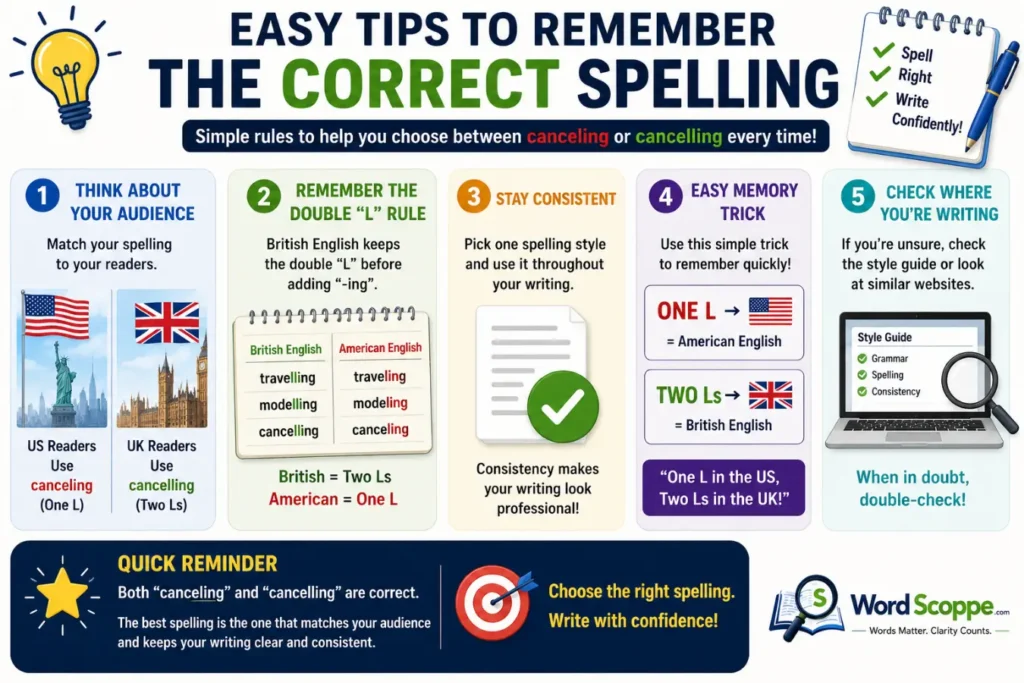
Tip 2: Remember the Double “L” Rule
British English often keeps double l in words ending with -ing.
Examples include:
- travelling
- modelling
- cancelling
American English usually drops one l in these words.
- traveling
- modeling
- canceling
Tip 3: Stay Consistent
Never switch between spellings in the same article, email, or report.
Consistency makes your writing look more professional.
Tip 4: Use This Easy Memory Trick
One L = American English 🇺🇸
Two Ls = British English 🇬🇧
This simple rule helps you remember the correct spelling quickly.
Using Canceling and Cancelling in Everyday Life
Knowing when to use canceling or cancelling helps you write clearly in daily situations. Since both spellings are correct, your choice depends on the type of English you use.
At Work
🇺🇸 We are canceling tomorrow’s meeting.
🇬🇧 We are cancelling tomorrow’s meeting.
While Traveling
🇺🇸 The airline is canceling several flights because of bad weather.
🇬🇧 The airline is cancelling several flights because of bad weather.
At School
🇺🇸 The school is canceling outdoor activities today.
🇬🇧 The school is cancelling outdoor activities today.
In Daily Conversations
🇺🇸 I’m thinking about canceling my subscription.
🇬🇧 I’m thinking about cancelling my subscription.
No matter where you use these words, the meaning stays the same. Only the spelling changes based on regional English.
Synonyms and Related Words
Using synonyms can improve your writing and help you avoid repeating the same word too often.
Synonyms for Cancel
- Call off
- Stop
- End
- Postpone
- Withdraw
- Revoke
- Abort
- Annul
- Scrap
- Terminate
Examples
- They decided to call off the concert.
- We had to postpone the meeting.
- The company will withdraw the offer.
- Officials chose to abort the mission because of safety concerns.
These alternatives can make your writing more natural while keeping the same meaning.
Expert Insights: Which Spelling Is Better?
Language experts agree that canceling and cancelling are both correct. The important point is consistency.
Professional writers, editors, and publishers always match their spelling to their audience. American publications almost always use canceling, while British publications prefer cancelling.
If you’re writing blog posts, business documents, or academic papers, choose one style before you begin. Switching between spellings in the same article may confuse readers and reduce the overall quality of your writing.
For SEO, using the spelling your audience searches for can also improve relevance. For example, a U.S.-focused website should naturally use canceling, while a UK-focused site should favor cancelling.
Frequently Asked Questions
Is it canceling or cancelling?
Both spellings are correct. Canceling is American English, while cancelling is British English.
Which spelling is used in the United States?
American English uses canceling with one l.
Which spelling is correct in the United Kingdom?
British English uses cancelling with two l’s.
Do canceling and cancelling have different meanings?
No. Both words mean to stop, call off, or end something before it happens or finishes.
Why does British English use two Ls?
British spelling often keeps a double l before adding -ing to many verbs, while American spelling usually drops one l.
Is “canceled” also different in American and British English?
Yes.
- American English: canceled
- British English: cancelled
Both are correct within their respective spelling systems.
Which spelling should I use for SEO?
Use the spelling that matches your target audience. American readers usually search for canceling, while British readers often search for cancelling.
Can I use both spellings in one article?
No. Choose one spelling style and use it consistently throughout your writing.
Conclusion
Understanding canceling or cancelling is easier than it first appears. Both spellings are correct and share the same meaning. The only difference is the version of English you follow. Canceling is the preferred spelling in American English, while cancelling is standard in British English and several other countries. The key is to write for your audience and remain consistent from beginning to end. Whether you’re writing emails, blog posts, business documents, or school assignments, using the correct regional spelling makes your work look more professional. When in doubt, remember this simple rule: one L for American English, two Ls for British English, and you’ll choose the right spelling with confidence every time.

Sophia Hayes is a language researcher and content writer at WordsCoppe.com, specializing in word comparisons, spelling differences, grammar explanations, and vocabulary insights. She is passionate about making English easier to understand through clear, accurate, and practical content. By breaking down complex language topics into simple explanations, Sophia helps readers improve their writing and communication skills. Her goal is to make learning English more accessible, engaging, and confidence-building for learners worldwide.